Pinnacle.
A pinnacle is a small ornamental peak or crown—often a pointed stone finial—placed on buttresses, parapets, or towers. In pinnacle architecture, it adds vertical emphasis and visual weight while sometimes helping stabilize masonry.
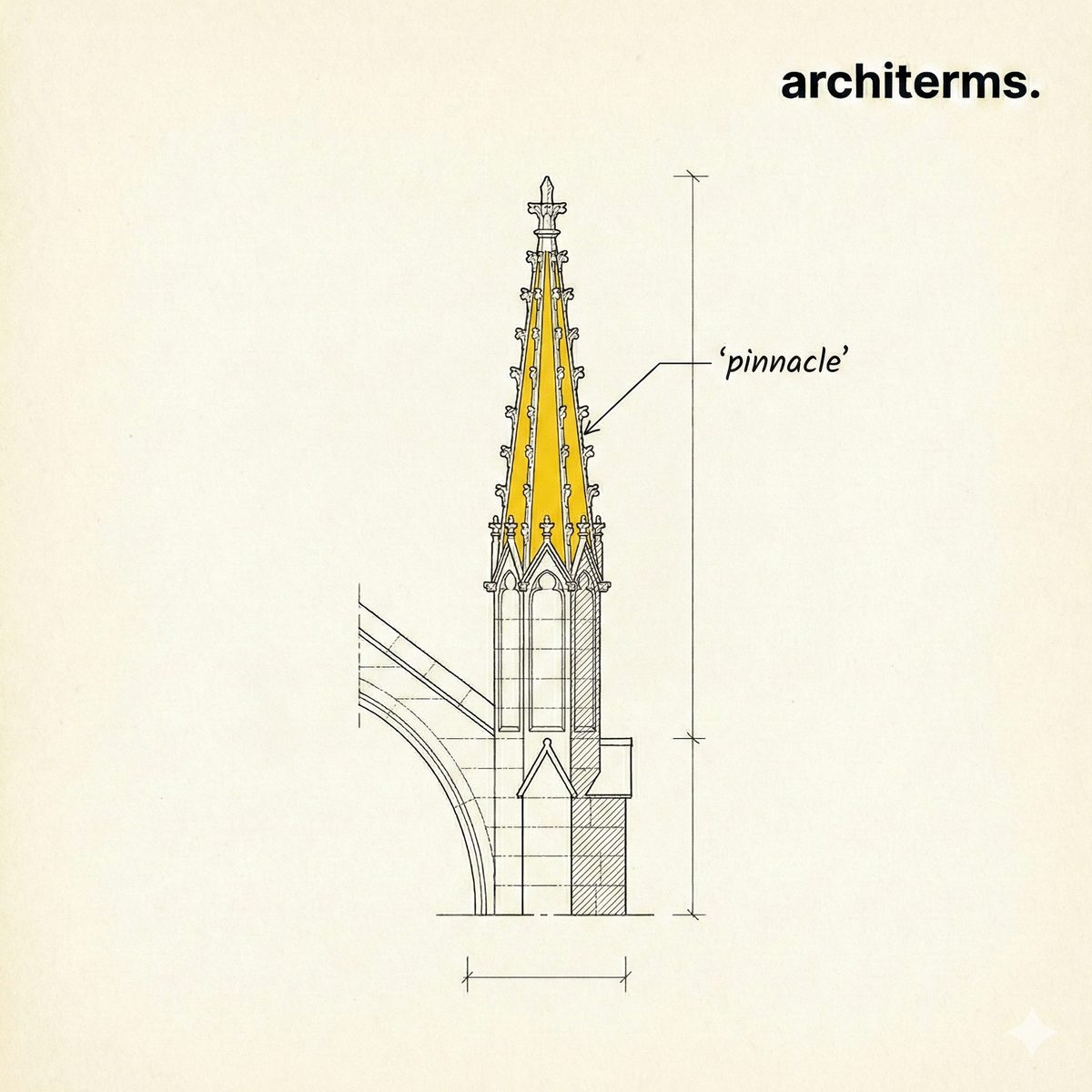
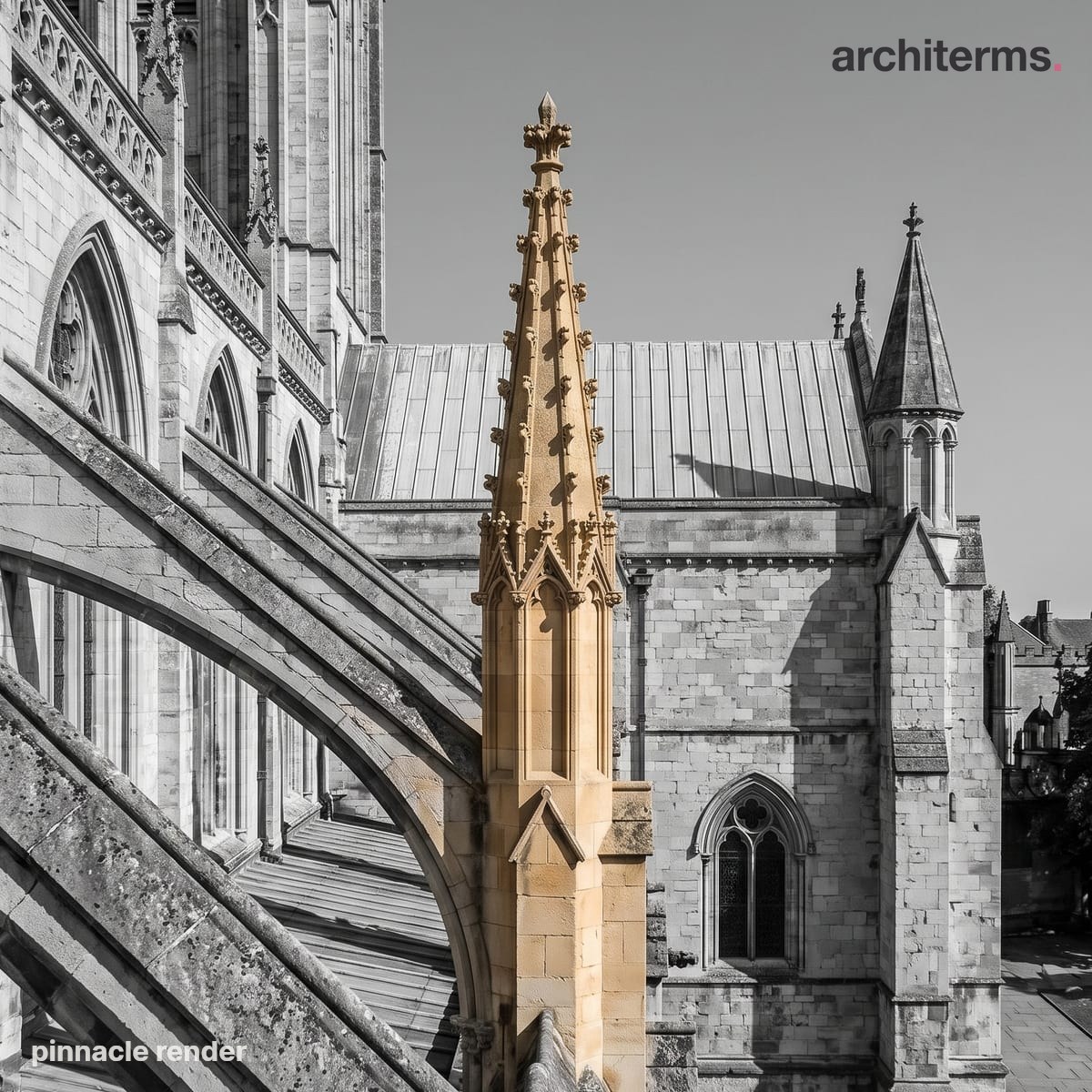
A pinnacle crowns the buttress where a flying arch delivers its thrust, adding downward weight that steadies the masonry below. Its crocketed spire and finial also carry the eye upward, sharpening the building's vertical line.
Created with Reviz.Design — AI rendering for architects and interior designers
Definition
A pinnacle is a slender, tapering ornament that crowns a buttress, spire, or roofline and ends in a sharp point. In Gothic architecture it is both decorative and structural, adding weight that helps steady the thrust of the arches and flying buttresses below.
A pinnacle is a small, decorative vertical termination—usually a pointed stone or masonry element—that sits on top of a Buttress, Flying Buttress, Parapet, tower corner, or Facade feature. The pinnacle meaning in architecture is twofold: it adds a strong vertical accent (repeating the upward push of Gothic and historic buildings) and, when placed on buttresses, it adds weight over the support, which helps resist outward thrust and improves stability.
So pinnacle architecture definition isn’t only decorative: in Gothic construction, pinnacles were often used at the top of flying buttress piers to increase the downward load and reduce the tendency of the pier to tip. Today the term is used for any similar small crown or peak on a building.
Pinnacle in architecture (where it appears)
Pinnacle in architecture shows up in:
- —Gothic and Gothic Revival churches and cathedrals (on Flying Buttress piers, tower corners, and Cornice terminations)
- —Historic civic and university buildings that use stone or brick detail
- —Restoration and new construction that references historic silhouettes
Pinnacle in architecture examples
Pinnacle in architecture examples include the small pointed crowns on the buttress piers of Notre-Dame de Paris, Chartres, and many other Gothic cathedrals; the corner pinnacles on towers and gatehouses; and the ornamental peaks on Parapet copings or balustrades in classical and Gothic Revival work.
Types of pinnacle in architecture
Types of pinnacle in architecture are usually described by placement rather than shape:
- —Buttress pinnacles: on top of Buttress or Flying Buttress piers (very common in Gothic)
- —Tower pinnacles: at corners or stages of towers and spires
- —Parapet or wall pinnacles: small crowns along a Parapet or Facade (often repeated in a rhythm)
- —Gable or roof pinnacles: at ridge ends or gable peaks
Shapes vary from simple pyramids to more elaborate crocketed (decorated) forms.
Pinnacle in gothic architecture
Pinnacle in gothic architecture is especially important. Gothic builders used pinnacles on Flying Buttress piers to add dead load and improve stability, and to sharpen the silhouette of towers and facades. The vertical emphasis of pinnacles echoes the overall upward drive of Gothic design (pointed Arch / Ogive, rib vaults, tall windows).
Pinnacle vs spire
- —Pinnacle: a small termination—a decorative peak or crown on a buttress, parapet, or tower. Usually modest in height relative to the building.
- —Spire: a tall, tapering roof or tower cap—often the main roof form of a tower (e.g. a church spire). Much larger and more dominant than a pinnacle.
A spire can have pinnacles at its base or on its stages; a pinnacle is not a spire.
Common confusion (pinnacle synonym)
- —Pinnacle vs spire: see above—spire is a tall roof/tower form; pinnacle is a small ornamental peak.
- —Pinnacle synonym: finial is a close synonym (decorative termination); pinnacle often implies stone/masonry and a more architectural (e.g. Gothic) context.
- —Pinnacle vs finial: Finial is broader (can be metal, small, on furniture); pinnacle in architecture usually means the stone/masonry crown on buttresses or parapets.
FAQ
What is a pinnacle in Bridgerton?
In period dramas and historic settings, “pinnacle” sometimes refers to the peak of social or literal height—e.g. “the pinnacle of society” or the top of a building. In architecture, a pinnacle is the small pointed stone element on buttresses, parapets, or towers, as on many Gothic and Regency-era buildings that might appear in such shows.
Do pinnacles have a structural role?
In Gothic construction, yes: adding mass on top of a buttress pier increases downward load and helps stabilize the pier against thrust. In most modern or purely decorative use, they are ornamental.