Coping.
Coping is a protective cap or covering placed at the top of a wall, parapet, or roof edge to shed water and prevent weather damage. It typically slopes outward and overhangs slightly, directing rainwater away from the vertical surfaces below.
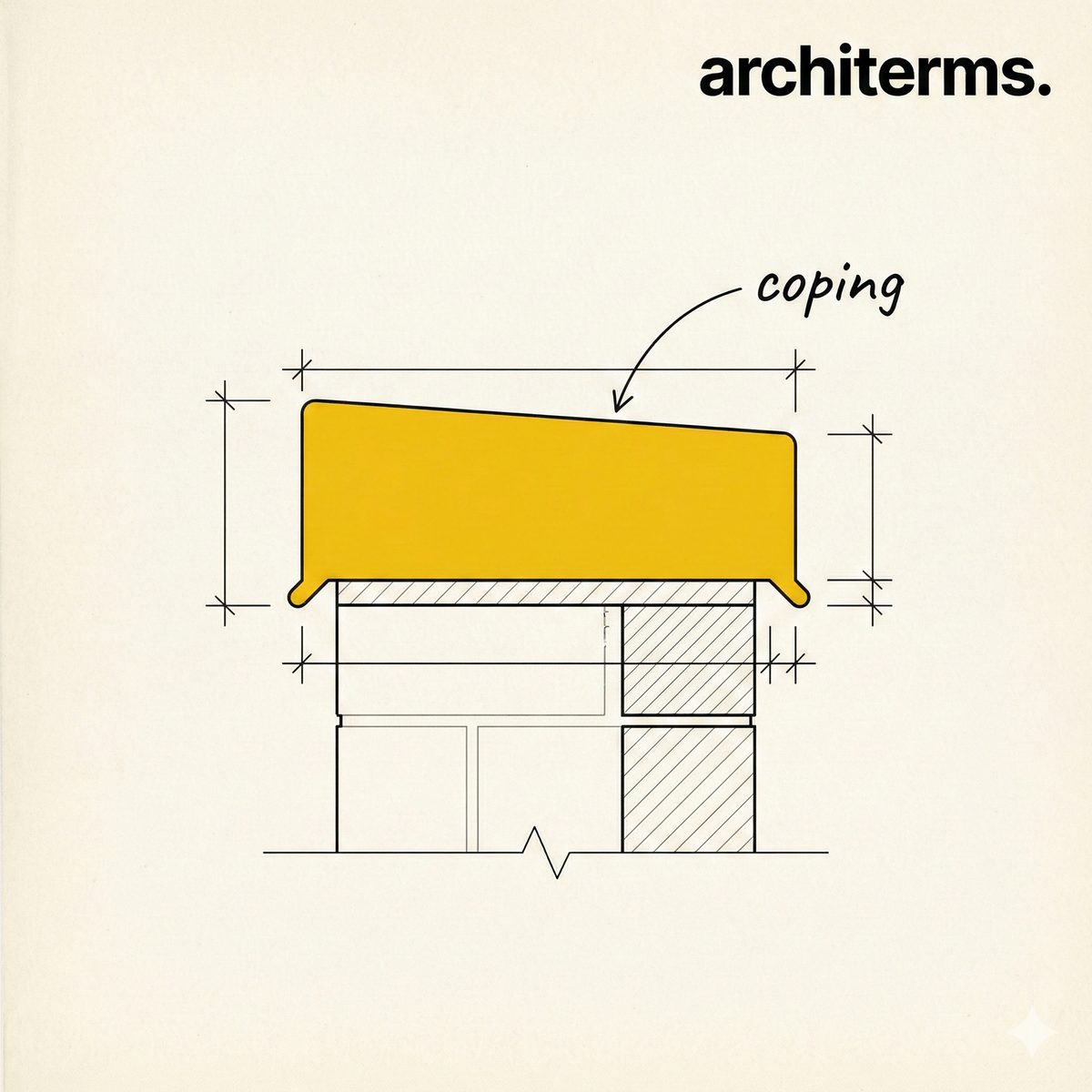
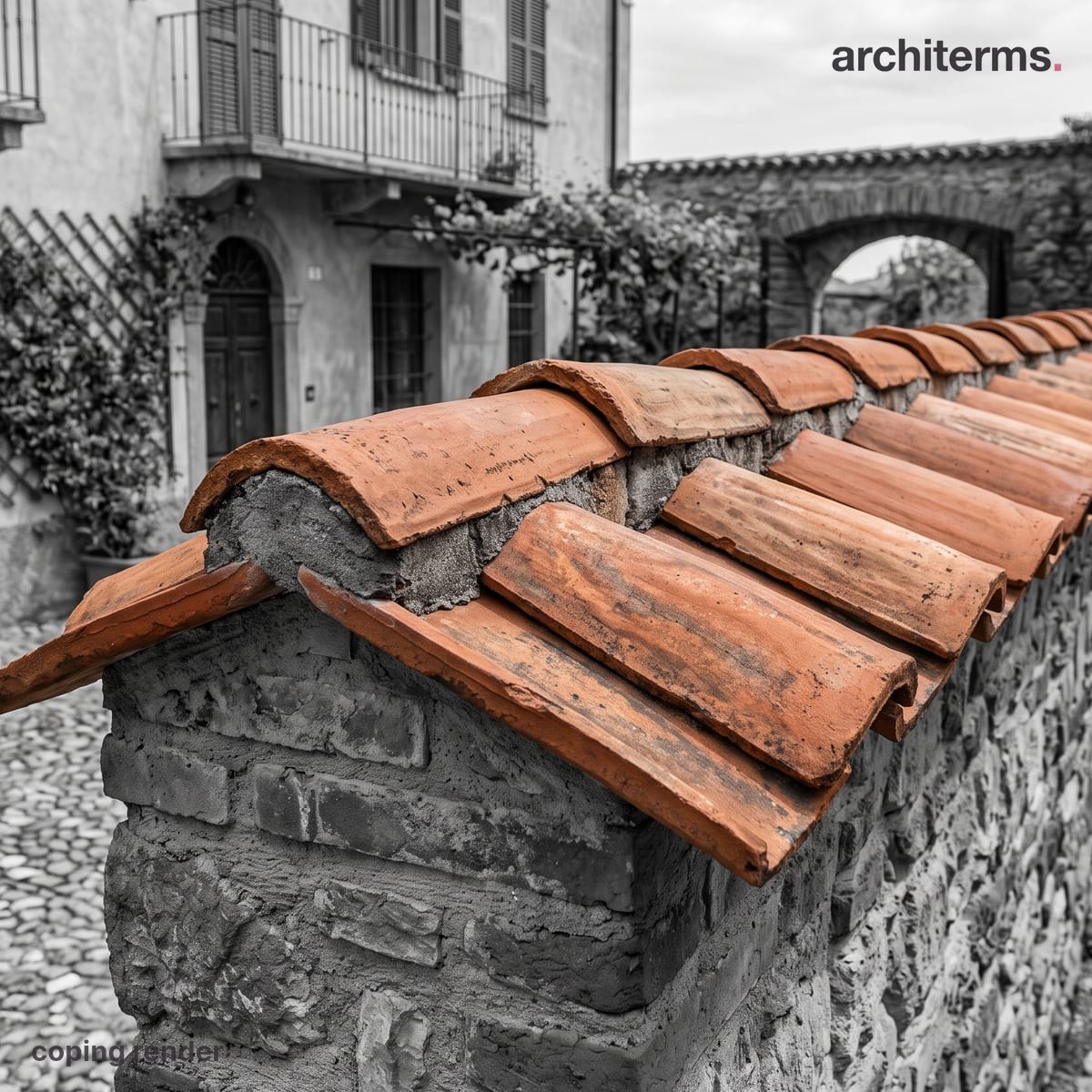
Coping caps the top of the wall, its sloped surface and slight overhang throwing rainwater clear of the vertical face beneath. Without it, water would soak into the exposed masonry and work the joints loose over time.
Made with Reviz.Design — AI visualization for architects and interior designers
Definition
A coping is one of architecture's most practical details—simple in principle but essential in execution. It sits at the highest point of a vertical surface (most commonly a parapet, boundary wall, or roof edge) and performs two critical jobs: it sheds water away from the wall below, and it seals the top edge against moisture infiltration. Without a coping, water would collect along the top of a wall, soak downward into the masonry or structural layers beneath, and eventually cause cracking, deterioration, and structural failure. The coping prevents that by sloping outward and typically including a drip edge or projection that breaks the water's path back toward the wall.
Copings are particularly important in wet or freeze-thaw climates where water damage accelerates material failure. The top surface slopes (usually 1-2 percent grade minimum) to encourage drainage; the outer edge often projects beyond the wall face by 1-2 inches, creating an overhang. Below the projection, a drip edge or groove (sometimes called a "drip mold" or "drip cap") catches and directs water downward and away. This simple geometry—slope and overhang—is the difference between a wall that lasts decades and one that degrades in years.
Coping History
Copings have been used for centuries in masonry construction, wherever architects needed to protect the top of load-bearing walls and parapets. Medieval stone buildings, fortress walls, and civic structures all relied on coped stone caps to extend their lifespan. In traditional work, copings were often carved from single blocks of stone or slate, chosen for their weather resistance—granite, slate, and limestone were common choices. The craftsmanship involved in fitting coping stones edge-to-edge with proper slope and overhang was a mark of quality masonry. As construction materials and methods evolved, copings adapted too. By the 19th and 20th centuries, architects and builders experimented with terracotta, metal (copper, aluminum, steel), concrete, and composite materials, each chosen for durability, cost, and aesthetic fit.
Coping in Architecture
Today, copings appear wherever walls meet weather. Common applications include:
- —Parapets at roof edges (most frequent use; prevents water from pooling behind the parapet and leaking into the building)
- —Boundary walls and freestanding walls (protects the top from rain and freeze-thaw cycles)
- —Retaining walls (handles runoff and prevents soil moisture from creeping into the wall structure)
- —Architectural features like pediments, gables, and other high points
- —Planters and landscape elements (garden walls often have copings to shed water away from planting soil)
The choice of coping material and profile is often aesthetic as well as functional. A copper coping on a historic building signals quality and durability; a smooth concrete coping on a modern minimalist wall reads as clean and contemporary. Architects may select copings that align with the Materiality of the façade or that provide visual interest through profile and texture. Some copings are deliberately expressed (projecting boldly to create shadow lines and visual emphasis), while others are subtle (nearly flush with the wall, prioritizing clean lines).
Materials and Profiles
Comon coping materials include:
- —Stone (granite, slate, limestone)—traditional, durable, visually prestigious
- —Precast concrete—affordable, consistent, versatile in profile
- —Metal (copper, aluminum, stainless steel)—weather-resistant, long-lasting, can be detailed for visual effect
- —Brick or tile—matching existing masonry, continuity with façade
- —Wood (rare)—used historically or in specific architectural styles, requires maintenance
Profiles vary from simple (a basic slope and overhang) to complex (with multiple drips, moldings, and ornamental detail). Modern architecture often favors cleaner profiles that integrate with minimalist Facades. Historic or classical work may feature more elaborate moldings and carved details, reflecting the Entablature traditions of pitched, deep overhangs, and decorative cornices.
Common confusion
Coping vs. cornice: A Cornice is a larger projecting detail that crowns a wall or façade, often with multiple moldings and ornamental profile. A coping is simpler and more focused on water shedding; it's the protective cap at the top. Cornices can include copings as part of their assembly, but a coping exists purely for function.
Coping vs. flashing: Flashing is sheet material (usually metal) placed at joints and transitions to prevent water infiltration—around windows, doors, chimneys. Copings are the structural cap at the top of a vertical surface. Flashing is often hidden; copings are visible and load-bearing. They work together in a complete weather-resistant design.
Coping vs. cap: "Cap" is a broad term for any topping; a coping is a specific architectural cap designed to shed water from a wall or parapet with slope, overhang, and drip edge.
Frequently Asked Questions
What is a coping in architecture?
A coping is a protective cap placed at the top of a wall or parapet that slopes outward and includes a drip edge to shed water and prevent weather damage. It is essential for extending the life of masonry and other wall materials by directing rainwater away from the wall face.
What is the difference between a coping and a cornice?
A coping is a simple water-shedding cap at the top of a wall, while a cornice is a larger, more ornamental projecting molding that crowns a façade or wall. Cornices often contain multiple moldings and decorative details; copings are more utilitarian, though they can be detailed for visual effect.
Why is a coping important in architecture?
A coping prevents water from pooling at the top of a wall and infiltrating downward, which would cause cracking, deterioration, and structural failure over time. Proper slope and overhang direct water away quickly, significantly extending the life of the building envelope.
What materials are copings typically made from?
Common coping materials include stone (granite, slate, limestone), precast concrete, metal (copper, aluminum, stainless steel), and brick or tile. The choice depends on durability requirements, cost, and aesthetic alignment with the building's façade and material palette.
How does a coping prevent water damage?
A coping sheds water by sloping outward (usually 1-2 percent grade) so water runs to the sides and off the building. The outer edge projects beyond the wall face and typically includes a drip edge or groove that breaks the water's path and directs it downward away from the wall.