Pediment.
A pediment is the triangular gable crowning the front of a classical building or framing a door or window, set above a horizontal entablature and bounded by sloping cornices.
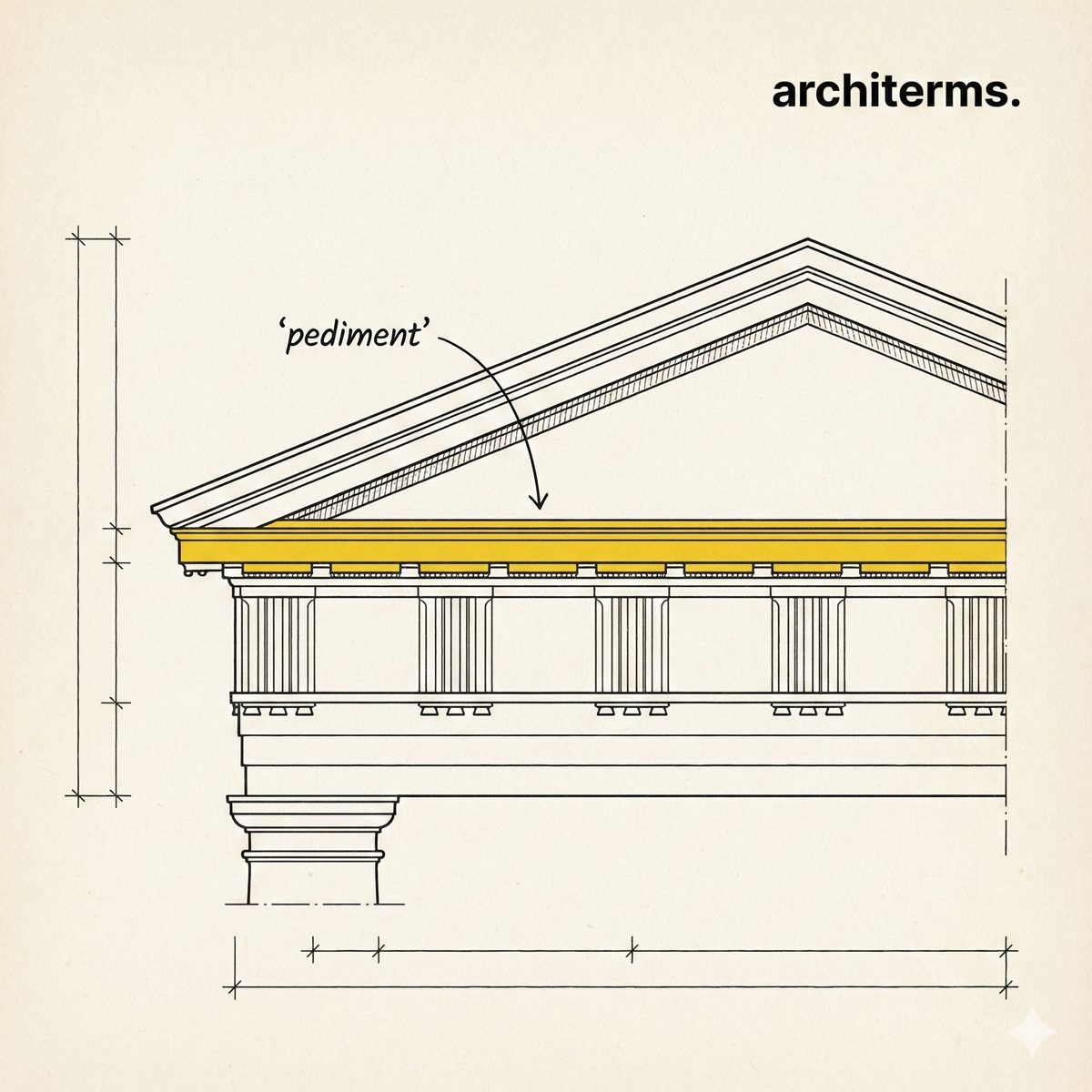

A pediment closes the top of a classical front: the horizontal entablature runs along the bottom and two sloping cornices climb to a peak, framing the triangular gable field that sits above the columns.
Rendered with Reviz.Design — AI visualization for architects and interior designers
Definition
A pediment is one of the most recognizable features of classical architecture: the broad triangular gable that crowns the front of a Greek temple and has been reused on countless buildings ever since. Sitting above the row of columns and the horizontal entablature, it gives a facade a clear top and a focal point, drawing the eye upward to its peak.
Beyond the grand temple front, the pediment shrinks to become a smaller decorative crown over doors, windows, and niches, where it lends dignity and a sense of order. Whether it spans an entire portico or caps a single doorway, the pediment signals importance and announces a building's connection to the classical tradition.
A pediment is a low-pitched triangular (or sometimes curved) gable that surmounts the entablature on the front of a classical building, or that crowns a smaller element such as a door, window, or niche. It is bounded by a horizontal cornice along its base and by two raking (sloping) cornices that rise to meet at the apex. The flat triangular field enclosed within these mouldings is called the tympanum, which in major buildings is often filled with sculpture.
Pediment History
The pediment originated in ancient Greek temple architecture, where it formed the gable end of the timber-and-stone roof above the colonnade. The triangular tympana of temples like the Parthenon were filled with carved figures depicting myths and gods, making the pediment both a structural gable and a stage for monumental sculpture. The Romans adopted and adapted the form, applying it to temples, civic buildings, and as a decorative crown over openings.
Revived enthusiastically during the Renaissance, the pediment became a standard element of classical design and a flexible decorative device. Architects introduced variations such as the segmental (curved) pediment, the broken pediment with a gap at the apex, and the open-bed pediment with a gap along the base. These forms spread through Baroque, Georgian, and Neoclassical architecture and remain a familiar feature on banks, civic buildings, and traditional houses today.
Pediment in Architecture
The pediment plays several roles in a composition:
- —Crowning a facade: A large pediment above a portico gives the front of a building a unified, monumental top and a clear central focus.
- —Framing openings: Smaller pediments over doors and windows lend them emphasis and hierarchy, marking the most important openings on a facade.
- —Carrying ornament: The tympanum offers a field for sculpture, coats of arms, or inscriptions, while the cornices that frame it provide rich mouldings.
- —Signalling tradition: Because it is so strongly associated with the classical orders, a pediment instantly evokes dignity, permanence, and authority.
The pediment works hand in hand with the entablature and cornice below it; together they form the standard classical "crown" of a building. Variations such as broken and segmental pediments allowed later architects to add movement and invention to this otherwise strict element, making it one of the most adaptable motifs in the classical vocabulary.
Common confusion
Pediment vs. gable: A gable is the general triangular upper portion of a wall beneath a pitched roof, found on any building, while a pediment is the specifically classical, framed and ornamented version of that triangle, bounded by cornices.
Pediment vs. entablature: The entablature is the horizontal band of architrave, frieze, and cornice that rests on the columns; the pediment is the triangular gable that sits above the entablature.
Pediment vs. tympanum: The pediment is the whole triangular feature including its framing cornices, whereas the tympanum is only the flat recessed field enclosed within it, where sculpture is placed.
Pediment vs. portico: A portico is the projecting roofed porch with columns at the entrance of a building; a pediment is the triangular gable that frequently crowns that portico.
Frequently Asked Questions
What is a pediment in architecture?
A pediment is the triangular gable that crowns the front of a classical building above its entablature, or that caps a door, window, or niche. It is framed by a horizontal cornice at the base and two sloping cornices meeting at the apex, enclosing a flat field called the tympanum.
What is the difference between a pediment and a gable?
A gable is the general triangular section of wall beneath a pitched roof on any building. A pediment is the classical, formalized version of that triangle: framed by cornices, often ornamented, and used both on temple fronts and as a decorative crown over openings.
What is the tympanum of a pediment?
The tympanum is the flat, often recessed triangular field enclosed within the framing cornices of a pediment. In major classical buildings the tympanum is filled with sculpture, coats of arms, or inscriptions, as on the temple fronts of ancient Greece.
What is a broken pediment?
A broken pediment is a variation in which the sloping cornices do not meet at the apex, leaving a gap at the top, often filled with an ornament such as an urn or cartouche. It became popular in Baroque and Georgian architecture as a more decorative, dynamic version of the classical pediment.
Where are pediments used?
Pediments are used to crown the porticoes of temples and civic buildings, and at a smaller scale to frame and emphasize doors, windows, and niches. They remain common on banks, courthouses, churches, and traditional houses that draw on the classical vocabulary.