Facade.
A facade (also spelled façade) is the main exterior face of a building—usually the front that people see first. In facade in architecture, it's both the building's "public image" and the layer that protects the interior from weather, noise, and heat.
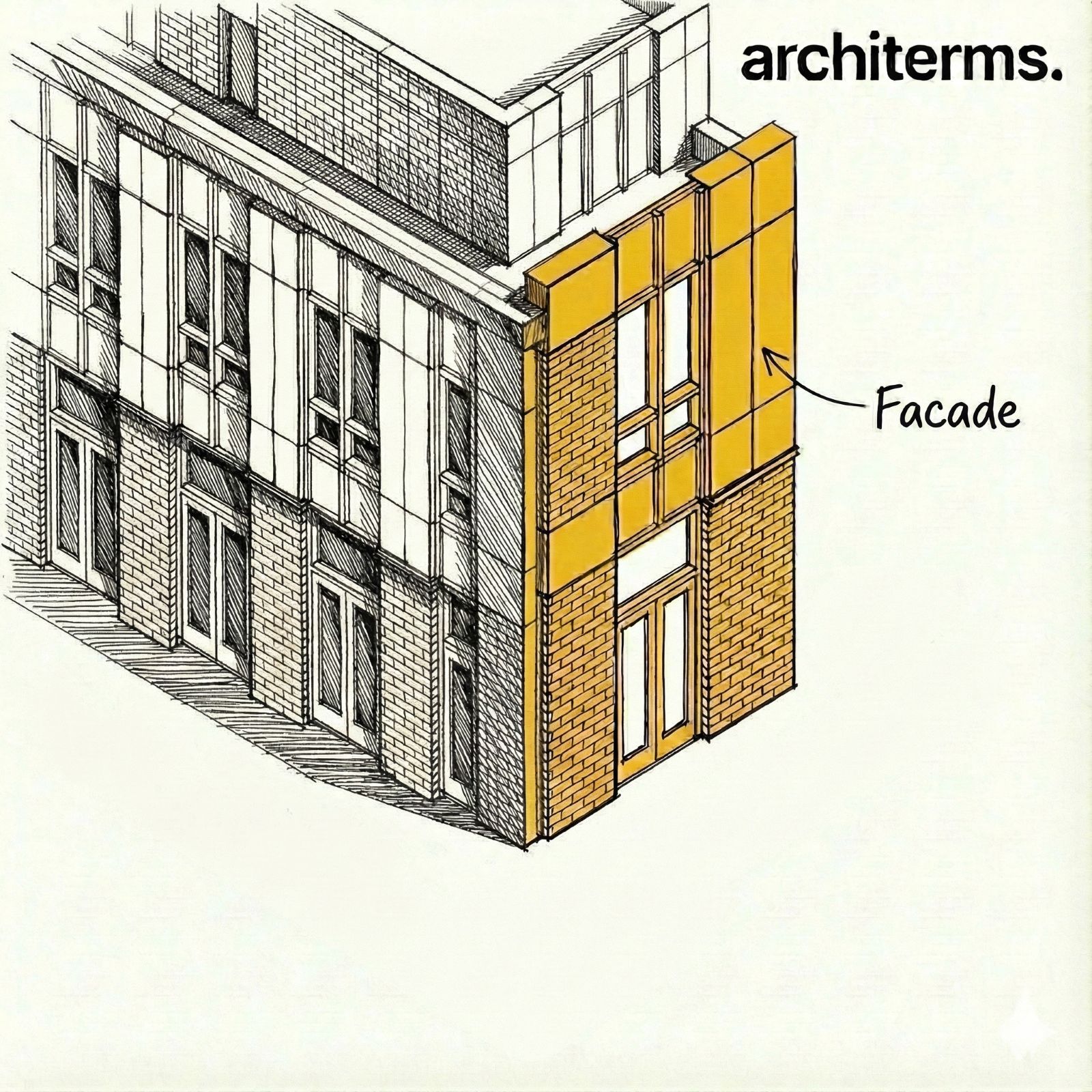
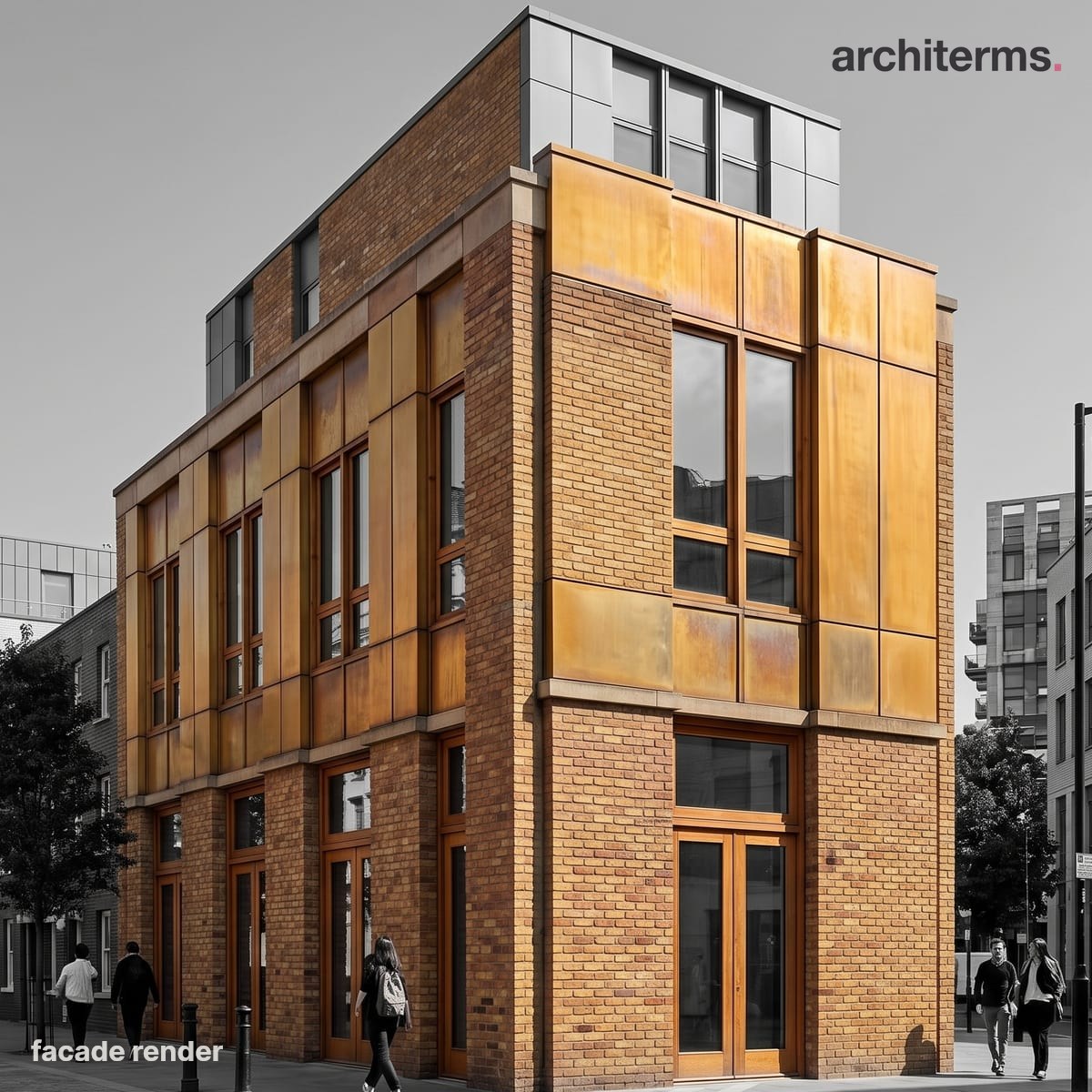
The facade is the building's principal outward face, the elevation composed to be read from the street. It presents the structure's public image while forming the outer layer that shields the interior from weather, noise, and heat.
See Facade in your own project with Reviz.Design
Definition (Facade in architecture)
The facade is where architecture meets the real world. It sits between interior life and the outside environment, handling two jobs at once: it shapes how a building looks from the street, and it helps the building perform—controlling daylight, ventilation, temperature, and privacy.
Historically, facades have been used to communicate status, function, and identity. You can often "read" a building from its facade: the size and placement of openings, the symmetry (or lack of it), the materials, and the level of ornament all tell a story about culture, technology, and how the building is organized inside. Even when the interior is complex, the facade can create a clear public order through repetition, proportion, and rhythm.
From a technical standpoint, modern facades range from thick, load-bearing walls to lightweight systems hung from a structure. Some facades are structural (they carry loads), while many contemporary facades are non-structural skins supported by frames—designed mainly for weather protection and environmental control. In both cases, a facade has to manage water, air leakage, thermal bridging, and long-term durability—because a beautiful facade that fails technically becomes an expensive problem.
Facade design (what designers actually decide)
Good facade design balances appearance with performance. Key decisions include:
- —Openings and fenestration: window size and layout affect daylight, views, and heat gain
- —Shading and glare control: overhangs, fins, louvers, and blinds can improve comfort
- —Material choices: stone, brick, metal, glass, timber—each changes maintenance and performance
- —Thermal performance: insulation strategy and minimizing thermal bridges are crucial
- —Weather protection: detailing for rain, drainage, and wind-driven water is non-negotiable
In practice, the best facades feel effortless—but they're usually the result of careful coordination between architecture, structure, and building physics.
Types of facades (common systems)
You'll often hear these facade types in construction and design:
- —Load-bearing facade (structural exterior wall)
- —Curtain wall (non-load-bearing glazed system attached to a frame)
- —Rainscreen facade (cladding system with a ventilated cavity for moisture control)
- —Double-skin facade (two layers, often glass, with an air cavity for performance control)
Common confusion
- —Facade vs. elevation: an elevation is a drawing view; a facade is the physical exterior face itself.
- —Facade vs. cladding: cladding is a material layer; the facade is the whole exterior "face" system.
- —Facade vs. curtain wall: a curtain wall is one type of facade system, usually glazed and non-structural.