Gargoyle.
A gargoyle is a carved waterspout—usually a grotesque figure or beast—that projects from a building to throw rainwater clear of the wall. In plain terms: it’s the decorative "rain spout" you see on Gothic and historic buildings.
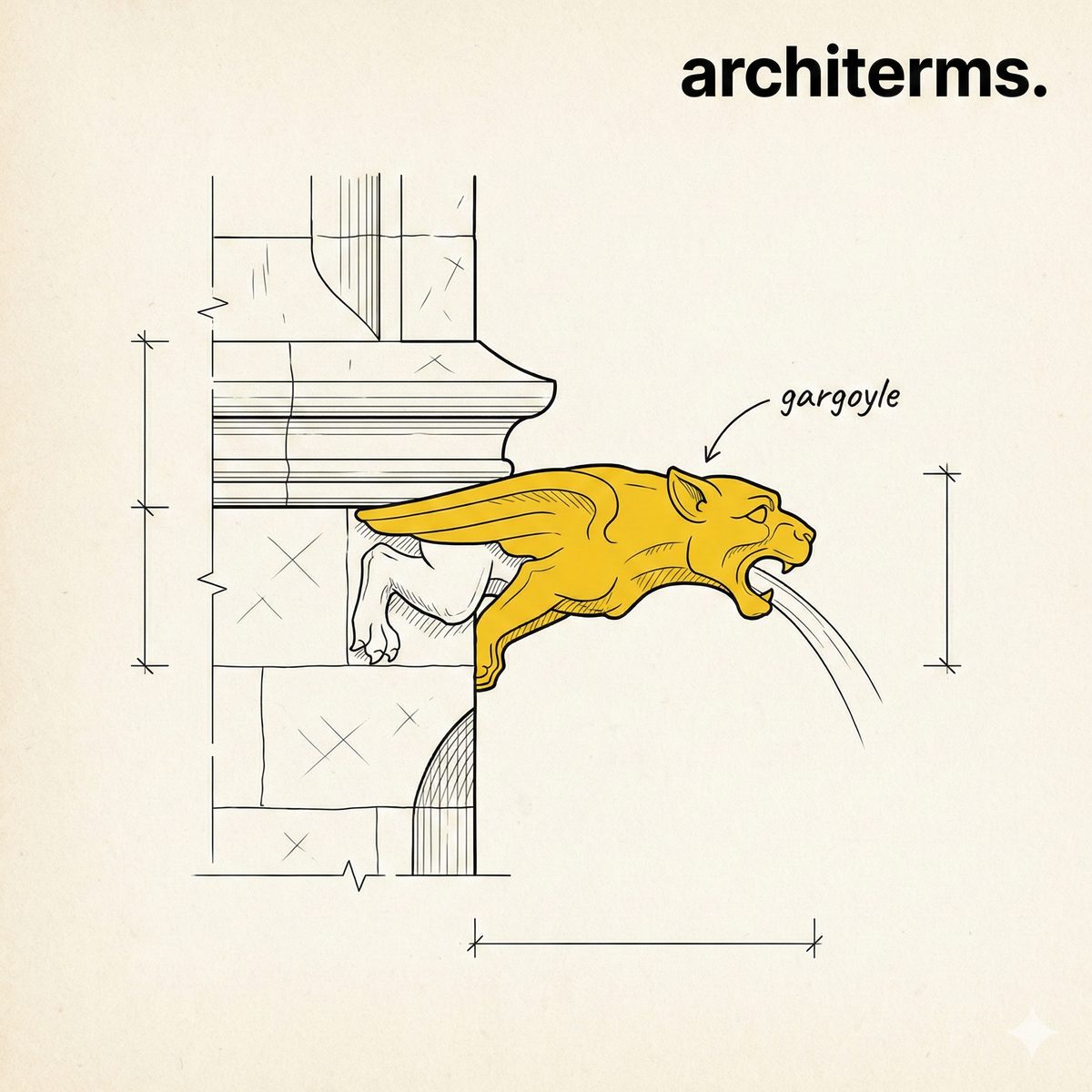
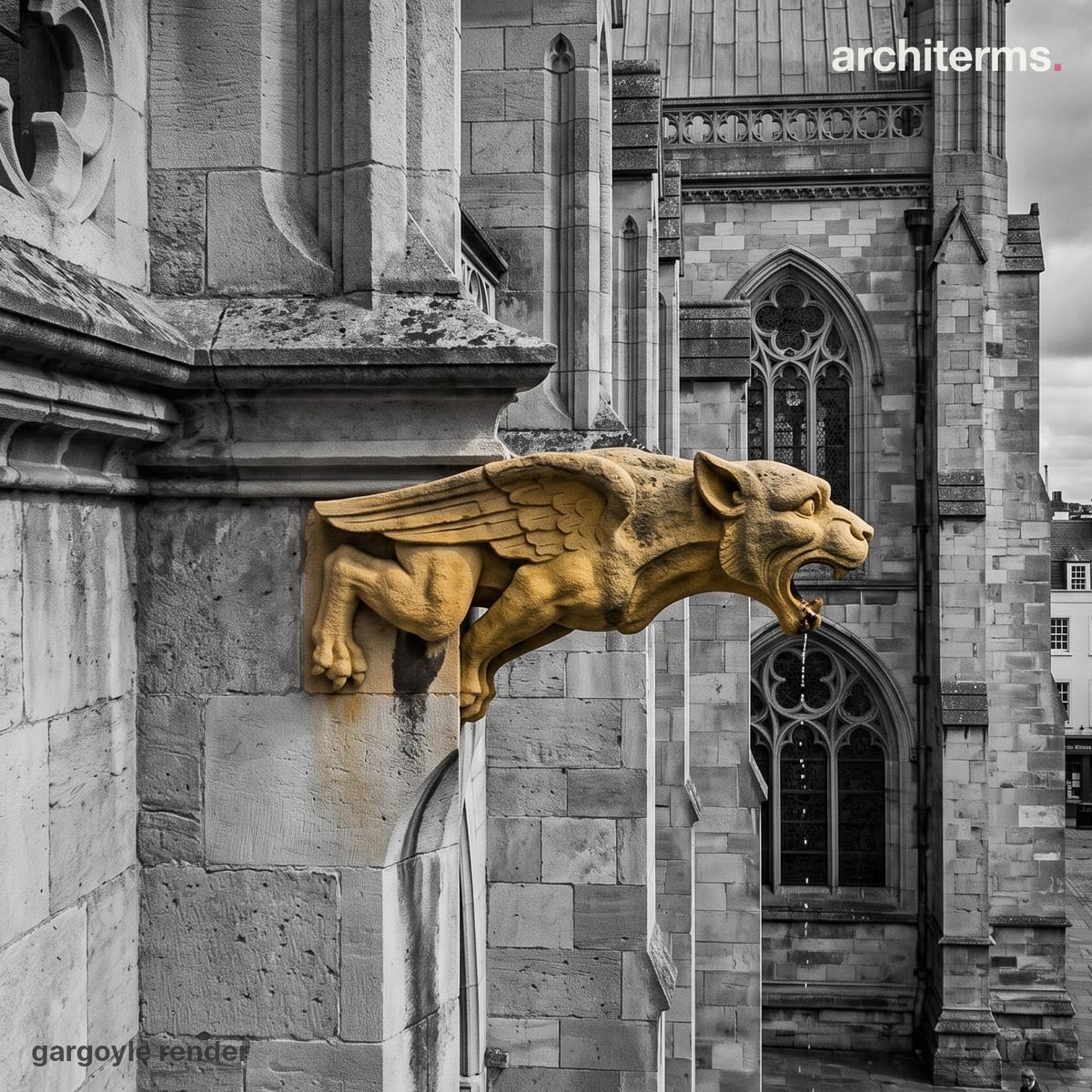
A gargoyle is a carved waterspout: rainwater collected from the roof runs through a channel in its body and out through the open mouth, thrown clear of the wall so it falls away from the stonework below rather than streaking down the face of the building.
Made with Reviz.Design — AI visualization for architects and interior designers
Definition
A gargoyle is a carved waterspout that projects from a building to throw rainwater clear of the walls below. Beyond its practical drainage role, the gargoyle became one of medieval architecture's most expressive ornaments, often carved as a grotesque figure or beast.
A gargoyle is a carved figure—often a grotesque animal or creature—that doubles as a waterspout. It projects from a Cornice, Parapet, or wall so that rainwater runs off the roof or gutter and is thrown away from the Facade, protecting masonry and foundations from runoff. The word comes from the idea of “throat” or “gullet”—the water “gargles” out of the figure’s mouth.
When people search gargoyle meaning, they’re usually thinking of the Gothic cathedral type: fierce, decorative figures that are both functional and symbolic.
Gargoyle architecture history
Gargoyle architecture history is tied to medieval European building, especially Gothic churches and cathedrals. Gargoyles became widespread in the 12th–14th centuries, when tall stone buildings needed to direct water away from walls and foundations. Carving spouts into figures (animals, demons, hybrids) added narrative and symbolism—protection, warning, or humour—while doing a practical job.
Over time, grotesque architecture (frightening or comic figures) and gargoyles were used on civic buildings, universities, and later revivals (Gothic Revival, 19th–20th century).
Famous gargoyle architecture
Famous gargoyle architecture includes:
- —Notre-Dame de Paris (and many French Gothic cathedrals): iconic gargoyles and chimeras on towers and cornices
- —Washington National Cathedral and other Gothic Revival buildings in the US
- —Universities and civic buildings that use Gothic or historicist detail
Gargoyle architecture examples today often appear in restoration work and in new buildings that reference historic styles.
Modern gargoyle architecture
In modern gargoyle architecture, true stone gargoyles are rare—most new construction uses internal drainage (gutters, downspouts, scuppers). Gargoyles still show up in:
- —Historic preservation and restoration (replacing or repairing originals)
- —New buildings that quote Gothic or historic detail (sometimes as cast or fabricated elements)
- —Decorative use without a working spout (purely sculptural)
Common confusion
- —Gargoyle vs grotesque: A gargoyle is specifically a waterspout. A grotesque is any carved monstrous or comic figure—it may not have a drain function.
- —Gargoyle vs chimera: Chimeras are often decorative figures on the same buildings (e.g. Notre-Dame); they may not function as spouts.
- —Gargoyle vs downspout: A downspout is a pipe; a gargoyle is a carved sculptural spout.
FAQ
Are gargoyles only on churches?
No—they appear on any building that used external stone drainage and decorative carving: churches, castles, town halls, universities, and Gothic Revival structures.
Do gargoyles have to be scary?
No. Many are beasts or hybrids; “grotesque” can mean comic or strange as well as frightening. The main idea is a projecting figure that doubles as a waterspout.