Gambrel Roof.
A gambrel roof (also called a barn roof) is a two-sided roof with two slopes on each side—a steep lower slope and a flatter upper slope. In plain terms: it's like a gable roof where each side has a 'break' that creates more usable attic space.
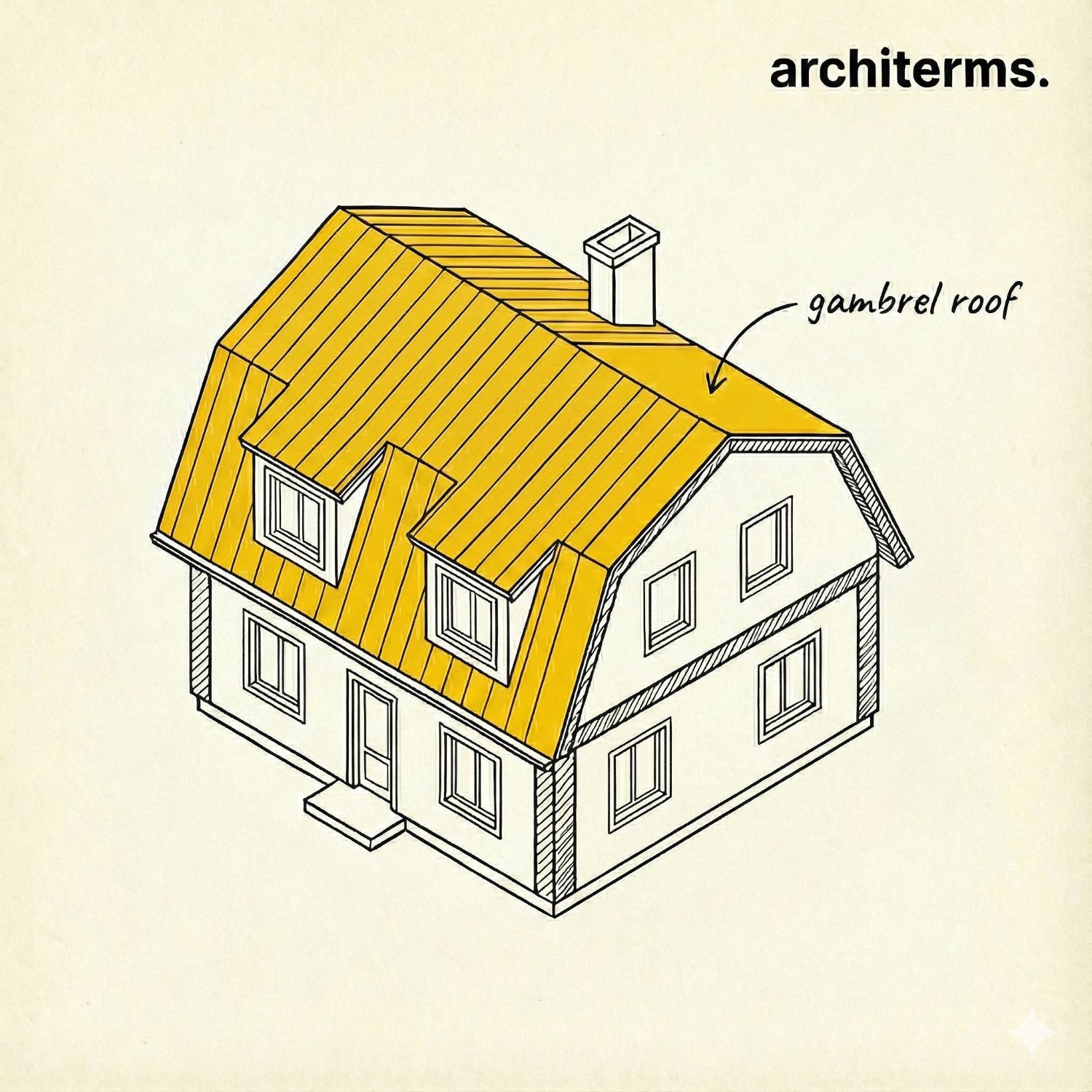
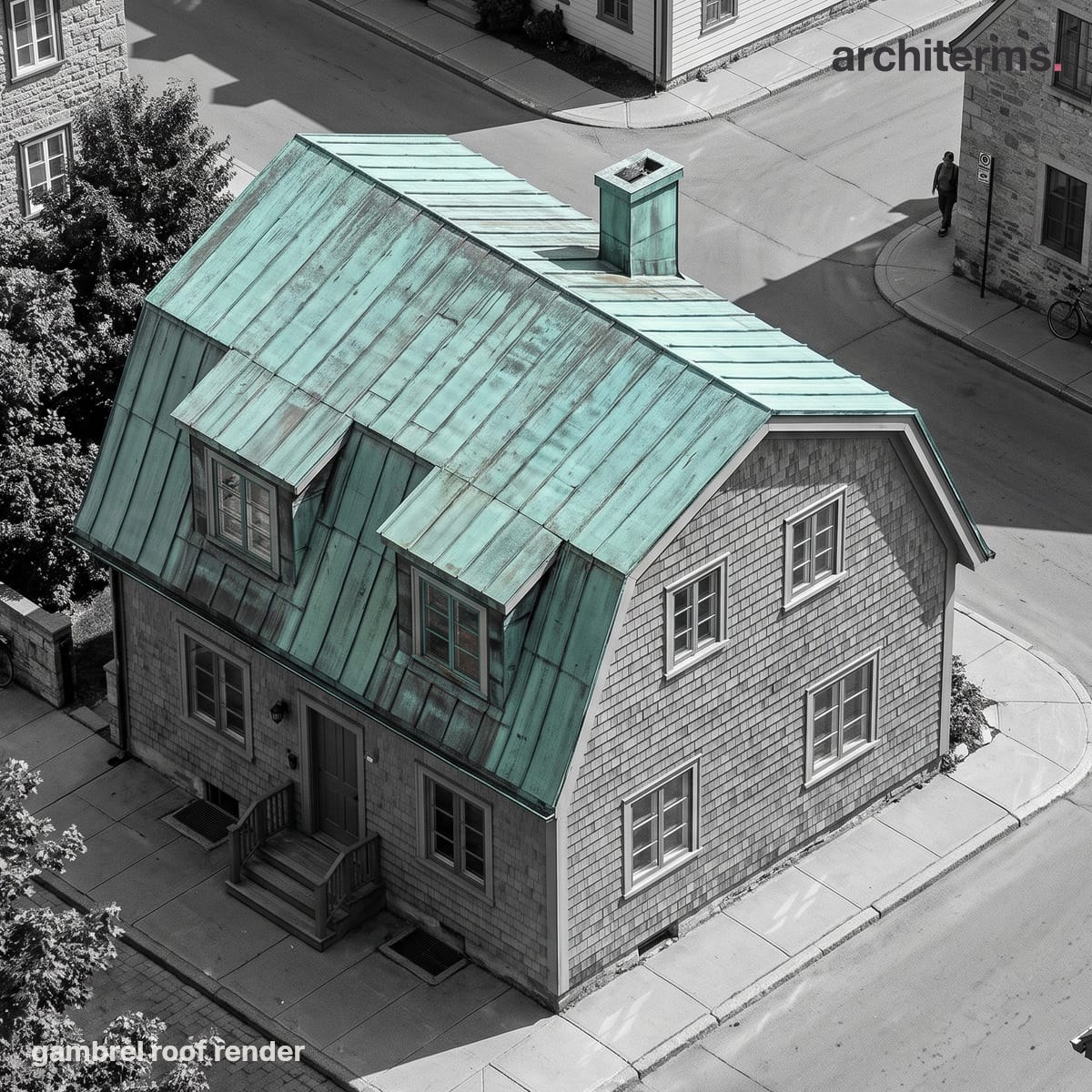
A gambrel roof folds each side into two pitches: a steep lower slope that pulls the eaves down over the walls, then a flatter upper slope near the ridge. The break lifts the headroom in the attic, letting dormers open into full-height rooms under the roof.
Rendered with Reviz.Design — AI visualization for architects and interior designers
Definition
A gambrel roof (also called a barn roof or Dutch roof) is a two-sided roof where each side has two distinct slopes: a steep lower slope and a much flatter upper slope. The steep lower slope provides more headroom and usable space in the attic, while the flatter upper portion reduces the overall roof height. This dual-slope design is the defining characteristic of gambrel roof architecture.
The gambrel roof is similar to a mansard roof, but while a mansard roof has four sides (all with dual slopes), a gambrel roof only has two sides (like a gable roof). This makes it simpler to construct while still maximizing attic space.
Gambrel roof design
In gambrel roof design, architects and builders consider several key elements:
Lower slope pitch: The steep lower slope typically ranges from 60° to 70° (almost vertical), creating maximum usable space in the attic. This steep angle makes the roof appear taller and provides more headroom.
Upper slope pitch: The flatter upper slope is usually between 20° and 30°, reducing the overall roof height while still providing adequate water drainage. This combination creates the characteristic "barn roof" silhouette.
Ridge placement: The ridge (the highest point) is positioned to balance the two slopes, typically closer to the center but allowing more space for the steeper lower slope.
Eave treatment: The transition between the steep and flat slopes (the "break" or "gambrel") is a critical design element. This break can be emphasized with trim or minimized for a cleaner look.
Material selection: The steep lower slope often uses shingles, metal, or tiles, while the flatter upper portion may use the same or different materials depending on the design.
Dormers: Gambrel roofs often include dormers (windows projecting from the roof) on the steep lower slope to provide light and ventilation to the attic space.
Gambrel roof detail
When examining gambrel roof detail, the critical construction elements are:
Gambrel break (transition point): The horizontal line where the steep lower slope transitions to the flatter upper slope. This is a key structural and visual element that requires careful framing.
Lower slope framing: The steep slope requires careful framing to support the weight and handle water drainage. This often involves closely spaced rafters or engineered trusses.
Upper slope framing: The flatter upper portion needs structural support that doesn't interfere with the usable space below. This may involve common rafters or trusses.
Ridge board: The horizontal beam at the top where the two upper slopes meet. This must be properly sized to support the roof loads.
Wall plate (top plate): The horizontal beam at the top of the wall that supports the bottom ends of the lower rafters.
Collateral ties or ceiling joists: Horizontal members that connect the bottom of opposing lower rafters, preventing the walls from spreading outward under the roof load.
Dormer integration: If dormers are included, they must be carefully integrated into the steep slope, requiring proper flashing, waterproofing, and structural support.
Gutter and drainage: The transition point (gambrel break) needs special attention for water management, as water can accumulate at this junction.
These details matter because gambrel roofs have more complex geometry than simple gable roofs, requiring precise construction and careful waterproofing at the break point.
Gambrel roof house
A gambrel roof house is a residential building that uses a gambrel roof as its primary roof structure. These houses are popular for several reasons:
Maximum attic space: The steep lower slope creates significantly more usable attic space than a standard gable roof, making it ideal for converting attics into living space, bedrooms, or storage.
Traditional appearance: Gambrel roofs are associated with Dutch Colonial, Colonial Revival, and American Colonial architecture, giving houses a classic, traditional look.
Efficient use of space: The design maximizes interior space while maintaining a reasonable roof height, making it efficient for both single-story and two-story homes.
Versatile applications: Gambrel roofs work well for:
- —Colonial and Dutch Colonial style homes
- —Barn conversions and farmhouse designs
- —Homes needing additional upper-floor space
- —Traditional and historic architecture
- —Modern interpretations of classic styles
Gambrel roof vs gable roof
The main differences in gambrel roof vs gable roof:
Gambrel roof characteristics:
- —Two slopes on each side (steep lower, flatter upper)
- —More attic space—the steep lower slope creates significantly more usable space
- —More complex framing—requires careful construction at the break point
- —Traditional "barn roof" appearance
- —Better for maximizing upper-floor space
- —More material and labor—the dual-slope design requires more construction work
Design flexibility: Gambrel roofs can be combined with dormers, cross-gables, or other roof elements to create unique architectural expressions.
Gable roof characteristics:
- —Single slope on each side
- —Simpler construction—straightforward framing with common rafters
- —Less attic space—triangular shape limits usable space
- —Lower cost—less material and simpler geometry
- —More traditional in many architectural styles
- —Easier ventilation—gable ends can have windows or vents
When to choose each:
- —Choose a gambrel roof for: maximizing attic space, Dutch Colonial or Colonial styles, converting attics to living space, traditional barn-like appearance, homes needing more upper-floor area
- —Choose a gable roof for: simpler construction budgets, maximizing ventilation, modern or contemporary designs, areas with moderate weather, easier construction
Gambrel roof vs Mansard
The main differences in gambrel roof vs Mansard:
Gambrel roof characteristics:
- —Two sides only (like a gable)
- —Two slopes on each of the two sides
- —Simpler construction—only two sides to frame
- —More common in residential construction
- —Associated with Dutch Colonial and American Colonial architecture
- —Typically used on smaller buildings
Mansard roof characteristics:
- —Four sides (all with dual slopes)
- —Two slopes on each of the four sides
- —More complex construction—four sides require more framing
- —More common in commercial and institutional buildings
- —Associated with French architecture and Second Empire style
- —Typically used on larger buildings
Key similarity: Both have dual-slope designs (steep lower, flatter upper), but the gambrel roof only applies this to two sides, while the mansard roof applies it to all four sides.
When to choose each:
- —Choose a gambrel roof for: residential homes, Dutch Colonial style, simpler construction, maximizing attic space in smaller buildings
- —Choose a mansard roof for: commercial buildings, French/Second Empire style, larger buildings, maximizing upper-floor space in all directions
History
Gambrel roofs have a long architectural history. The design is thought to have originated in Dutch architecture and was brought to America by Dutch colonists in the 17th and 18th centuries. The name "gambrel" may come from the Latin word "gamba" (leg), referring to the bent or "leg-like" appearance of the roof's shape.
In American architecture, gambrel roofs became popular in Dutch Colonial architecture, particularly in New York, New Jersey, and Pennsylvania. They were especially common in barn construction because the design maximized storage space in the upper level while keeping the overall building height reasonable.
During the Colonial Revival period (late 19th and early 20th centuries), gambrel roofs saw a resurgence in residential architecture as architects looked to traditional American building forms. Today, gambrel roofs are used in both historic preservation and new construction, especially in homes that reference Colonial or Dutch Colonial styles.
Application
Residential construction: Gambrel roofs are popular in Dutch Colonial, Colonial Revival, and American Colonial style homes, providing maximum attic space for bedrooms, offices, or storage.
Barn construction: Gambrel roofs are the classic barn roof type, maximizing hayloft and storage space while maintaining a reasonable building height.
Historic preservation: Gambrel roofs are common in restoration projects for Dutch Colonial and Colonial buildings, requiring careful attention to traditional construction methods.
Attic conversions: The steep lower slope makes gambrel roofs ideal for converting attics into usable living space, as they provide more headroom than standard gable roofs.
Modern architecture: Contemporary designs use gambrel roofs in new ways—asymmetrical breaks, large overhangs, or combined with other roof types for unique expressions.
Agricultural buildings: Beyond barns, gambrel roofs are used in other agricultural structures where maximizing upper-floor storage is important.
Common confusion
Gambrel roof vs gable roof: A gambrel roof has two slopes on each side (steep lower, flatter upper). A gable roof has a single slope on each side.
Gambrel roof vs mansard roof: A gambrel roof has two slopes on each side, but only on two sides (like a gable). A mansard roof has two slopes on all four sides.
Gambrel roof vs hip roof: A gambrel roof has two sides with dual slopes. A hip roof has four sides, each with a single slope.
Gambrel vs gambrel-style: True gambrel roofs have the dual-slope construction on two sides. "Gambrel-style" may refer to buildings that have a gambrel-like appearance but use different construction methods.
Gambrel roof vs barn roof: These are the same thing—"barn roof" is a common nickname for gambrel roofs because they're so commonly used in barn construction.