Dormer.
A dormer is a structure that projects vertically from a sloping roof, usually housing a window, to bring light and headroom into the space within the roof.
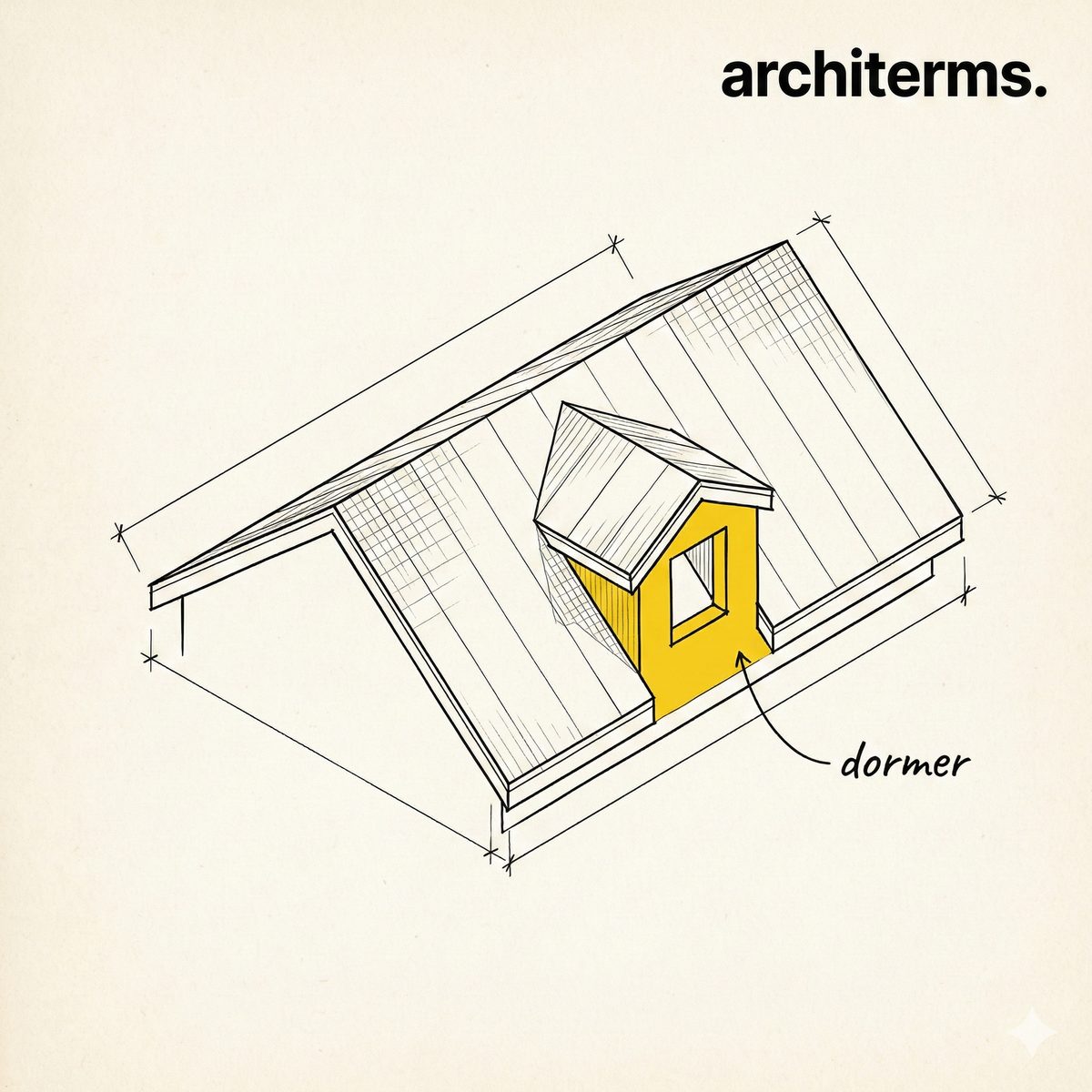
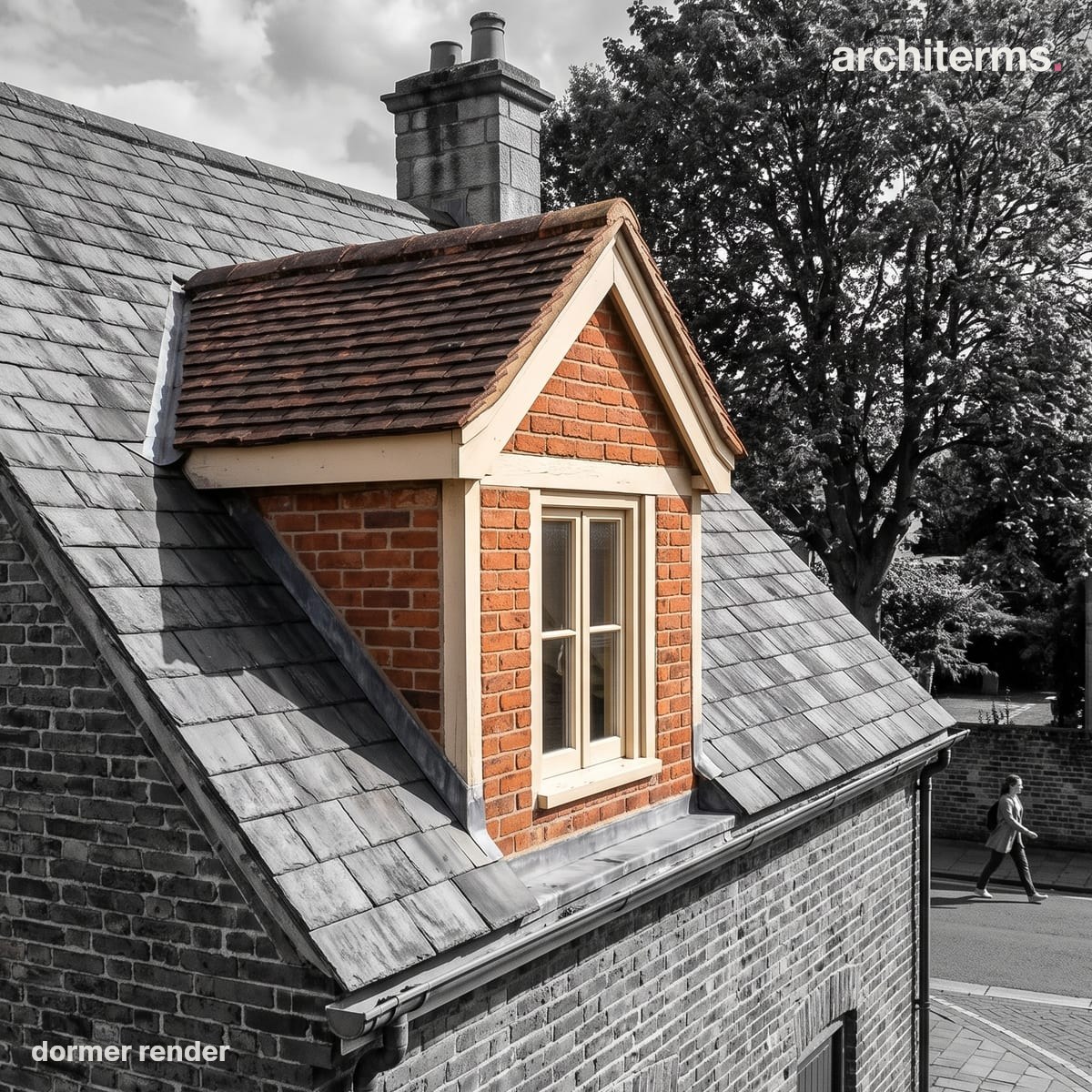
A dormer breaks vertically out of a sloping roof to carry an upright window. By interrupting the pitch it wins headroom and daylight for the attic behind, which a roof-flush skylight alone could not provide.
Rendered with Reviz.Design — AI visualization for architects and interior designers
Definition
A dormer is the small roofed projection that pokes out from a sloping roof, almost always carrying a window in its vertical face. It turns the dark, low space under a pitched roof into a usable, light-filled room, which is why dormers are such a familiar sight on houses with rooms in the roof. Rows of dormers also give many traditional streets and grand roofs their distinctive rhythm.
A dormer does two jobs at once. Functionally, it creates standing headroom and a vertical window where the sloping roof would otherwise be too low and too dark. Architecturally, it breaks up a large expanse of roof, adds scale and interest, and expresses that the attic is inhabited rather than empty.
A dormer is a roofed structure, containing a window, that projects from the plane of a pitched roof with a vertical front face. It consists of the window itself, vertical side walls known as cheeks, and its own small roof, which may take several forms. By rising above the slope of the main roof, a dormer provides headroom and a vertical opening for light and ventilation in the space below the roof, commonly a loft or attic room.
Dormer History
The dormer takes its name from the Latin for "to sleep," reflecting its long association with sleeping quarters built into the roof space. Dormers became common in medieval and Renaissance Europe as a way of making attics habitable, and they grew especially elaborate in French architecture, where steep roofs offered generous room for tall, richly decorated dormers.
The form became closely tied to the mansard roof, whose steep lower slope is almost always punctuated by rows of dormers to light the rooms within. From grand townhouses to modest cottages, dormers spread wherever the roof space was valuable, and they remain one of the most popular ways to convert a loft into a bedroom or study today. Modern dormers range from traditional pitched-roof designs to large flat-roofed boxes that maximize internal space.
Dormer in Architecture
Dormers serve several purposes on a roof:
- —Headroom: By projecting above the slope, a dormer creates standing height in a roof space that would otherwise be too low to use.
- —Daylight and ventilation: The vertical window in a dormer brings light and fresh air into the attic far more effectively than the slope alone would allow.
- —Composition and rhythm: Repeated dormers break up a large roof and give a facade scale, pattern, and visual interest.
- —Expressing habitation: Dormers signal that the roof space is lived in, turning a plain roof into an animated, occupied part of the building.
Dormers come in many named varieties—gabled, hipped, shed, eyebrow, and others—each defined by the shape of its little roof. The choice affects both how much internal space the dormer gains and how it sits with the character of the main roof, which is why matching the dormer style to the building is an important part of a successful loft conversion.
Common confusion
Dormer vs. gable: A gable is the triangular end wall of a building under a pitched roof, while a dormer is a small projection from the slope of the roof itself. A gabled dormer simply has a little gable of its own on its front.
Dormer vs. skylight: A dormer projects from the roof with a vertical window and adds headroom, whereas a skylight (or rooflight) lies flush within the slope of the roof and adds light but no extra space.
Dormer vs. gable roof: A gable roof is a whole roof form with two slopes meeting at a ridge; a dormer is a small added feature that sits on a larger roof, regardless of that roof's overall shape.
Dormer vs. cupola: A cupola is a small domed or roofed structure crowning the top of a roof, often for ventilation or as a lookout, while a dormer projects from the side slope of the roof to light the space within.
Frequently Asked Questions
What is a dormer in architecture?
A dormer is a structure that projects from a sloping roof with a vertical face, usually containing a window. It provides headroom and brings daylight and ventilation into the space under the roof, turning a low, dark attic into a usable room.
What is the difference between a dormer and a skylight?
A dormer projects out from the roof with a vertical window and adds both light and headroom, while a skylight sits flush within the slope of the roof and adds light only. A dormer creates usable standing space; a skylight does not.
What are the parts of a dormer?
A dormer consists of a window in its vertical front face, two side walls called cheeks, and its own small roof. The shape of that roof—gabled, hipped, shed, or eyebrow—gives the dormer its name and character.
Why are dormers used on roofs?
Dormers are used to make the space under a pitched roof habitable. They add headroom and a vertical window for light and air, and they also break up a large roof, giving a facade rhythm and showing that the roof space is occupied.
What are the common types of dormer?
Common types include the gabled dormer with a small pitched roof and gable, the hipped dormer with a sloped roof on three sides, the shed dormer with a single flat slope, and the curved eyebrow dormer. Each balances internal space against how it suits the main roof.