Ridge.
A ridge is the horizontal line at the very top of a sloped roof, where two roof planes rise up and meet. In plain terms: it's the highest edge of the roof, running the length of the building like a spine.
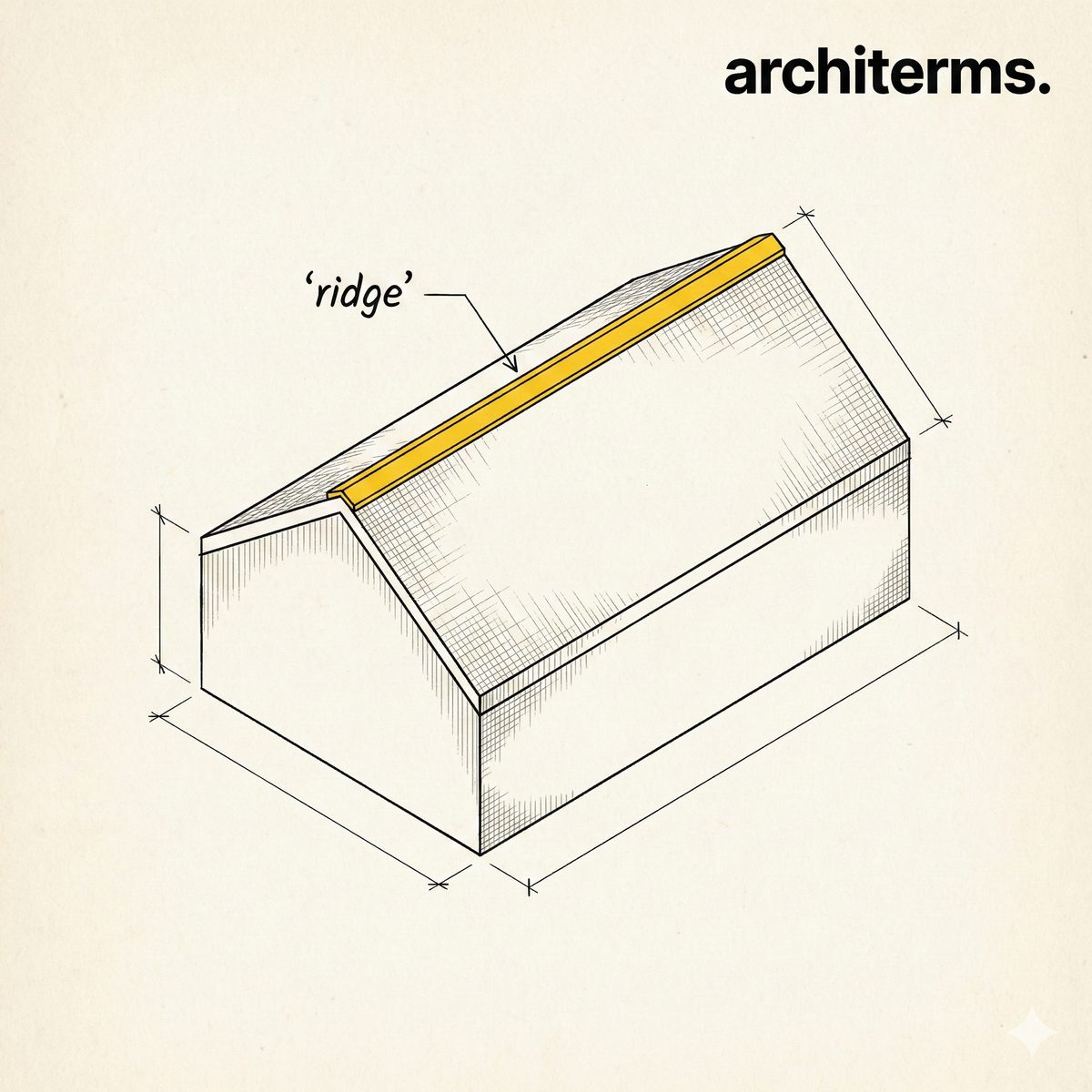
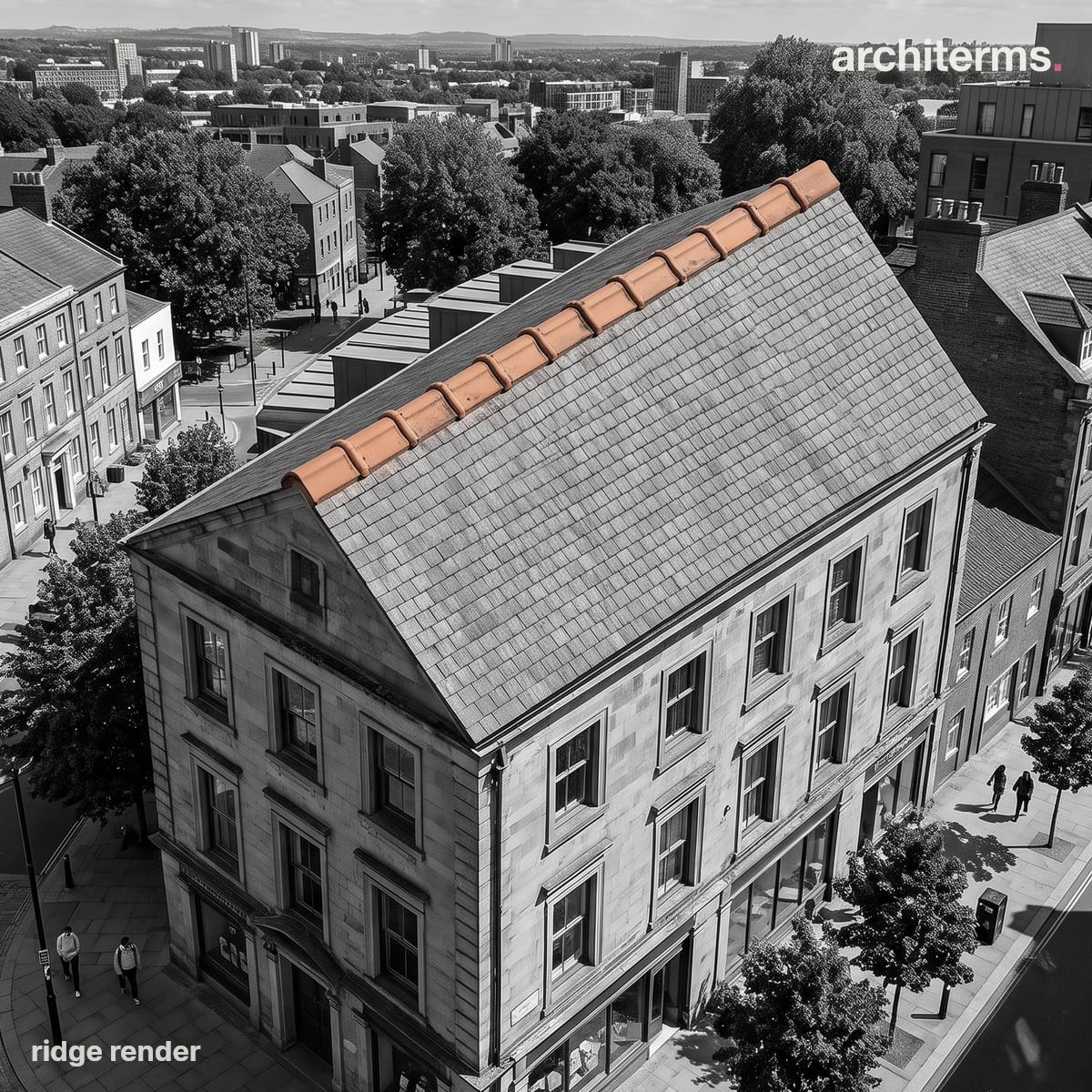
The ridge is the horizontal line where two roof slopes meet at the top. Here a run of half-round ridge tiles seals that join, shedding water off both planes and weatherproofing the most exposed edge of the roof.
Visualized with Reviz.Design — AI rendering for architects and interior designers
Definition
The ridge is the highest point of a pitched roof — the long horizontal line where two sloping roof planes rise up and meet. It runs like a spine along the top of the building and sets the roof's overall height and direction. Almost every gable roof or hip roof has at least one ridge, and the way that ridge is framed and finished shapes how the roof sheds water and how the space below breathes.
Structurally, the ridge is where opposing rafters meet and brace against one another. In traditional framing they bear on a ridge board; in open or vaulted ceilings they bear on a structural ridge beam that actively carries load down to posts or walls. Either way, the ridge of a roof is a critical line: it locks the two slopes together and is the last place water can sneak in, so it is always capped and sealed.
A ridge is the horizontal intersection at the apex of a sloped roof, formed where two roof planes meet at their highest edge. It runs parallel to the eaves and defines the peak of the roof. On the outside it is closed with a ridge cap — shingles, tiles, or a metal profile — and it is frequently fitted with a ridge vent so warm, moist air can escape the roof space while the eaves draw cool air in.
Ridge History
The ridge is as old as the pitched roof itself. Early timber buildings used a heavy ridge pole carried on forked posts or gable walls, with rafters leaning against it — a logic still visible in vernacular barns and cottages worldwide. As carpentry matured, the simple ridge board let pairs of rafters be cut and raised quickly, while the triangulated truss eventually removed the need for the ridge to carry much load at all. The decorative side has a long history too: glazed ridge tiles, iron cresting, and finials turned the roofline into an ornamental feature in Gothic, Victorian, and East Asian architecture.
Ridge in Architecture
The ridge does several jobs at once:
- —Sets the silhouette: the ridge line fixes the building's peak height and the direction the roof runs, which in turn drives the massing and proportion of the whole design.
- —Defines roof types: a single straight ridge usually reads as a gable roof; multiple ridges and hips that step down to the corners read as a hip roof; the ridge can also break, step, or meet a dormer.
- —Carries detail: ridge caps, ridge tiles, and cresting are where roofers weatherproof the peak and where designers add character.
Common confusion
- —Ridge vs. hip: a ridge is the horizontal line at the top where slopes meet going up; a hip is the sloping external angle where two roof planes meet going down to a corner.
- —Ridge vs. valley: the ridge is the high point that sheds water away from itself; a valley is the low internal angle that collects and channels water.
- —Ridge board vs. ridge beam: a ridge board is a non-structural spacer that rafters lean on (the rafters and ceiling ties do the work); a ridge beam is a true load-bearing member that supports the rafter ends.
Frequently Asked Questions
What is a ridge on a roof?
A ridge is the horizontal line at the top of a sloped roof where two roof planes meet at their highest edge. It runs along the peak of the building, parallel to the eaves, and is sealed on the outside with a ridge cap to keep water out.
What is the difference between a ridge board and a ridge beam?
A ridge board is a thin, non-structural member that simply gives paired rafters something to butt against, while the rafters and ceiling ties carry the load. A ridge beam is a structural member that actually supports the upper ends of the rafters, which is what lets a roof stay open below with no ceiling joists or ties.
What is a ridge vent and do I need one?
A ridge vent is a continuous opening along the ridge, hidden under the ridge cap, that lets warm, moist air escape from the roof space. Paired with soffit vents at the eaves it creates steady airflow that reduces condensation, summer heat build-up, and winter ice dams. Most modern pitched roofs benefit from one.
Does every roof have a ridge?
Most pitched roofs do, but not all. Gable and hip roofs have one or more ridges where slopes meet, while a single-slope (shed) roof or a flat roof has no ridge. A pyramid hip roof meets at a single point rather than a ridge line.
What is the difference between a ridge and a hip?
A ridge is the horizontal line at the very top of the roof where two slopes rise to meet. A hip is the inclined edge where two roof planes meet and slope down toward an outside corner. A hip roof has both: hips at its corners and a ridge along its top.