Purlin.
A purlin is a horizontal roof beam that runs parallel to the ridge and supports the rafters or the roof covering, spanning between trusses, frames, or walls. In plain terms: it is the lengthwise roof member that the roof rests on.
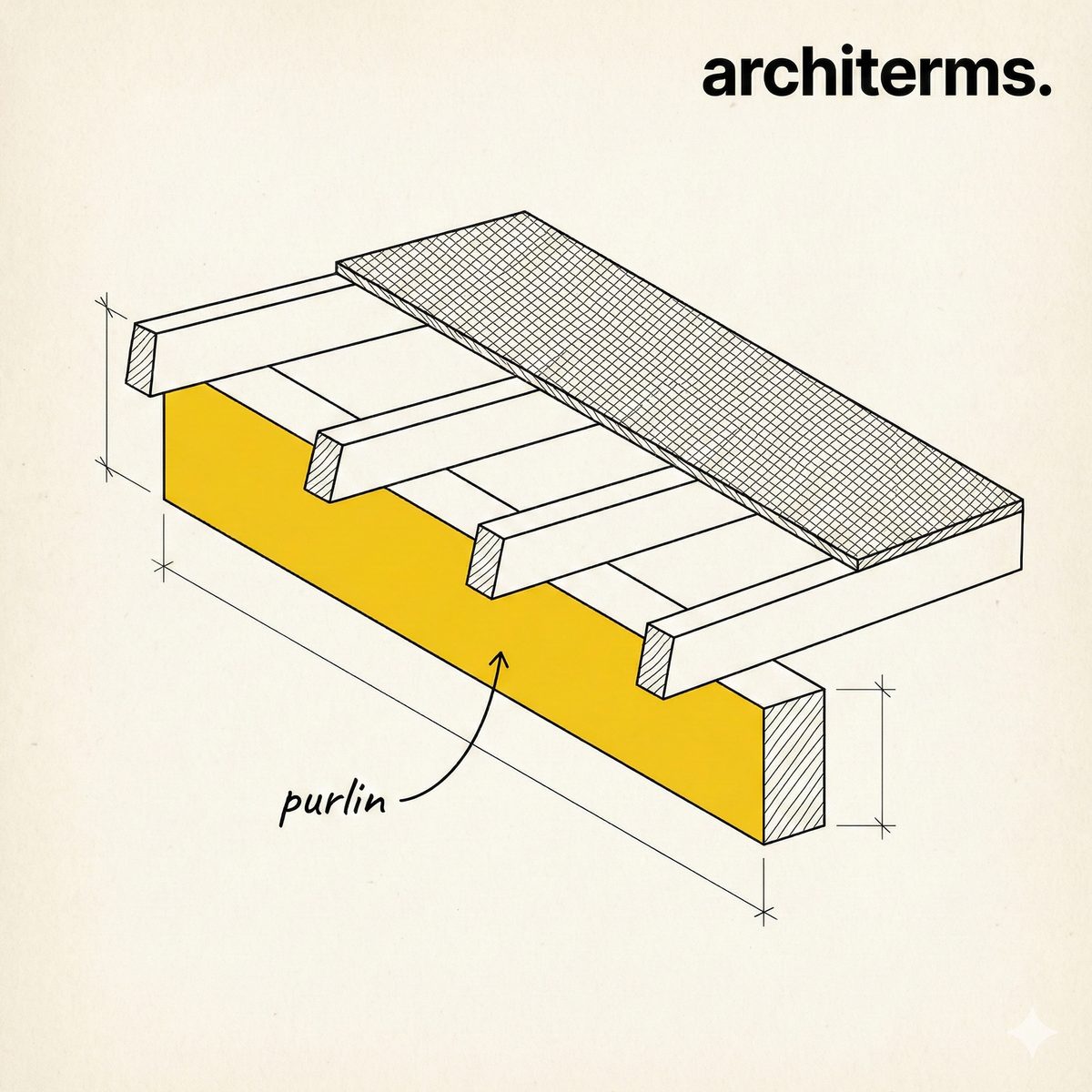
Definition
A purlin is a horizontal beam that runs the length of a roof, parallel to the ridge, and supports the load of the roof above it. In traditional timber roofs the purlins carry the rafters partway along their span; in modern steel and industrial roofs the purlins span directly between the main frames and carry the roof sheeting itself. Either way, a purlin is the lengthwise member that gathers the roof load and passes it to the building's primary structure.
Purlins exist to solve a span problem. Rafters or roof sheets can only reach so far before they sag, so purlins are introduced as intermediate supports running across them. By breaking a long roof slope into shorter spans, purlins let designers use lighter, shallower roof members over wide buildings—from a simple house roof to a vast warehouse.
A purlin is a horizontal structural member in a roof that runs parallel to the ridge and eaves and provides intermediate support to the rafters or directly to the roof covering. It spans horizontally between trusses, principal rafters, portal frames, or gable walls, transferring the roof load it collects into those primary supports. Purlins are made of timber or, very commonly in modern construction, cold-formed steel in C- or Z-shaped sections. Their size and spacing are set by the span of the roof material they carry and by the loads—wind, snow, and the roof's own weight—acting on the roof.
Purlin History
Purlins are a core part of traditional timber roof carpentry, which developed sophisticated systems for spanning ever-wider buildings without enormous single timbers. In historic roofs the distinction between a common-rafter roof and a purlin roof was fundamental: by adding purlins, carpenters could support the rafters at mid-span and so use smaller, more available timber over a wide hall, barn, or church. Purlins were carried on the principal rafters of trusses or on cross-frames, and their position—beneath the rafters or set between them—helped define regional building traditions. The industrial era transferred the same logic to steel: cold-formed Z- and C-section steel purlins became the standard secondary structure of portal-frame sheds, factories, and warehouses, spanning between steel frames to carry profiled metal cladding.
Purlin in Architecture
Purlins are usually hidden in the roof build-up, but they govern how a roof is structured:
- —Intermediate support: By propping rafters partway along their length, purlins allow longer roof slopes and shallower rafters than would otherwise be possible.
- —Carrying the covering: In steel and many timber roofs, purlins directly support the roof sheeting, battens, or boarding, setting the spacing the covering must span.
- —Bracing the roof: A line of purlins ties the trusses or frames together and helps stabilise them against wind and buckling.
- —Expressing structure: In exposed timber roofs, purlins running along the slope are a visible part of the roof's rhythm, adding scale and order to the ceiling overhead.
The spacing of purlins is a direct response to the strength of the roof covering: lightweight metal sheets can span widely between fewer purlins, while heavier or smaller units need them more closely set.
Common confusion
Purlin vs. rafter: Rafters run up the slope of the roof, from eaves to ridge; purlins run horizontally across the rafters, parallel to the ridge. The two are perpendicular, and the purlin supports the rafter (or the covering), not the other way around.
Purlin vs. ridge beam: A ridge beam sits at the very top of the roof where the two slopes meet; a purlin runs partway down the slope as an intermediate support. The ridge is a single line at the apex, while there can be several purlins on each slope.
Purlin vs. joist: Joists are closely spaced horizontal members that carry a floor or flat ceiling; purlins are roof members that run along the slope to support rafters or sheeting. Joists usually support a walking surface, purlins support the roof.
Purlin vs. batten: Battens are small strips fixed across rafters to carry tiles or slates; purlins are larger structural members that carry the rafters or the whole roof covering. A batten is a finishing support, a purlin is part of the roof's structure.
Frequently Asked Questions
What is a purlin in a roof?
A purlin is a horizontal roof beam that runs parallel to the ridge and provides intermediate support to the rafters or directly to the roof covering. It spans between trusses, frames, or walls and transfers the roof load into those primary supports, allowing longer roof slopes and lighter roof members.
What is the difference between a purlin and a rafter?
Rafters run up the slope of the roof from the eaves to the ridge, while purlins run horizontally across them, parallel to the ridge. The two are perpendicular, and the purlin supports the rafter at mid-span (or carries the roof sheeting), reducing how far the rafter has to span on its own.
What is the difference between a purlin and a joist?
A joist is a closely spaced horizontal member that carries a floor or flat ceiling, whereas a purlin is a roof member that runs along the slope to support rafters or roof sheeting. Joists generally support a walking surface; purlins support the roof covering and its loads.
What are purlins made of?
Traditionally purlins are made of timber, used in roof carpentry to support the rafters. In modern construction they are very commonly cold-formed steel in C- or Z-shaped sections, which span between portal frames to carry metal roof cladding in sheds, factories, and warehouses.
How far apart are purlins spaced?
Purlin spacing depends mainly on the roof covering they support and the loads on the roof. Lightweight profiled metal sheets can span widely, so purlins may be set a metre or more apart, while heavier coverings or smaller units need purlins more closely spaced. An engineer sets the exact spacing from the span tables for the chosen covering and the wind and snow loads.