Drywall.
Drywall is a factory-made panel used to build interior walls and ceilings, typically made of a gypsum core faced with paper. In drywall architecture, it's the standard fast way to create smooth partitions without wet plaster work.
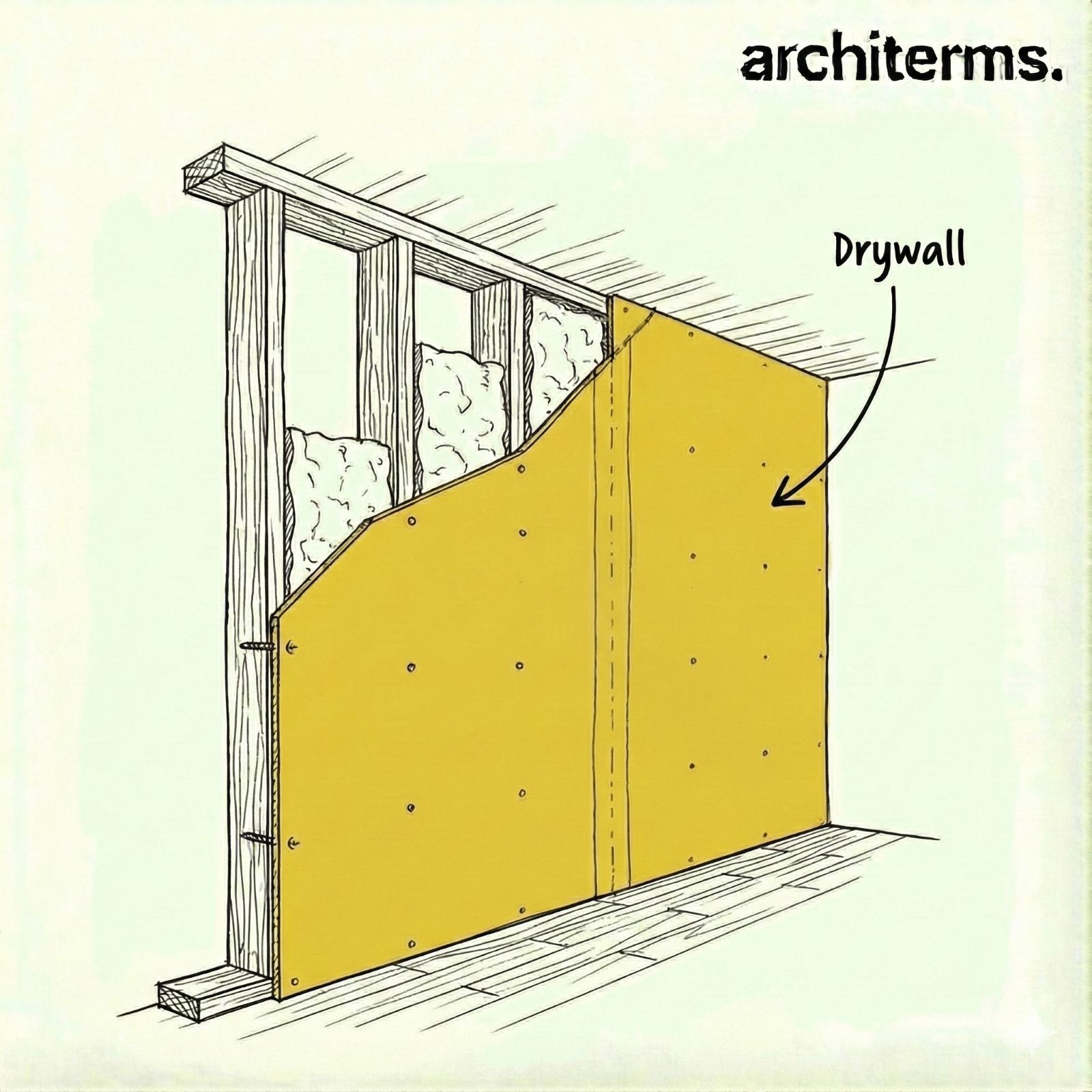
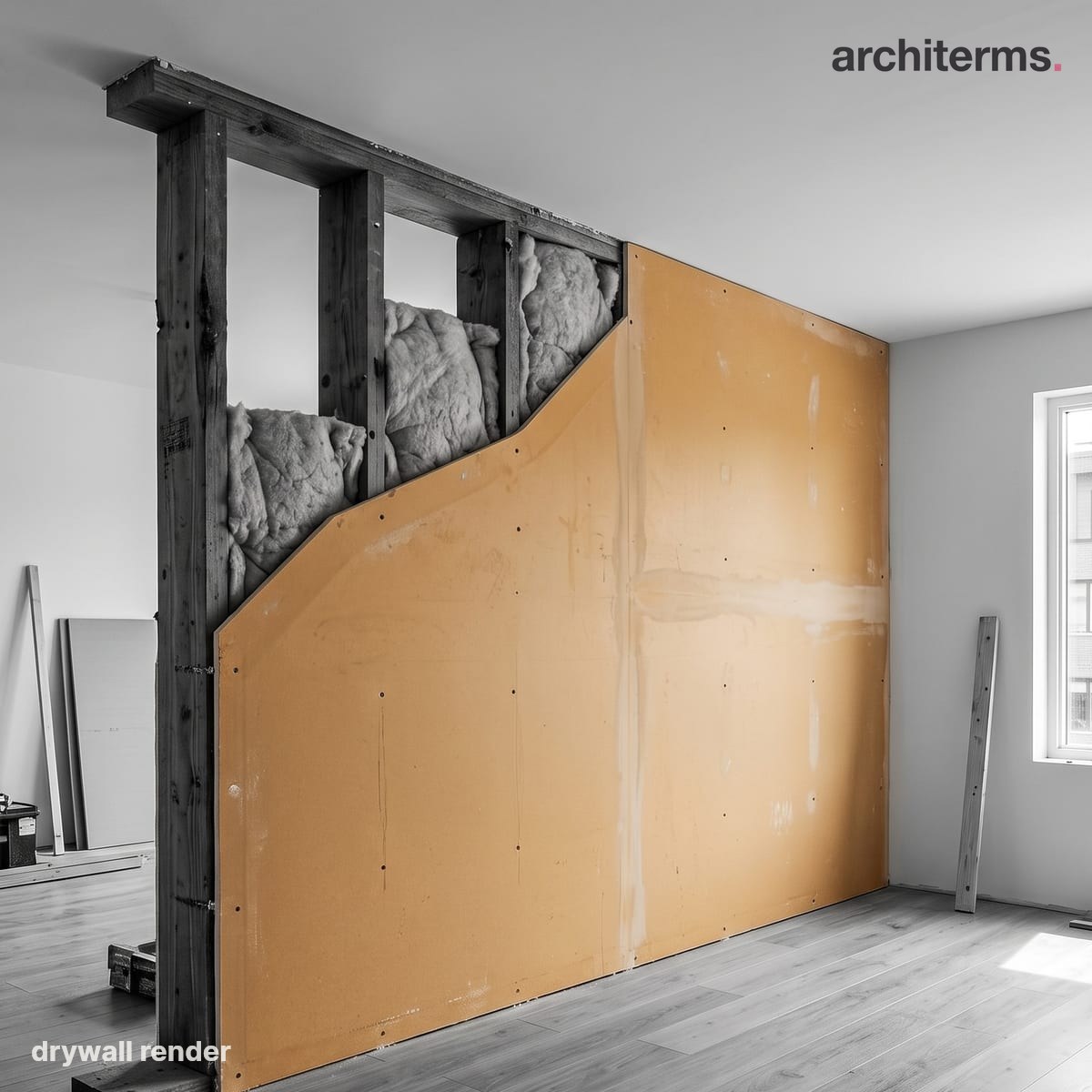
Drywall replaces wet plaster with a factory-made panel: sheets of paper-faced gypsum are screwed straight onto the studs, and only the joints need taping and filling, so a smooth partition goes up dry and fast.
Created with Reviz.Design — AI rendering for architects and interior designers
Definition (Drywall made of)
If you've ever knocked on an interior wall and it sounded hollow, you've probably met drywall. So, drywall made of what exactly? Most drywall panels are made of gypsum (calcium sulfate dihydrate) pressed into a core and wrapped with tough paper facings. The gypsum provides good fire performance, while the paper gives the panel tensile strength and a clean surface for finishing.
Drywall is installed as sheets on a framing system (typically wood studs or metal studs). The joints between boards are reinforced with tape and covered with joint compound, then sanded to create a continuous surface ready for paint, wallpaper, or other finishes. Compared to traditional plaster, drywall is faster, cleaner, and easier to repair or modify—which is why it dominates modern interior construction.
Drywall in architecture (why it's used)
Drywall is popular because it's practical:
- —Speed: no long curing time like wet plaster; interiors can be finished quickly
- —Cost: efficient labor and standardized materials
- —Flexibility: easy to cut openings, add services, or reconfigure partitions
- —Integration: wall cavities can hold insulation, electrical, and plumbing components
- —Performance options: fire-rated, moisture-resistant, and acoustic assemblies are widely available
Architecturally, drywall supports clean, minimal interiors—and it's the reason many modern buildings can change layouts over time without heavy demolition.
Drywall vs plasterboard (are they different?)
In most countries, drywall vs plasterboard is basically a naming issue: they're usually the same product.
- —Drywall is the common term in North America.
- —Plasterboard (and gypsum board) is common in the UK, Europe, and many other regions.
The key idea is the same: gypsum core + facing, installed in sheets, finished at joints.
Types of drywall (common variants)
Not all drywall is identical. Common types include:
- —Standard drywall (general interior use)
- —Moisture-resistant board (bathrooms, laundry rooms—used with proper waterproofing where needed)
- —Fire-rated drywall (used in rated wall/ceiling assemblies for code compliance)
- —Sound-rated systems (panels and assemblies designed to improve acoustic performance)
Common confusion
- —Drywall vs plaster: Plaster is applied wet in coats and cures; drywall is installed as panels and finished at joints.
- —Moisture-resistant board vs waterproofing: moisture-resistant drywall isn't a substitute for proper waterproofing in wet zones.