Dentil.
A dentil is a small, rectangular "tooth" block used in a repeated row within a classical cornice or molding. In plain terms: it’s the tight tooth-like pattern you see under many traditional cornices.
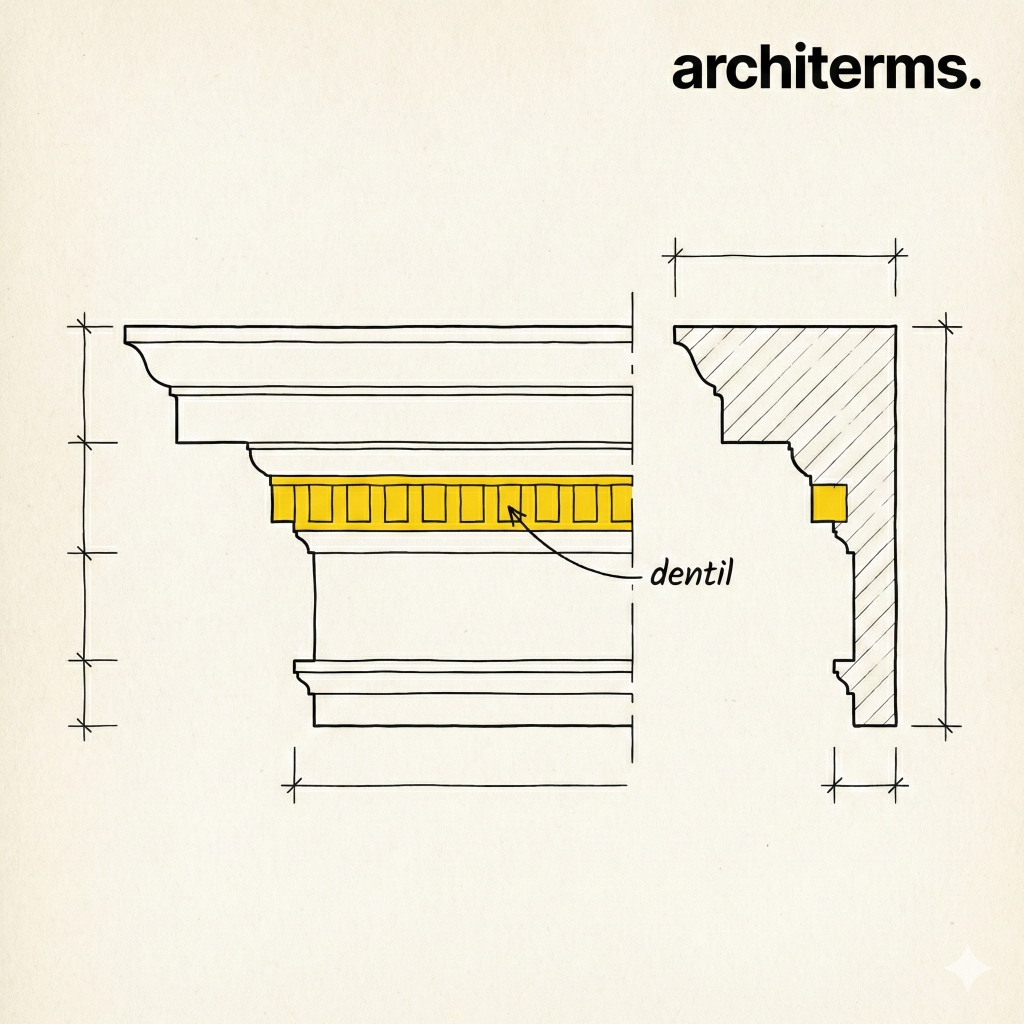
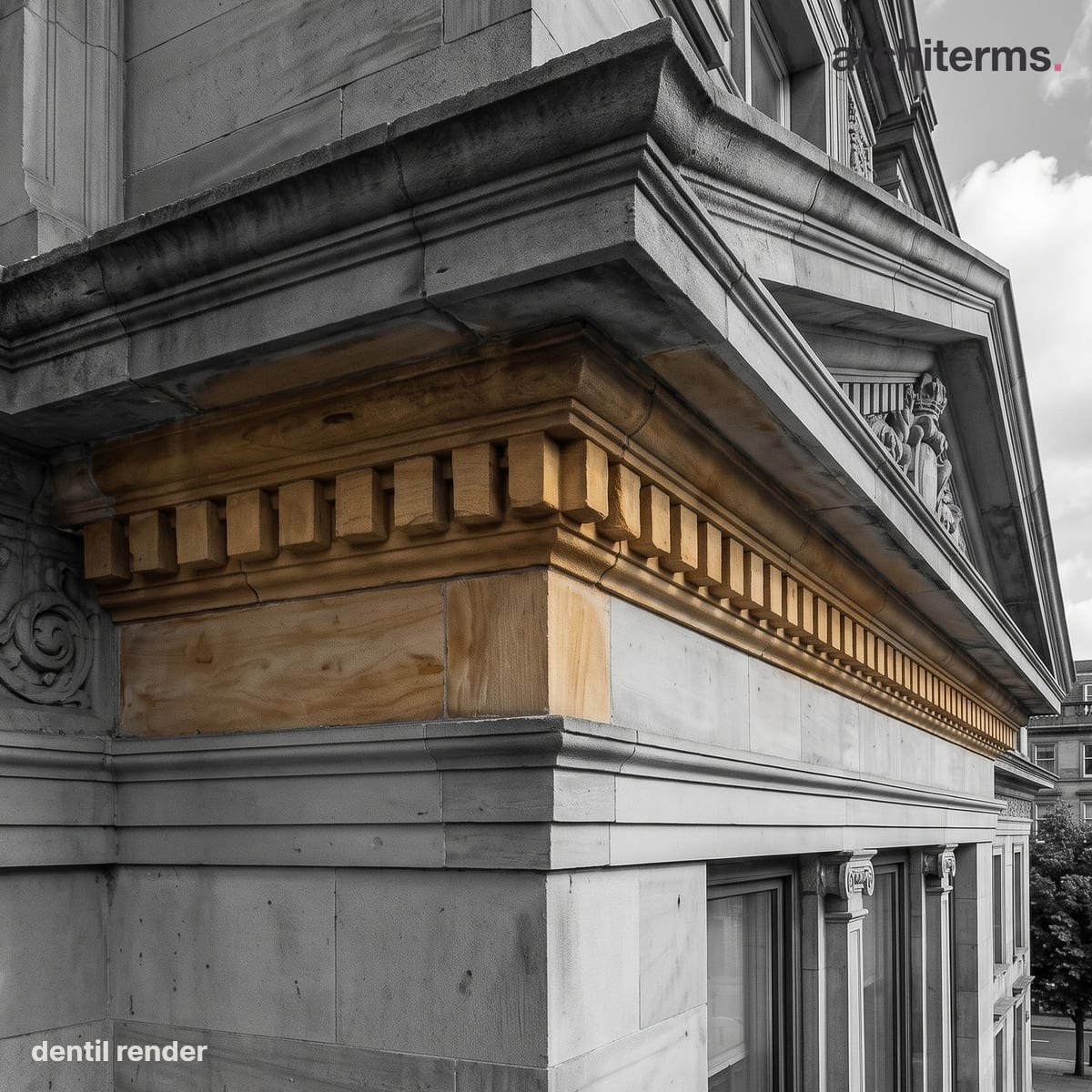
Dentils are small tooth-like blocks set in a closely spaced row beneath a cornice. Each is separated from the next by a narrow gap, and the repetition casts a fine line of shadow that reads as texture along the underside of the projecting moulding.
Made with Reviz.Design — AI visualization for architects and interior designers
Definition
A dentil is one of a series of small, tooth-like rectangular blocks set in a closely spaced row beneath a cornice. Repeated along the moulding, dentils add fine-grained light and shadow that give Classical and Neoclassical buildings their crisp, detailed finish.
A dentil is a small, square or rectangular block repeated in a tight rhythm—most commonly as a dentil course in a Cornice. The name comes from the Latin word for tooth, and that’s exactly how it reads: a row of evenly spaced “teeth” that creates a crisp shadow line and adds texture to the top edge of a Facade.
When people search dentil meaning, they’re usually looking for two things: where dentils sit in a profile, and how to tell them apart from bigger bracket elements like a Modillion.
Dentil molding (where it appears)
In classical and traditional detailing, dentils appear as a band within a cornice or trim profile—often below the main projecting cap. You’ll see dentil molding in:
- —exterior cornices (roofline and parapet terminations)
- —door and window trim (as a smaller “dentil band” within the surround)
- —interior crown moldings and traditional ceiling edges
Dentil molding exterior (weather + legibility)
On the exterior, dentil molding exterior details are mostly about legibility and shadow. Dentils are typically not structural; they’re a surface rhythm. But because they sit near the top of a wall, durability matters—materials and joints should handle water, UV, and movement without cracking or staining.
Dentil cornice (how it relates to the entablature)
In a classical Entablature, dentils belong to the cornice vocabulary—the “top band” that finishes the composition above the Frieze. Dentils can be used with other cornice elements (including Modillions) depending on the richness of the order and the desired scale of the rhythm.
Dentil trim (modern use)
In contemporary construction, dentil trim often shows up as:
- —manufactured profiles (wood/composite) for residential and light commercial work
- —cast plaster/gypsum for interiors
- —precast/GFRC for larger facades where lightweight assemblies mimic classical depth
The intent stays the same: a precise, repeated rhythm that makes the cornice edge feel detailed and “finished.”
Common confusion
- —Dentil vs modillion: dentils are small, closely spaced tooth blocks; a Modillion is a larger bracket-like block with deeper shadows and a bolder rhythm.
- —Dentil vs corbel: a corbel is a generic projecting support that can be structural and can appear in many locations. A dentil is a specific repeated tooth pattern within a molding/cornice.
- —Dentils vs "molding": “molding” is the overall profile; dentils are one band/feature inside that profile.
FAQ
Are dentils structural?
Usually no. They are primarily decorative and used to create rhythm and shadow. In most modern assemblies they are applied or cast as part of the trim.
Can dentils and modillions appear together?
Yes—some traditional cornice profiles use dentils as a finer band and modillions as the larger “support” rhythm, depending on the order and the level of ornament.