Modillion.
A modillion is a small bracket-like block used in a classical cornice, typically set in a repeated row beneath the projecting top edge. In plain terms: it’s the "tooth-like support block" you see under ornate cornices.
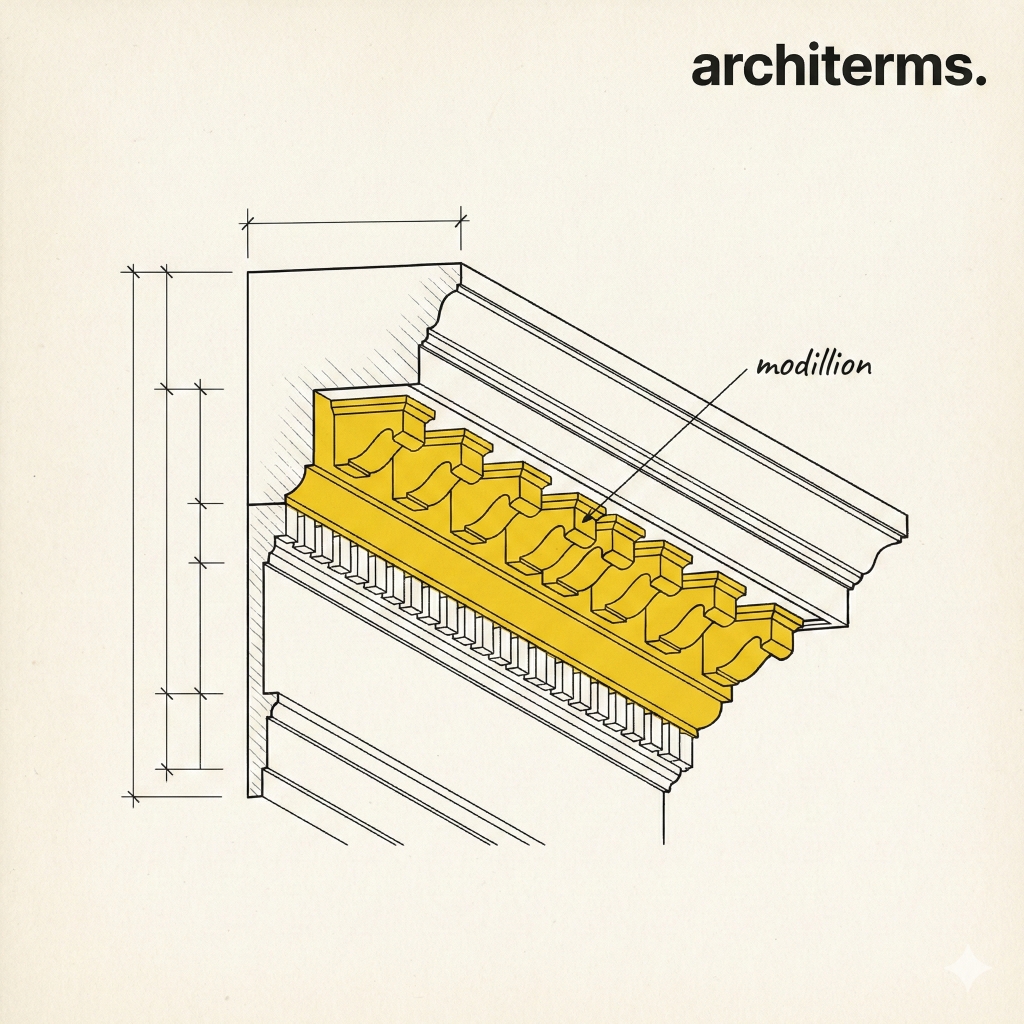
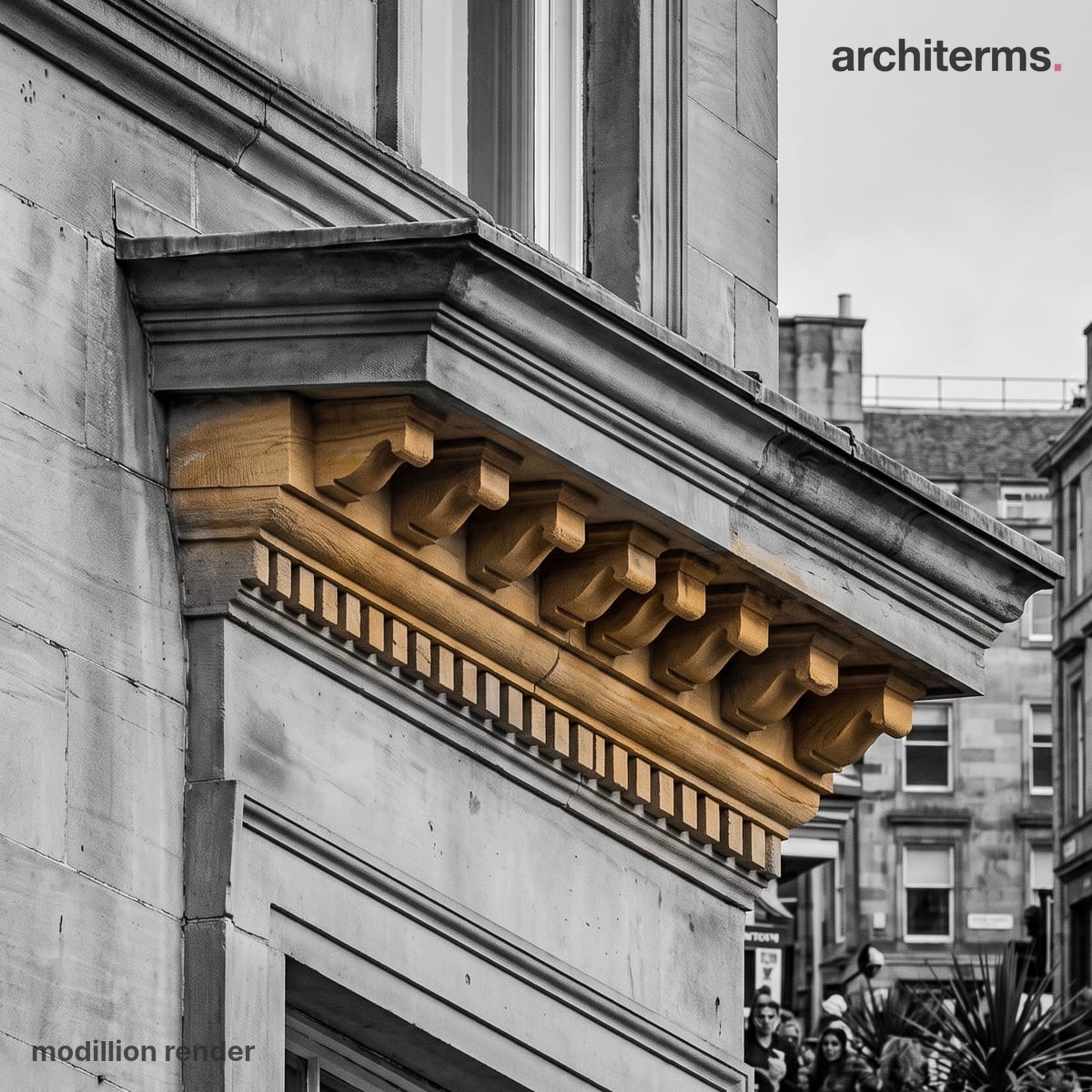
Modillions are the scrolled brackets set in a repeated row beneath the projecting edge of a classical cornice. Spaced evenly and often paired with a course of dentils below, they carry the overhang visually while adding rhythm to the underside.
Created with Reviz.Design — AI rendering for architects and interior designers
Definition
A modillion is one of a series of small, scroll-shaped brackets set in a row to support the underside of a projecting cornice. Drawn from the Corinthian and Composite orders, modillions give a cornice depth, rhythm, and a richly detailed shadow line.
A modillion is a decorative bracket—usually a small, carved block—placed in a repeating rhythm under a Cornice. In classical design, modillions sit on the underside of the cornice (often under a cyma or corona), creating a strong shadow pattern and making the roofline feel supported and richly detailed.
If you’re looking up modillion meaning, the simplest way to remember it is this: a modillion is a cornice bracket that’s repeated bay after bay. In many classical compositions, it reads as a “row of supports” that adds scale and texture to the top edge of a Facade.
Modillion cornice (where it appears)
Modillions are most associated with ornate classical cornices—especially in Corinthian and Composite contexts—where the entablature is layered and expressive. You’ll typically find modillions:
- —at the top edge of civic/institutional facades that borrow classical language
- —on residential cornices in traditional or revival styles
Because they live under an Entablature’s cornice, modillions are part of the “top band” vocabulary that makes classical elevations legible at a distance.
Modillion blocks (how they’re made today)
Historically, modillion blocks were carved from stone or wood. In contemporary construction they’re often cast or fabricated as part of a lightweight façade build-up:
- —precast / GFRC pieces attached to a subframe
- —molded plaster or gypsum for interior cornice detailing
- —timber or composite trims in residential work
Whether structural or not, the design intent stays the same: shadow, rhythm, and a sense of support under the cornice line.
Modillions vs dentils (quick comparison)
People often search modillions vs dentils because both create repetition in a cornice—but they read very differently:
- —Dentils are small, closely spaced “teeth” (fine grain, tight rhythm).
- —Modillions are larger bracket blocks (bold rhythm, deeper shadows).
In many traditional profiles, you may see dentils as a finer band, with modillions as the bigger “support” rhythm above or below, depending on the profile.
Common confusion (Modillion vs corbel)
- —Modillion vs corbel: a corbel is a projecting support element that can appear anywhere (and can be structural). A modillion is a specific *cornice* bracket used in a repeated row—more standardized in classical proportion systems.
- —Modillion vs dentil: dentils are small and tooth-like; modillions are larger bracket blocks.
- —Modillion vs bracket: “bracket” is generic; “modillion” is the classical cornice-specific bracket type.
FAQ
Are modillions structural?
In historic masonry and timber construction, they could support parts of the cornice build-up. In many modern facades, modillions are primarily decorative and attached as cladding elements.
Where do modillions sit in a classical entablature?
They appear under the Cornice (the top part of the Entablature), typically beneath the projecting edge that throws the main shadow line.