Frieze.
A frieze is the horizontal band of a façade or interior wall—often decorative—typically located between the architrave and the cornice in Classical architecture. In plain terms: it's the "story strip" that runs across a building.
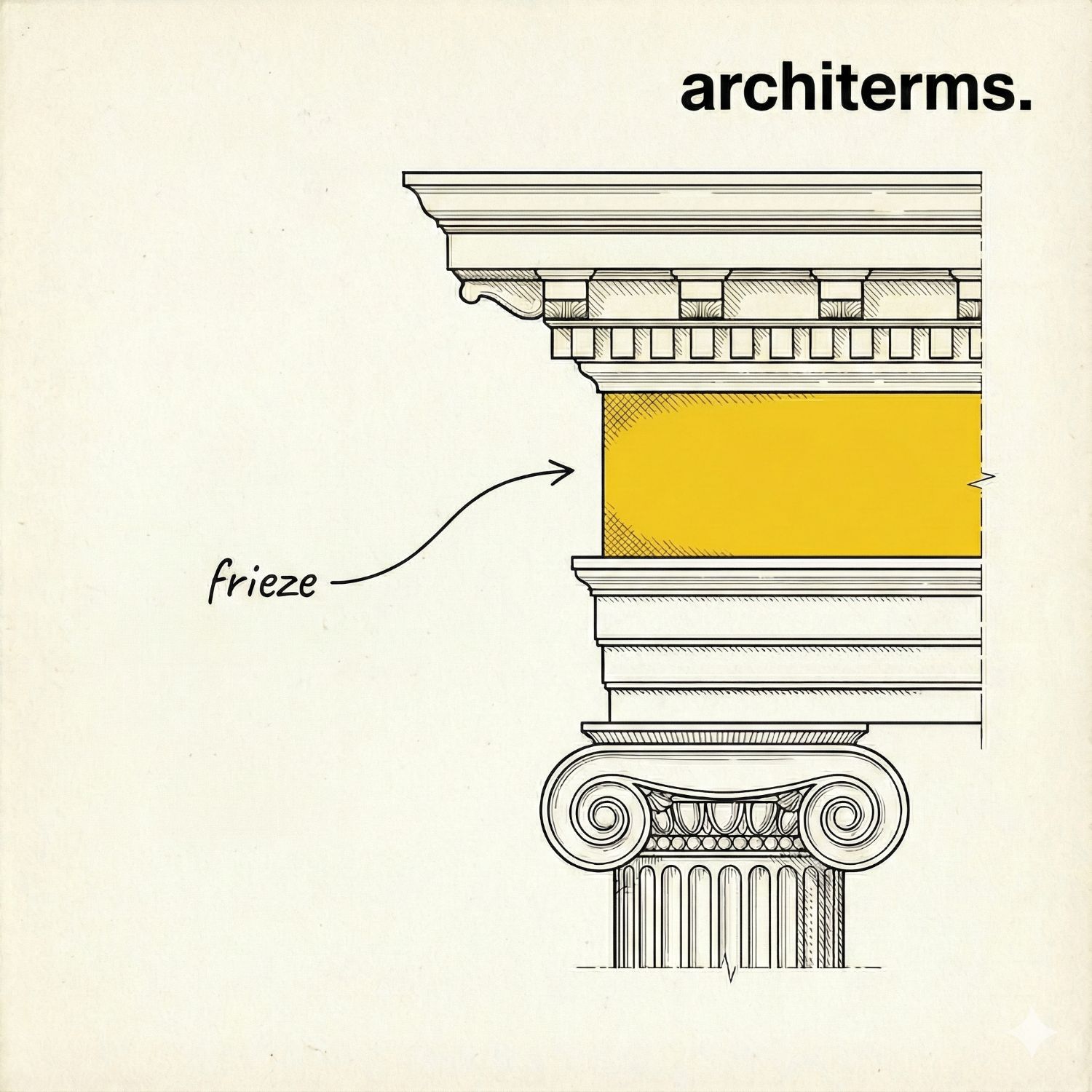
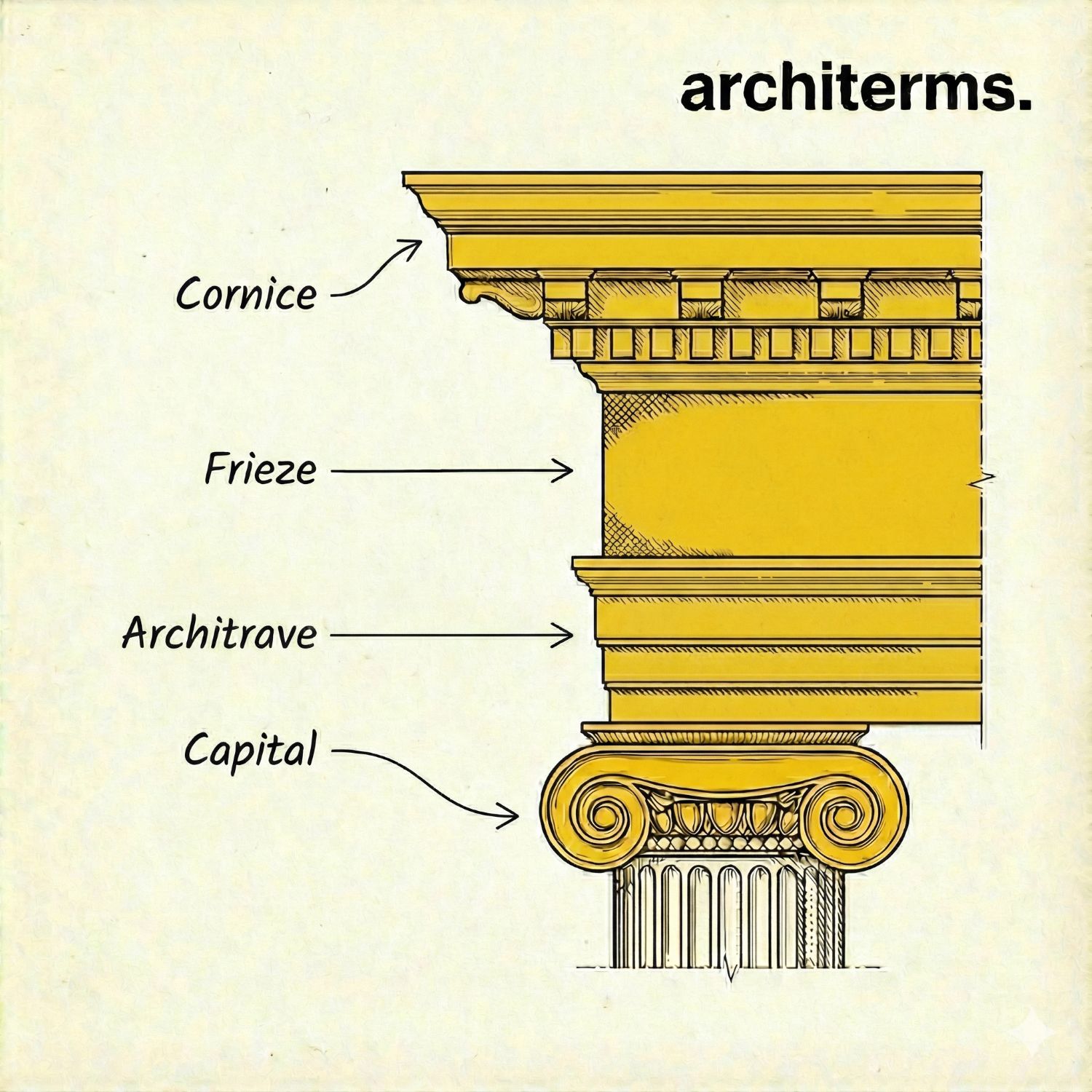
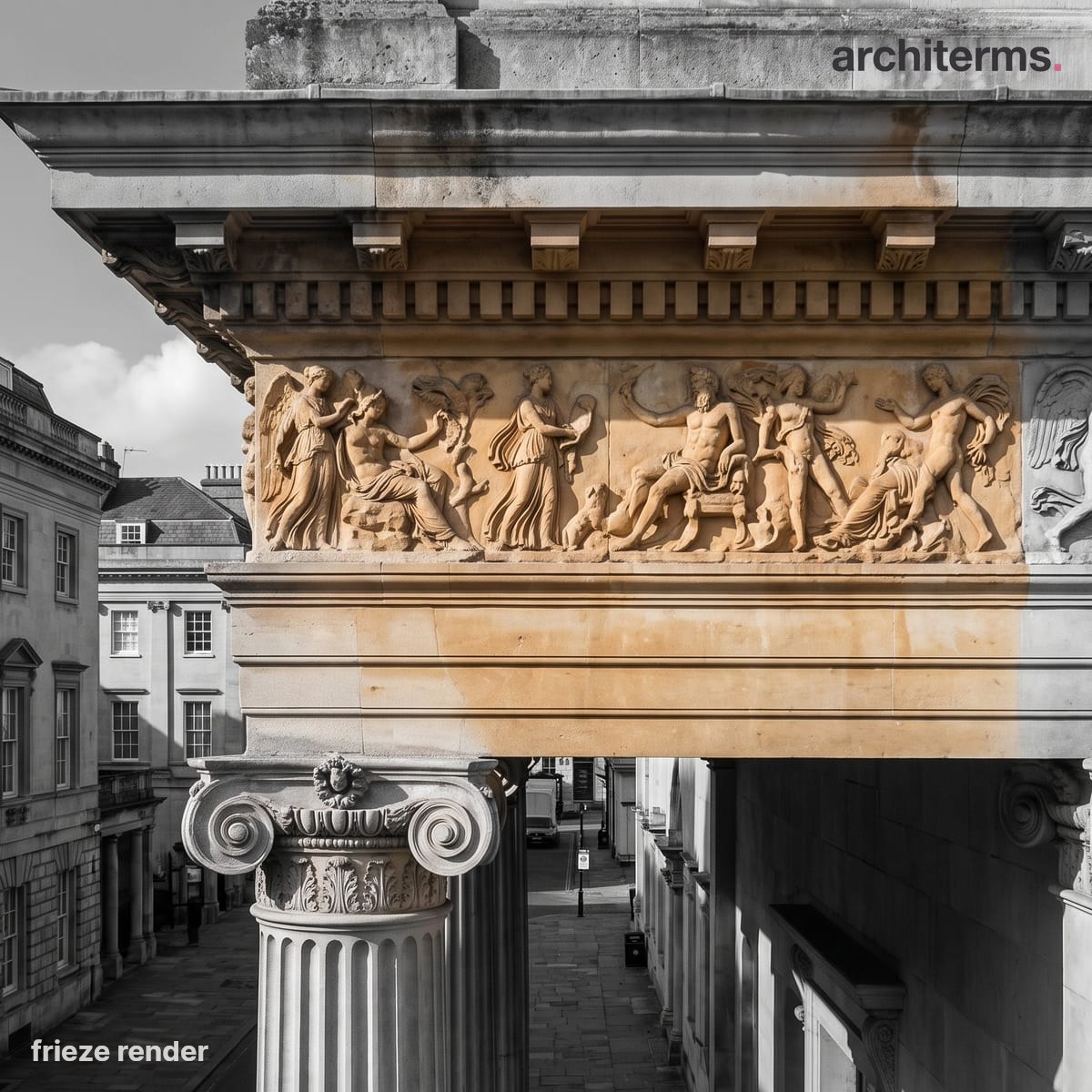
The frieze is the middle band of the entablature, running horizontally between the architrave and the cornice. Its continuous surface invites carving or relief, turning a structural course into the facade's decorative story strip.
Created with Reviz.Design — AI rendering for architects and interior designers
Definition
In frieze architecture, the frieze is most famously part of the entablature (the horizontal assembly that sits on columns). If you stack it from bottom to top, it's usually:
architrave → frieze → cornice
The frieze can be plain (a smooth band that reinforces the horizontal line of the building) or ornamented with relief sculpture, inscriptions, patterns, or repeated motifs. That's why people often associate the frieze with "artwork" rather than structure—because it's one of the main places where architecture historically displayed narrative and symbolism.
A frieze is usually non-structural. It's a surface zone, not a beam. But it matters a lot visually: it controls proportion, gives the façade a readable "middle layer," and can tie multiple bays together into one continuous composition.
Frieze in Greek architecture
If you're asking what is a frieze in Greek architecture, the answer depends on the order:
Doric order: the frieze is divided into triglyphs (the vertical grooved blocks) and metopes (the panels between them, often carved). This is one of the clearest "textbook" identifiers of Doric.
Ionic and Corinthian orders: the frieze is typically a continuous band, often carved with a running relief. This is where you get those long processions of figures and flowing narratives people think of as "classical frieze artwork."
So, Greek friezes are not just decoration—they're also a key visual code for identifying the architectural order.
History
A quick frieze architecture history timeline looks like this:
Ancient Greece: friezes become a major architectural surface for symbolic and civic storytelling—especially on temples.
Ancient Rome: similar language continues, with more variation and more frequent use of inscriptions and imperial imagery.
Renaissance to Neoclassical: friezes return as part of revived Classical proportions—sometimes sculpted, sometimes simplified.
19th–20th century: the "frieze band" concept survives even when ornament disappears—modern buildings still use horizontal bands to scale and organize façades, just with fewer carvings.
In other words: the frieze shifts over time from carved narrative to a more abstract "middle stripe," but the role—organizing the elevation—stays consistent.
Architecture examples
When people search frieze architecture examples, they usually mean one of these situations:
Temple entablatures: continuous sculpted bands (common in Ionic/Corinthian contexts) or triglyph–metope compositions (Doric).
Civic and institutional buildings: courts, museums, and libraries often use friezes for inscriptions, emblems, or symbolic reliefs.
Interior friezes: a decorative band running near the ceiling line in halls, staircases, or formal rooms—sometimes painted, sometimes plasterwork.
Contemporary "frieze bands": modern façades may use a frieze-like horizontal strip for signage, patterning, ventilation grilles, or material transitions.
Frieze architecture artwork
A frieze is basically architecture's most convenient canvas: it's long, readable from a distance, and positioned at an eye-catching height. That's why frieze architecture artwork is often:
Relief sculpture (figures, processions, battles, myths)
Ornamental patterns (meanders/Greek key, acanthus, rosettes)
Inscriptions (dedications, dates, civic names)
Symbolic emblems (crests, wreaths, shields)
For architecture students, it's worth noting: the frieze's "art" is never random—its scale, rhythm, and placement are designed to match the building's proportion system.
Common confusion
Frieze vs. cornice: A cornice is the projecting top cap that throws a shadow and finishes the edge. A frieze is the band below it—usually flatter and often the main decorative strip.
Frieze vs. architrave: The architrave is the lowest part of the entablature (directly above the columns). The frieze sits above the architrave and often carries ornament or narrative.
Frieze vs. mural/band painting: A mural can be anywhere. A frieze is specifically a horizontal band zone tied to architectural proportion and placement.