Parapet.
A parapet is a low protective wall along the edge of a roof, balcony, or bridge. In parapet architecture, it's both a safety feature and a clean way to finish a building edge—often hiding roof build-up or equipment behind it.
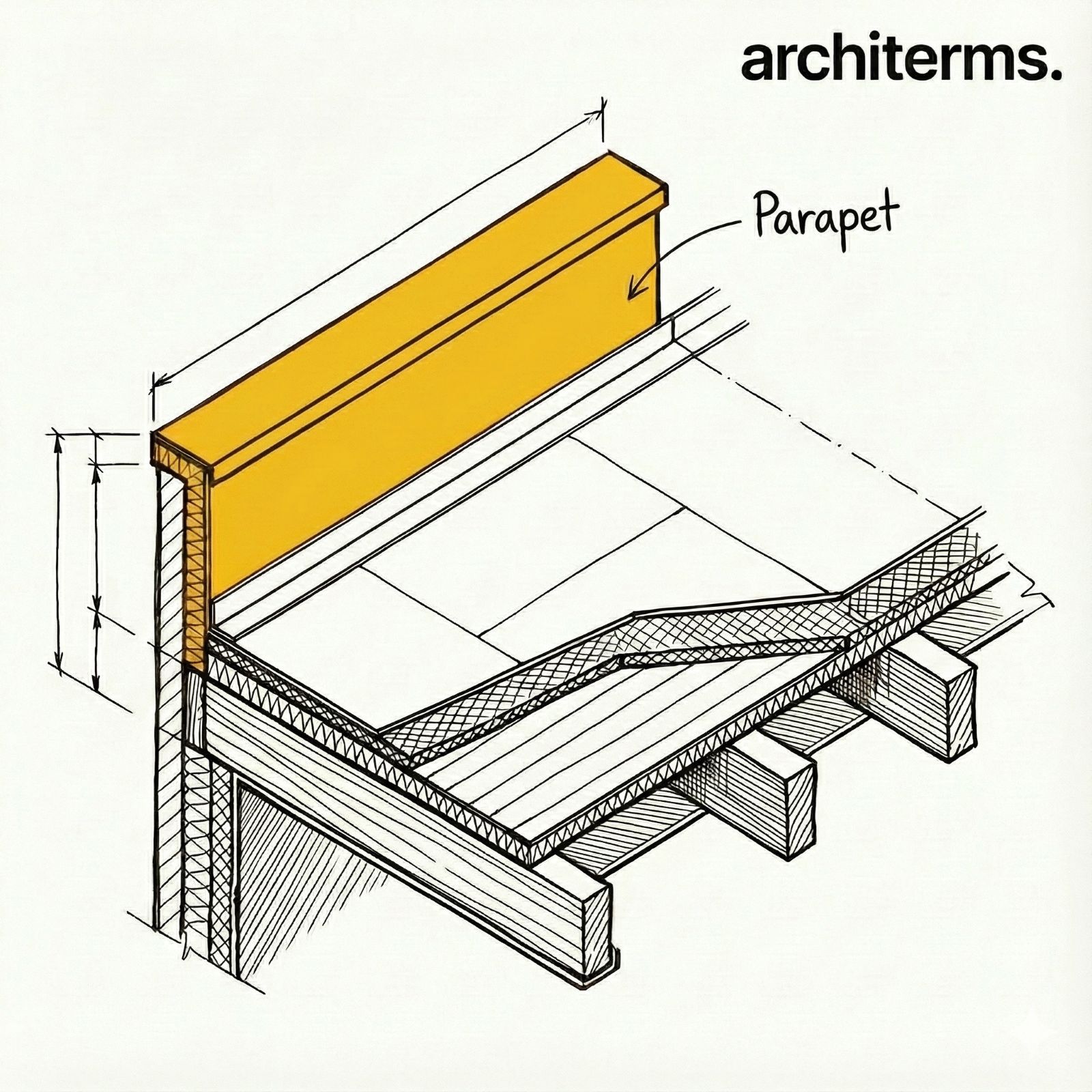
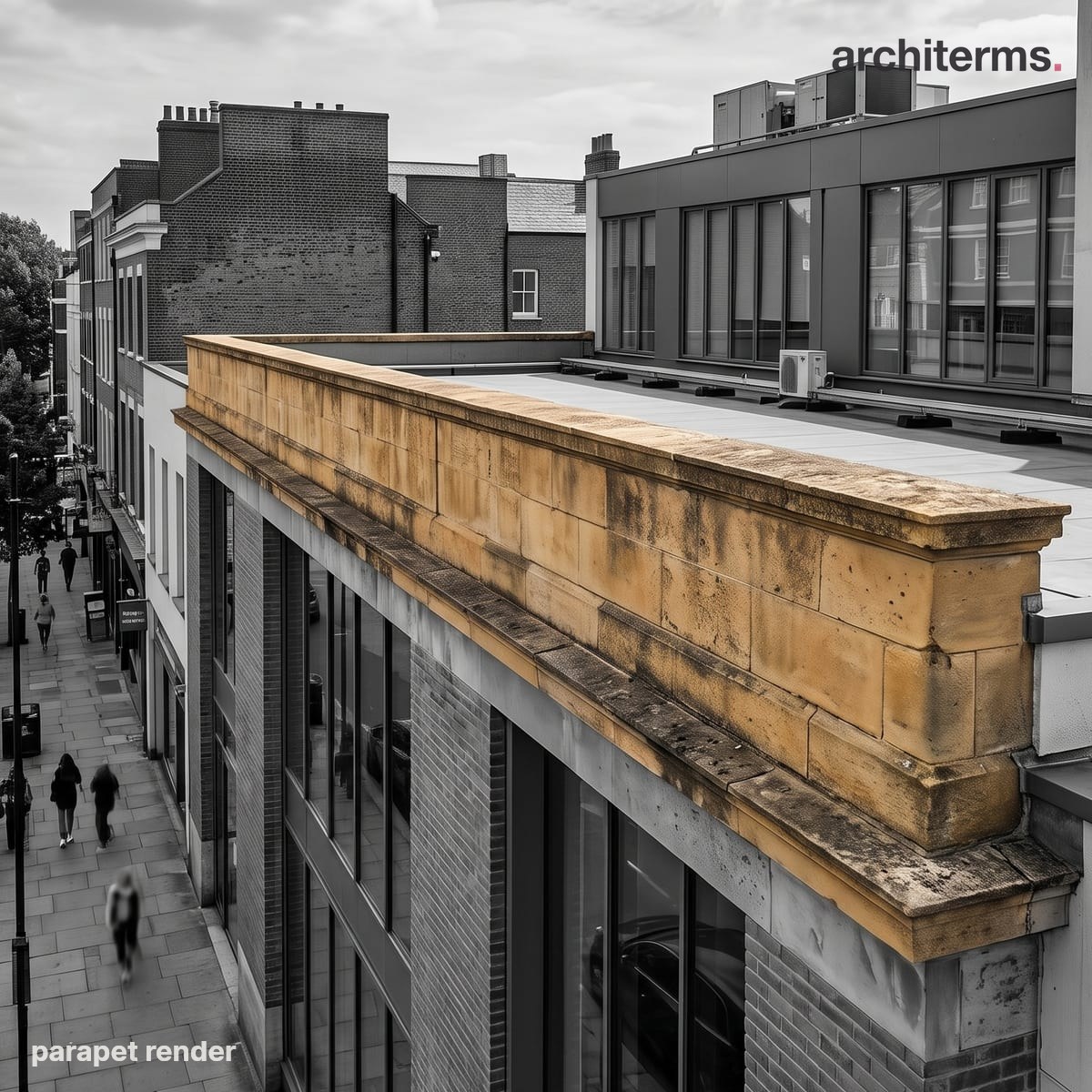
A parapet is a low wall carried up past the roof line at the building's edge. Here it screens the flat roof and its plant from the street below while giving the facade a clean, finished top and a guarded edge.
Visualized with Reviz.Design — AI rendering for architects and interior designers
Definition (Parapet architecture / parapet roof)
A parapet is the part of a building that says, "this edge matters." On flat roofs and terraces, it creates a safe boundary and helps protect the roof edge from wind and weather. On facades, it can also shape the building's silhouette—sometimes making a simple roofline look sharper and more intentional.
On a parapet roof (especially a flat roof), the parapet sits above the roof surface and the waterproofing must turn up the parapet before it's terminated and protected. That's why parapets are closely tied to roof detailing: if the waterproofing, flashing, and coping aren't done right, the parapet becomes a common source of leaks.
Parapet wall design (what it needs to do)
Good parapet wall design is a mix of safety, weather performance, and clean detailing. A parapet may be designed to:
- —Provide fall protection at roof or terrace edges
- —Shield the roof edge from wind uplift and weather exposure
- —Conceal roof slopes, insulation build-up, gutters, or mechanical units
- —Improve fire safety in some contexts by helping reduce flame spread at roof edges (requirements vary by code)
Because parapets sit at the most exposed edge of a building, the small details matter a lot more than people expect.
Construction details (where parapets fail if you're not careful)
Parapets usually fail in boring ways—water. The most important technical pieces are:
- —Coping: the protective cap on top of the parapet (often metal or stone)
- —Flashing: the weatherproof transition at joints and terminations
- —Membrane upturn: roof waterproofing must rise up the parapet before it ends
- —Drainage strategy: water must be directed away from the parapet edge
If those parts are missing or poorly executed, parapets can trap moisture, cause staining on facades, and create persistent leak points at the roof perimeter.