Fenestration.
Fenestration is the arrangement, proportioning, and design of windows and other openings in a building's facade, governing how light, views, and ventilation enter and how the elevation looks.
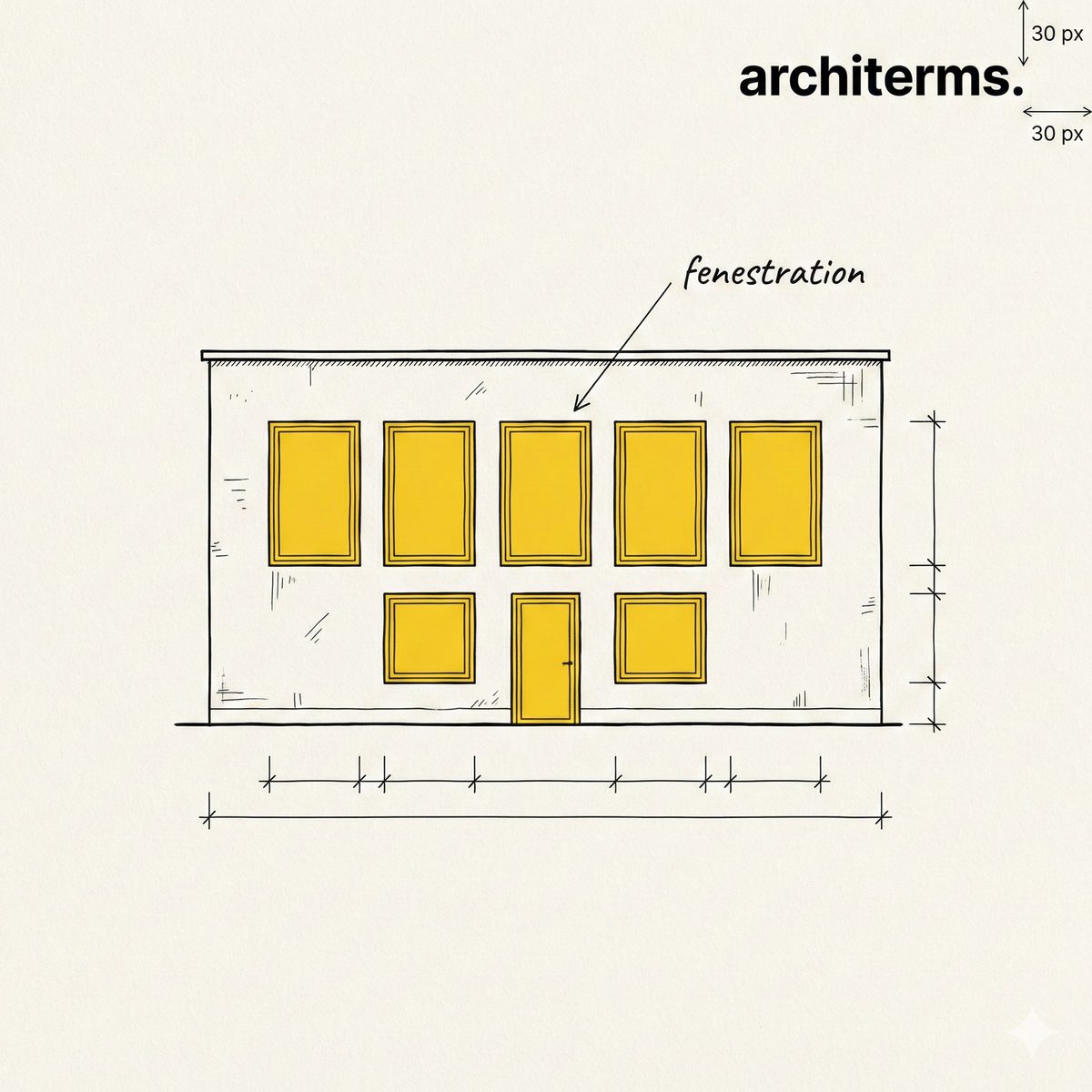
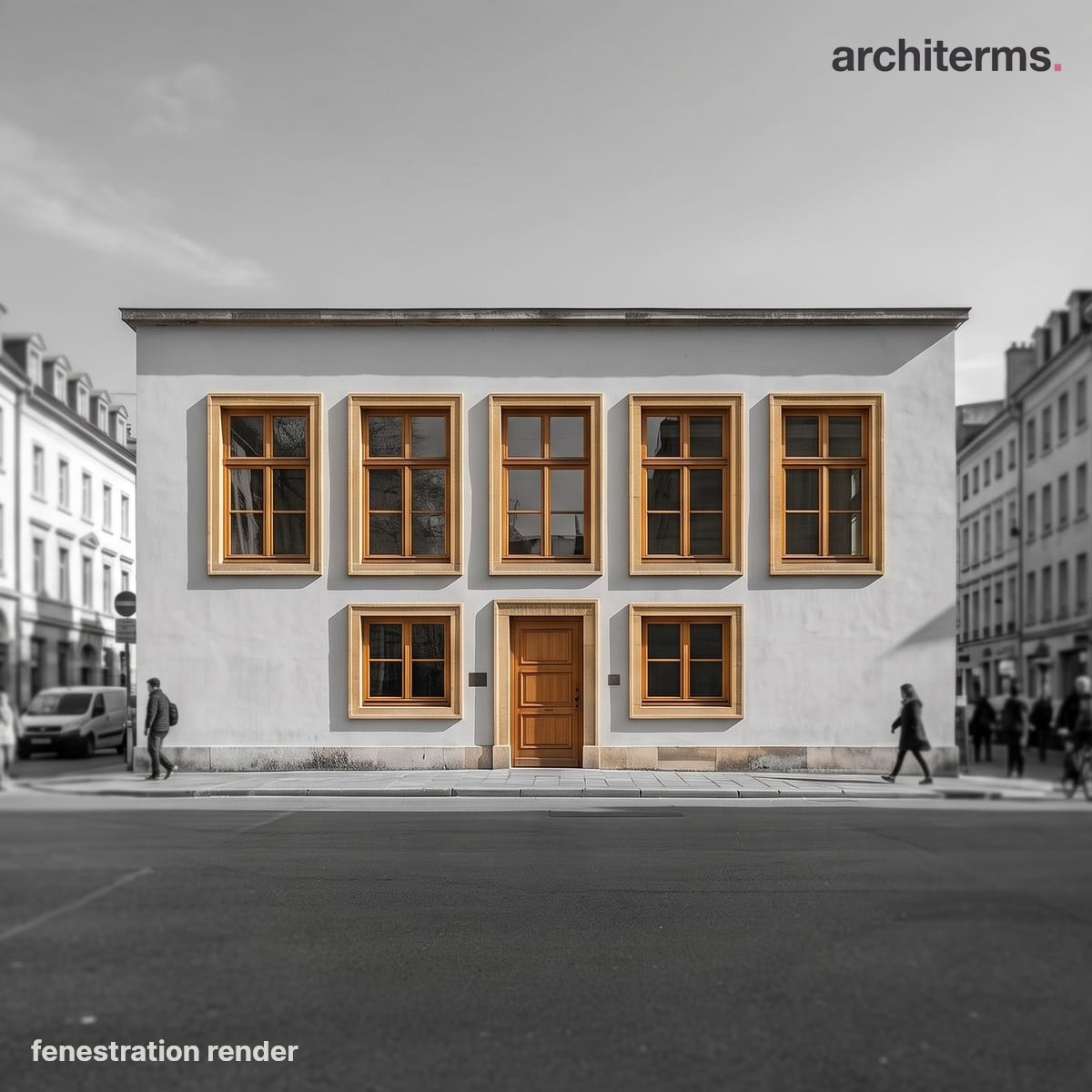
Fenestration is the overall pattern of openings across an elevation: window size, spacing, and alignment are worked out together so the facade reads as an ordered composition while admitting daylight, air, and views.
Visualized with Reviz.Design — AI rendering for architects and interior designers
Definition
Fenestration is the architect's word for how a building is opened up to the world. It covers the placement, size, shape, and pattern of all the windows, doors, and other openings in a wall, and it is one of the most powerful tools a designer has for shaping both the appearance of a facade and the experience of the spaces inside. Get the fenestration right and a building feels balanced, light, and alive; get it wrong and even a well-built structure can look awkward or feel gloomy.
The word comes from the Latin for window, but fenestration means far more than just the windows themselves. It describes the whole composition of openings across an elevation—their rhythm, proportion, and relationship to the solid wall around them. This balance of solid and void is at the heart of how a facade reads and how daylight, views, and fresh air reach the rooms behind it.
Fenestration is the design and arrangement of openings—principally windows, but also doors, skylights, and louvres—within the walls and roof of a building. As a concept it embraces the size, proportion, position, spacing, and detailing of these openings, and the way they are grouped into a coherent pattern across a facade. Fenestration governs the entry of daylight, the framing of views, and natural ventilation, while also being a primary determinant of how an elevation looks and how the building performs in terms of energy and comfort.
Fenestration History
For most of history, fenestration was constrained by structure: in load-bearing masonry walls, every opening weakened the wall and had to be spanned by a lintel or an arch, so windows were necessarily limited in size and carefully spaced. The regular grids of windows on classical and Georgian facades express this discipline, where proportion and rhythm were guided by strict rules of composition.
The arrival of the steel and reinforced-concrete frame transformed fenestration. Once the structure was carried by an internal frame rather than the outer wall, the facade could be opened up almost without limit, leading to the ribbon windows and glass curtain walls of modern architecture. Today fenestration is shaped as much by environmental performance—daylighting, solar gain, glare, and insulation—as by composition, and high-performance glazing lets designers balance large openings against energy efficiency.
Fenestration in Architecture
Fenestration influences a building on several levels:
- —Daylight and views: The size and position of openings determine how much natural light reaches the interior and what views the occupants enjoy.
- —Facade composition: The rhythm, proportion, and grouping of windows are central to how an elevation looks, balancing solid wall against open glazing.
- —Ventilation and comfort: Openable windows and louvres allow natural ventilation, while the area of glazing affects heat gain, heat loss, and glare.
- —Energy performance: Modern fenestration must balance generous daylight against the thermal performance of the glazing, often using shading devices such as a brise-soleil to control solar gain.
Because fenestration is where structure, environment, and appearance meet, it is one of the defining decisions in designing a facade. The pattern of openings is usually worked out on the elevation drawing, where the architect tunes the proportions and rhythm until the solid and the void are in balance.
Common confusion
Fenestration vs. window: A window is a single opening with its glazing and frame, while fenestration is the overall arrangement and design of all the openings across a facade—the pattern rather than the individual unit.
Fenestration vs. facade: The facade is the entire face of a building, including solid wall, openings, and ornament; fenestration refers specifically to the openings within that facade and how they are arranged.
Fenestration vs. curtain wall: A curtain wall is a non-load-bearing glazed outer skin hung from the structure, which is one particular system for achieving fenestration; fenestration is the broader idea of how any wall is opened up, whether by individual windows or continuous glazing.
Fenestration vs. glazing: Glazing is the glass itself and its performance, whereas fenestration is the architectural arrangement of the openings that the glazing fills.
Frequently Asked Questions
What is fenestration in architecture?
Fenestration is the arrangement and design of openings—principally windows, but also doors, skylights, and louvres—in a building's walls and roof. It covers their size, proportion, position, and pattern, and it governs daylight, views, and ventilation as well as how the facade looks.
What is the difference between fenestration and a window?
A window is a single opening with its frame and glazing, while fenestration is the overall composition of all the openings across a facade. Fenestration is about the pattern, rhythm, and proportion of the openings as a whole, not just one individual unit.
Why is fenestration important?
Fenestration controls how much daylight, view, and natural ventilation a building gets, and it is one of the main drivers of how a facade looks. It also strongly affects energy performance, because the area and quality of glazing influence heat gain, heat loss, and glare.
What is the difference between fenestration and a facade?
The facade is the entire face of a building, including the solid wall, the openings, and any ornament. Fenestration refers specifically to the openings within that facade and the way they are sized, proportioned, and arranged.
What affects good fenestration design?
Good fenestration balances daylight, views, and ventilation against energy performance and facade composition. Designers consider the proportion and rhythm of openings, orientation and solar gain, shading devices, and the structural system, since a framed building allows far larger openings than a load-bearing wall.