Lintel.
A lintel is a horizontal structural member placed across the top of an opening such as a door or window, carrying the load of the wall above and transferring it to the supports on either side.
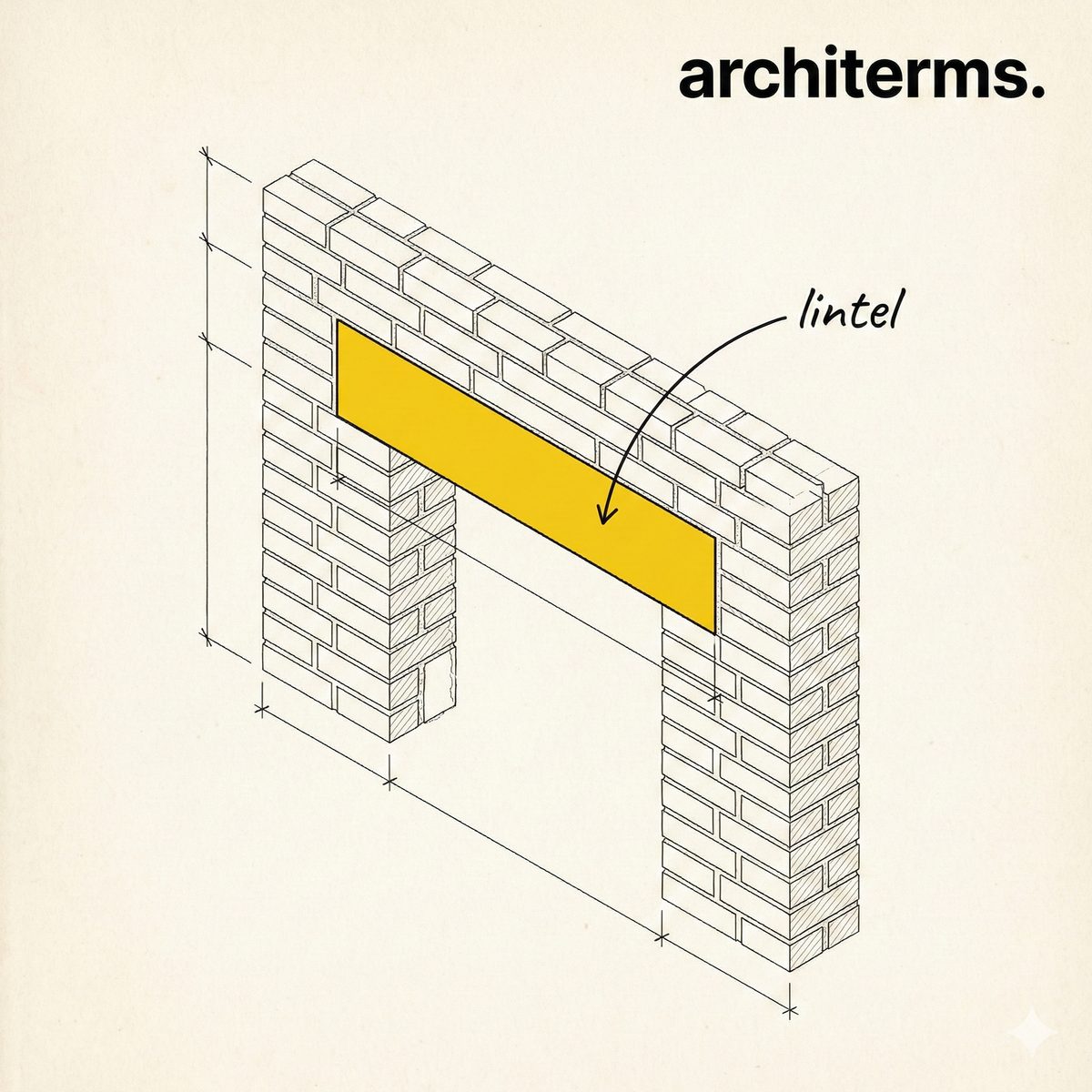
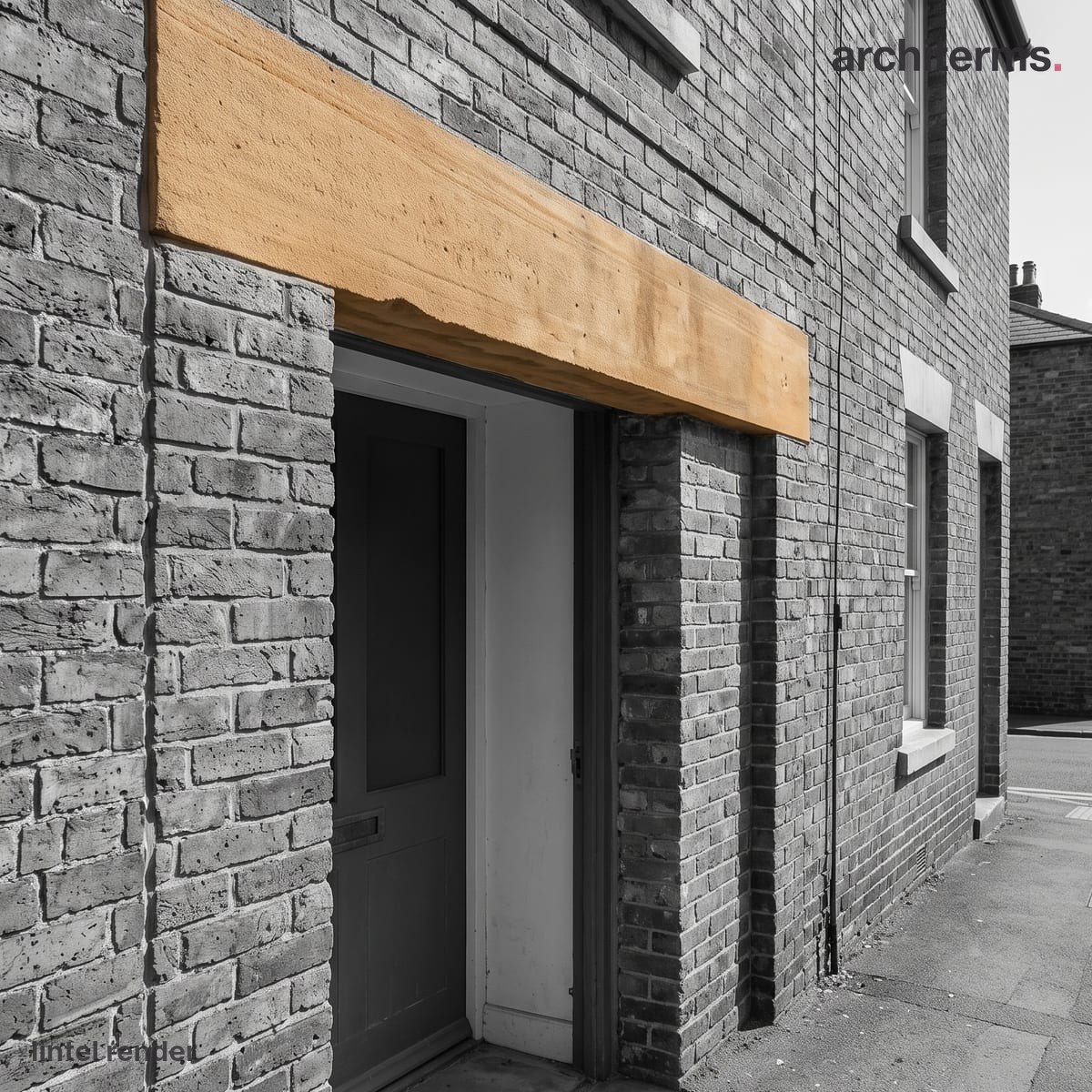
A lintel bridges the top of the doorway, carrying the courses of brickwork above and passing their weight down through the piers on either side. Unlike an arch, it does the work as a single straight beam in bending.
Visualized with Reviz.Design — AI rendering for architects and interior designers
Definition
A lintel is one of the oldest and most essential structural elements in architecture, solving a fundamental problem: how to create an opening in a load-bearing wall without the wall collapsing into the gap. By spanning the void horizontally and redirecting the weight above it down into the jambs or supports on either side, a lintel makes doors, windows, and passageways possible. You will find lintels in nearly every building, from ancient stone temples to modern steel-framed houses.
Although it often goes unnoticed once a wall is finished, a lintel is doing constant structural work. Its material and depth are sized to resist bending under the load it carries, so a longer span or a heavier wall above demands a deeper, stronger lintel. Because it works in bending much like a beam, the two are closely related, but a lintel specifically names the member that spans an opening.
A lintel is a horizontal load-bearing member that spans the top of an opening—such as a door, window, or recess—and supports the masonry, framing, or wall load above it, transferring that load to the vertical supports (jambs, piers, or columns) at each side. Lintels can be made of timber, stone, brick, reinforced concrete, or steel, and their depth is calculated to limit deflection and resist the bending stresses imposed by the wall above. In load-bearing masonry, the lintel is essential; in framed construction, a similar member called a header performs the same job.
Lintel History
The lintel is fundamental to post-and-lintel (or trabeated) construction, one of the earliest building systems in human history. Ancient builders at sites like Stonehenge stacked massive horizontal stones across upright supports, and Egyptian and Greek temples refined the idea into monumental colonnades where stone lintels bridged the gap between columns. In classical architecture, the architrave—the lowest band of the entablature—is essentially a refined lintel resting directly on the column capitals.
Because stone is strong in compression but weak in tension, stone lintels could only span modest distances before cracking under their own bending load. This limitation drove much of the history of structure: the arch emerged precisely to overcome the short span of the stone lintel by carrying loads in compression along a curve. With the arrival of wrought iron, steel, and reinforced concrete in the 19th and 20th centuries, lintels could suddenly span far wider openings, enabling the large shop windows, glazed facades, and open-plan interiors of modern architecture.
Lintel in Architecture
Lintels serve several practical and expressive roles in a building:
- —Load transfer: A lintel collects the weight of the wall, floor, or roof above an opening and channels it safely to the supports on each side, preventing the opening from being crushed.
- —Opening framing: Every door and window in a solid wall needs a lintel (or an arch) above it; the lintel defines the clear height of the opening.
- —Material expression: An exposed timber or stone lintel can become a visible design feature, expressing how the structure works, while a concealed steel lintel lets the masonry above appear to float over a wide opening.
- —Span control: The depth and material of a lintel are chosen to suit the span and load, which is why wide modern openings rely on steel or reinforced concrete rather than stone.
In contemporary construction, lintels are often hidden galvanized-steel or precast-concrete sections built into the wall, doing their work invisibly. In traditional and heritage buildings, by contrast, the lintel is frequently a celebrated element—a carved stone head, a heavy oak beam, or a gauged-brick flat arch that announces the entrance below.
Common confusion
Lintel vs. beam: A beam is any horizontal member that carries load in bending; a lintel is the specific beam that spans an opening in a wall. Every lintel is a kind of beam, but not every beam is a lintel.
Lintel vs. arch: A lintel spans an opening with a straight horizontal member that works in bending, while an arch spans it with a curve that works in compression. Builders historically turned to the arch when openings became too wide for a stone lintel.
Lintel vs. architrave: The architrave is the classical, decorative lintel that spans between column capitals as the lowest part of the entablature. A lintel is the general structural term, used in any wall, not just classical orders.
Lintel vs. header: In timber and steel framing, the member over an opening is usually called a header, while lintel is the traditional term in masonry construction. They perform the same structural function.
Frequently Asked Questions
What is a lintel in architecture?
A lintel is a horizontal structural member set across the top of an opening such as a door or window. It carries the weight of the wall, floor, or roof above the opening and transfers that load down to the supports on either side, allowing the opening to exist without the wall failing.
What is the difference between a lintel and a beam?
A beam is any horizontal member that carries load in bending, anywhere in a structure. A lintel is the specific beam that spans an opening in a wall, such as above a door or window. Every lintel is a beam, but not every beam is a lintel.
What materials are lintels made from?
Lintels are made from timber, stone, brick, reinforced concrete, or steel. The choice depends on the span, the load above, and the building tradition: stone and timber in historic buildings, and galvanized steel or precast concrete in most modern construction.
What is the difference between a lintel and an arch?
A lintel spans an opening with a straight horizontal member that resists the load in bending, while an arch spans the same opening with a curve that carries the load in compression. The arch was developed partly to span wider openings than a stone lintel could safely cross.
Is a lintel load-bearing?
Yes. A lintel is a load-bearing element by definition; its entire purpose is to support the wall above an opening and carry that load to the jambs on either side. Removing or weakening a lintel can cause the masonry above the opening to sag or collapse.