Header.
A header is a horizontal framing member placed above a door, window, or other opening to carry the loads that the interrupted studs can no longer support. In plain terms: it's the beam over an opening that holds up everything above it.
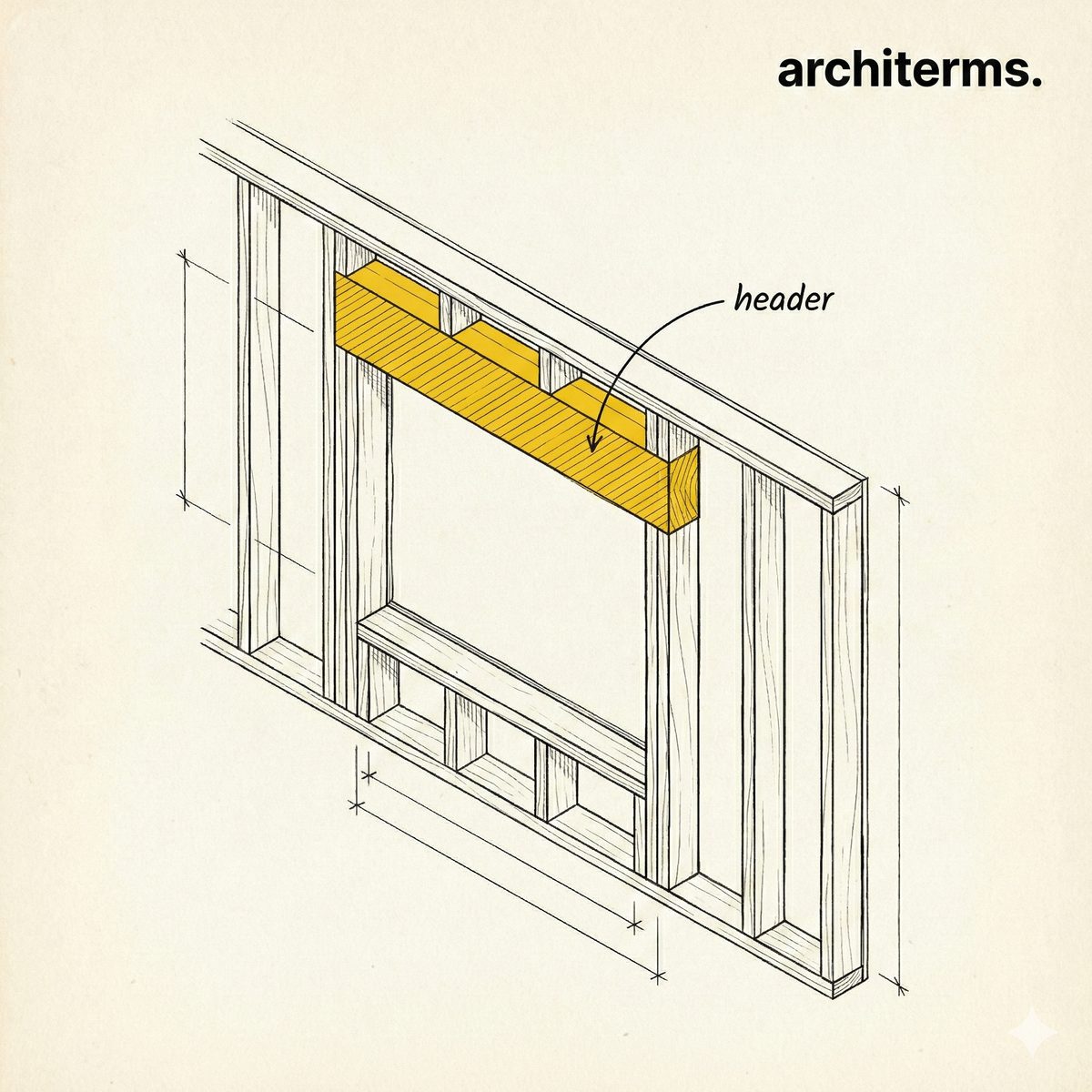
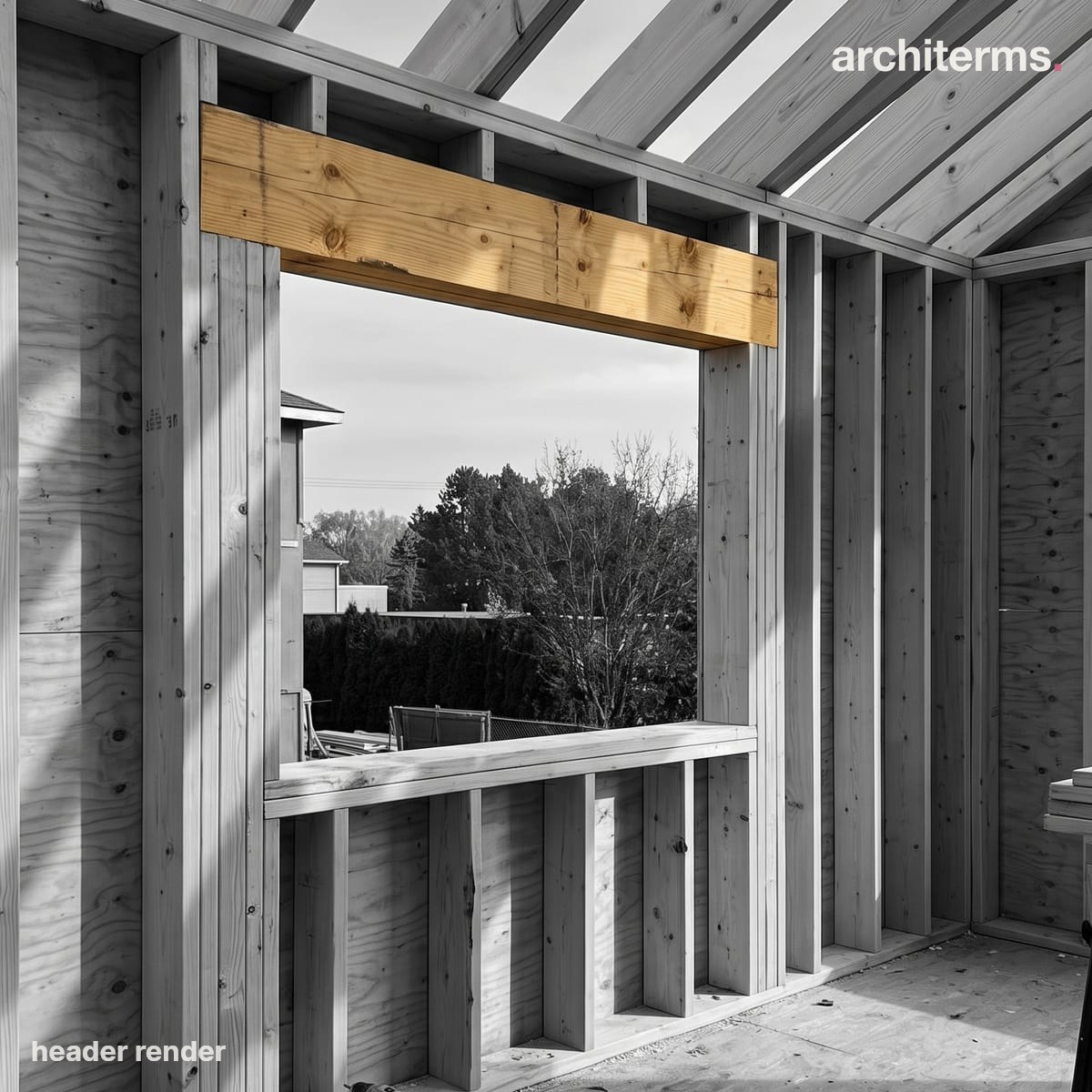
A header spans the top of a framed opening, carrying the load from above across the gap where the wall studs have been cut away. Short cripple studs pass that weight down to the trimmers on either side and on into the floor.
Made with Reviz.Design — AI visualization for architects and interior designers
Definition
A header is the horizontal member that bridges the top of an opening in a framed wall — a door, a window, or a pass-through — and carries the load from above across the gap. When studs are cut to make an opening, the weight they would have carried has to go somewhere; the header collects that load and delivers it to the full-height studs on each side. In platform framing, sizing a header correctly is one of the most common everyday structural decisions made on site.
A header is really a short beam, and the wider the opening or the heavier the load above, the deeper the header has to be. In masonry the same role is played by a lintel; in light framing the header is usually built up from dimensional lumber or formed from an engineered beam. Because it sits directly in the load path, a header is structural — you cannot widen an opening without checking what the header is able to span.
A header is a horizontal structural member spanning the top of a wall opening that transfers the load from above to the supporting studs on either side. It bears on jack (trimmer) studs and is held in place by king studs, together forming the rough opening for a door or window. Header depth increases with span and load, following the same bending logic as any beam.
Header History
The header is a product of light-frame carpentry, where walls are assembled from many small repeated members rather than a few large ones. As soon as builders cut an opening into a stud wall, they needed a member to carry the interrupted load across it — and the doubled-up timber header became the standard answer. The idea is ancient in masonry, where a stone or timber lintel has spanned openings for millennia; modern framing simply adapted it to dimensional lumber, and later to engineered products like LVL and glulam that span wider openings with less depth.
Header in Architecture
The header is small but decisive in how a wall behaves:
- —Completes the load path: it bridges the gap left by cut studs so load from the joists or roof above can travel safely down to the foundation.
- —Is sized like a beam: its depth follows directly from the opening width and the weight above, exactly as for any beam.
- —Frames the opening: header, jack studs, king studs, and the cripple studs above together define the rough opening for windows and doors.
- —Limits opening width: because it is structural, the header sets how wide an opening can be — a wider header (or a steel beam) is needed for large garage or patio openings.
- —Mirrors the masonry lintel: in a load bearing wall of brick or block, a lintel does the header's job over the opening.
Common confusion
- —Header vs. lintel: a header is the beam over an opening in timber or steel framing; a lintel is the same idea in masonry, spanning a brick or block opening. In some regions the two words are used interchangeably.
- —Header vs. beam: a header is simply a beam used in the specific position above a wall opening — same structural behavior, specialized role.
- —Header vs. header joist: in floor framing a header joist (or rim board) closes the ends of the joists; it is a related but different use of the word from the wall header.
- —Header vs. sill: the header sits at the top of an opening, while the sill sits at the bottom of a window opening.
Frequently Asked Questions
What is a header in construction?
A header is a horizontal framing member placed above a door, window, or other opening in a wall. It carries the load that the cut studs can no longer support and transfers it to the full-height studs on each side, keeping the load path continuous around the opening.
What is the difference between a header and a lintel?
A header is the load-carrying member over an opening in timber or steel framing, while a lintel does the same job in masonry, spanning an opening in brick or block. They share the same structural purpose, and in some regions the terms are used interchangeably.
How big should a header be?
Header size depends on the width of the opening and the load coming from above. Wider openings and heavier loads require deeper headers, and very wide openings may need an engineered beam or steel member. Because it is structural, header sizing should follow span tables or an engineer's design rather than guesswork.
Is a header load-bearing?
Yes. A header sits directly in the load path above an opening, carrying weight from the floors or roof down to the studs on either side. That is why you cannot simply widen a door or window opening without checking that the header can span the new width.
What are king and jack studs?
King studs are full-height studs on each side of an opening that run from plate to plate, while jack (or trimmer) studs are shorter studs nailed to the king studs that the header rests on. Together they support the header and define the rough opening.