Arch.
An arch is a curved structure that spans an opening and carries weight by pushing the load into its supports (walls, piers, or columns). Instead of bending like a beam, it mostly works in compression, which is why arches can feel "effortlessly strong."
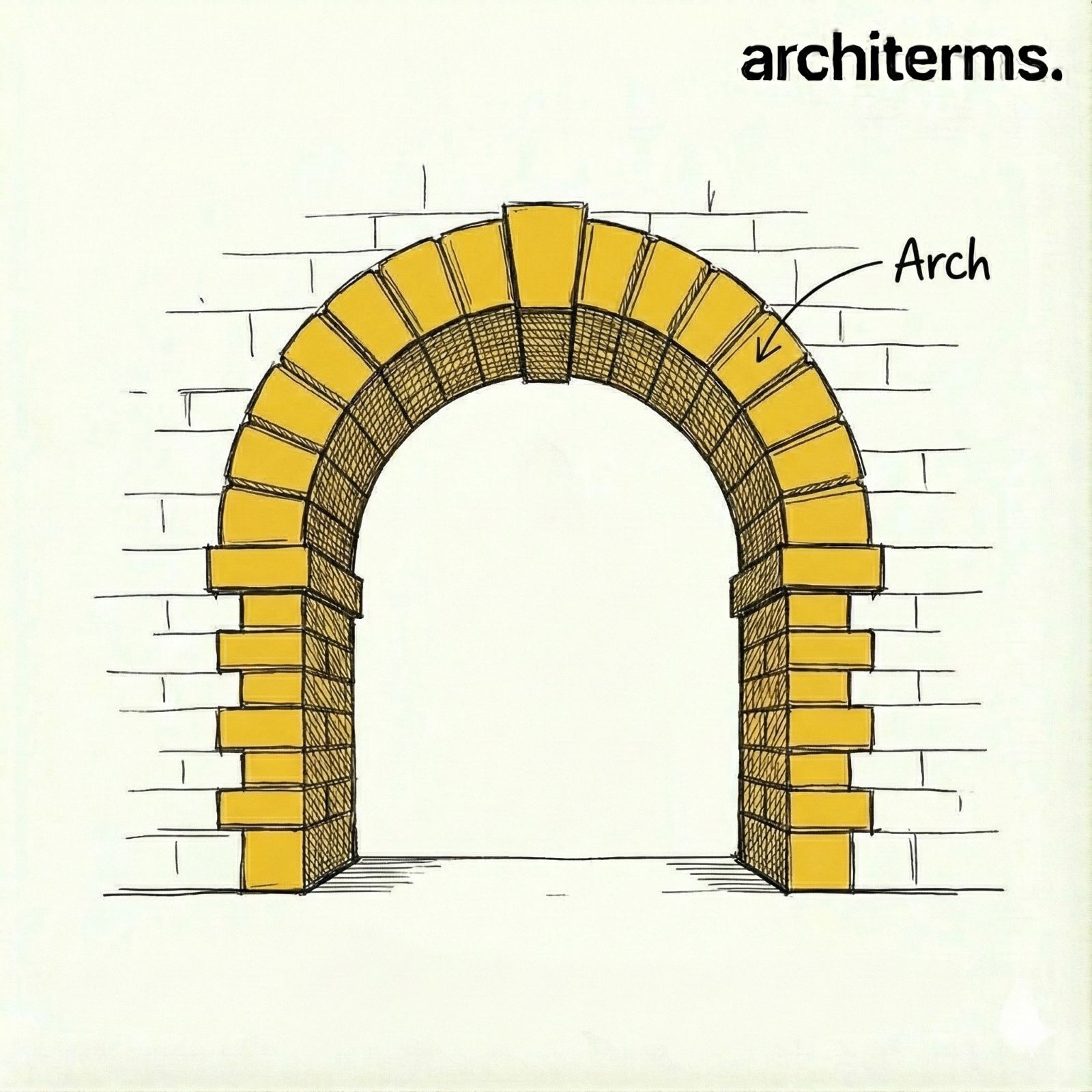
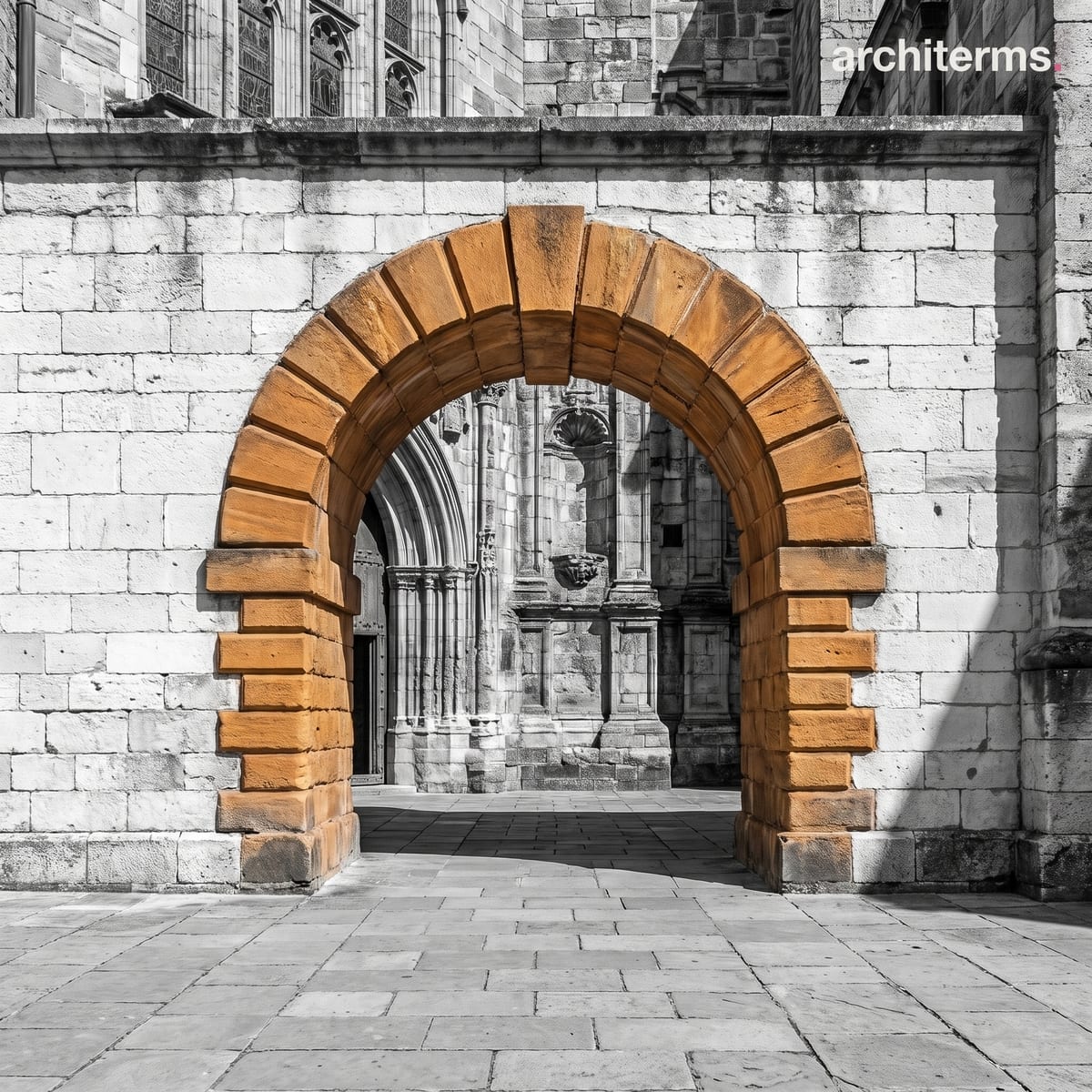
A round arch built from wedge-shaped voussoirs: each stone leans on its neighbour, so the weight of the wall above travels around the curve and down into the piers on either side rather than bearing straight across the opening.
Rendered with Reviz.Design — AI visualization for architects and interior designers
Definition
Think of an arch as architecture's "smart shortcut" for spanning space. A straight beam has to fight gravity by bending; an arch takes a different approach: it guides the weight along its curve and sends it down into the supports on each side. That's why arches show up in everything from small door openings to giant bridges—they're a simple idea that scales incredibly well.
Traditional masonry arches are often built from voussoirs (wedge-shaped stones or bricks) that lock together. The key detail is what happens at the bottom: arches don't only push down; they also push outward. That sideways push is called lateral thrust, and it's the reason arch supports need to be strong—thick walls, heavy piers, or other structural help keep the arch from spreading its supports apart.
The shape matters a lot. A round (semicircular) arch tends to push outward more, while a pointed arch can reduce that sideways force and make taller openings easier. With modern materials like reinforced concrete and steel, architects can form arches in more "engineered" curves—like parabolic or catenary shapes—chosen because they follow how forces naturally want to flow.
Types
You'll commonly see:
- —Round arch (semicircular)
- —Pointed arch
- —Segmental arch (a shallow curve)
- —Parabolic arch (often used for long spans)
Application
Arches show up whenever you need to span an opening and want the structure to feel clear and honest. Typical uses include:
- —Door and window openings (especially in masonry)
- —Arcades (a row of arches creating a covered passage)
- —Vaults (an arch extended in depth to form a ceiling/roof)
- —Bridges and large-span halls, where compression-based forms are efficient
They also do something beams don't do as well: arches frame space. They make entrances feel like thresholds, turn corridors into sequences, and add rhythm to facades.
Common confusion
Arch vs. lintel: A lintel is straight; it resists load mainly by bending. An arch is curved; it redirects load into side supports.
Arch vs. vault: A vault is basically an arch stretched along a length to create a roof/ceiling form.