Arcade.
An arcade in architecture is a row of arches supported by columns or piers, often forming a covered walkway or passage. It creates rhythm along a façade or within a courtyard while providing sheltered circulation.
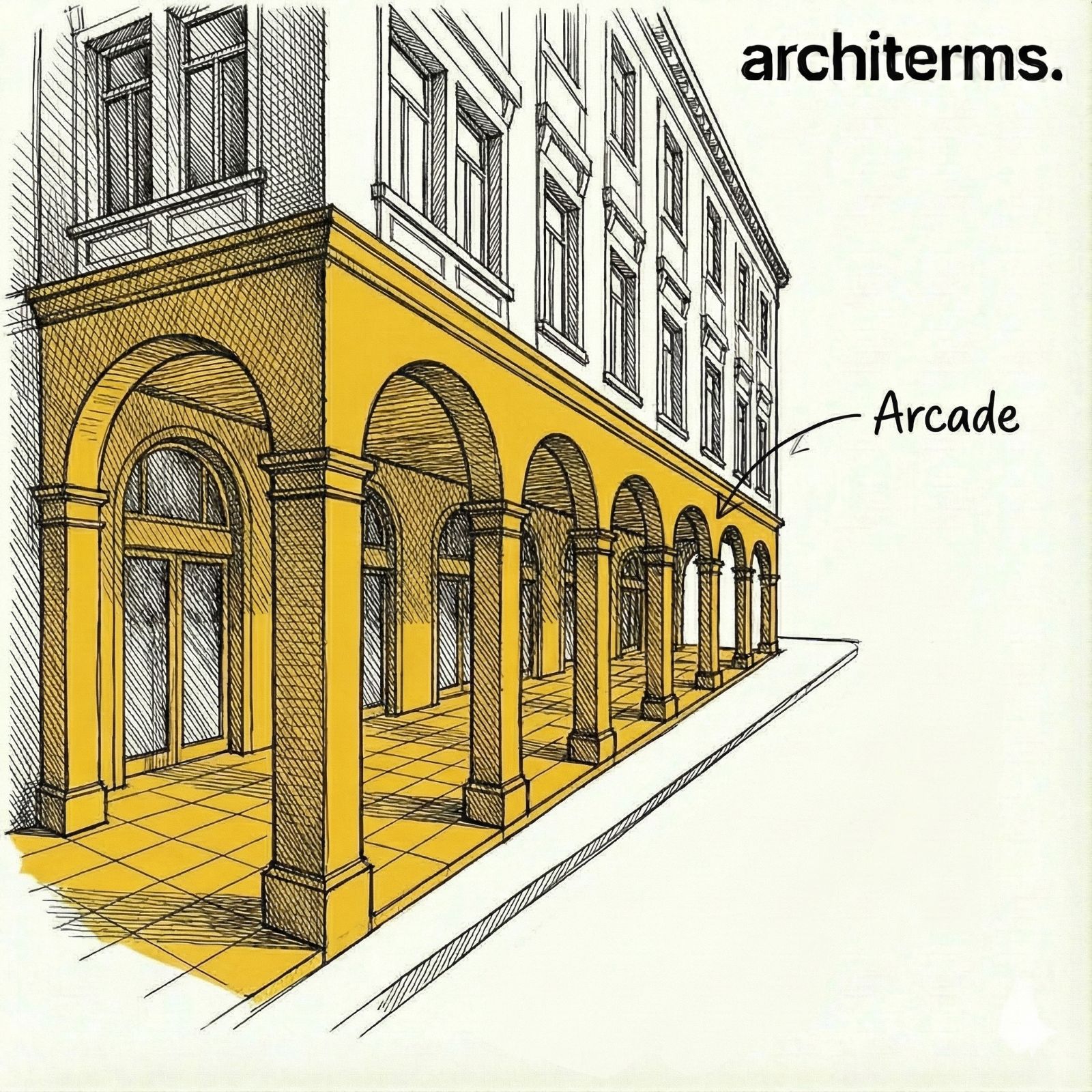
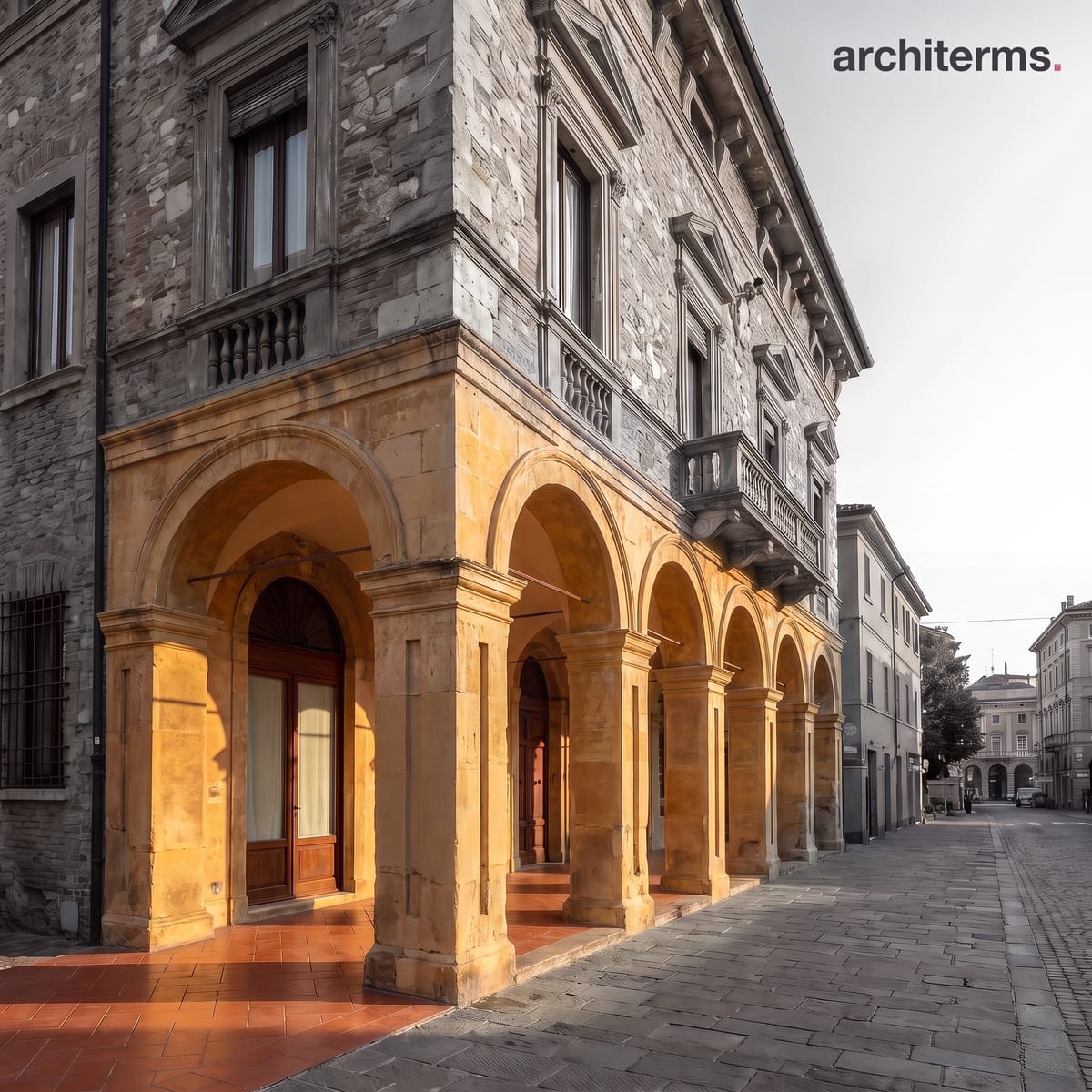
An arcade at street level: the same arch repeated along the facade turns a structural device into a rhythm, and the run of openings gives the ground floor a sheltered walkway without closing it off from the street.
Rendered with Reviz.Design — AI visualization for architects and interior designers
Definition
An arcade is one of the most recognizable architectural systems because it combines structure and space in a simple repeated module: arch + support + arch + support. Structurally, the arches transfer loads into the columns or piers; spatially, the repetition frames views, defines edges, and creates a comfortable transition zone between inside and outside. Arcades may be structural (carrying floors, roofs, or walls above) or non-structural (used mainly to shape facades and movement).
In practice, arcades are valued for three reasons:
Shelter from sun, rain, and wind along pedestrian routes
Legibility—they guide movement and clearly mark entrances and paths
Rhythm and proportion—the repeated bays give facades a consistent scale and order
History
Arcades have been used across many eras because their geometry is adaptable and their construction is efficient. Early monumental examples developed with masonry traditions where arches excel in compression. In medieval contexts, arcades shaped cloisters and church interiors, creating sequences of bays that organized circulation and views. Later, arcades became key façade devices in civic buildings and urban streets, turning building edges into walkable public space rather than hard boundaries.
Application
Today, arcades are common wherever designers want comfortable pedestrian movement and a strong building edge—along streets, around courtyards, and at ground floors of large buildings. They can improve microclimate by offering shade and rain protection, and they help activate street life by creating a semi-public zone suitable for entrances, seating, or storefronts. In mixed-use and urban projects, arcades are also used to make ground floors feel more permeable while still supporting the building above.