Rhythm.
Rhythm in architecture is the ordered repetition of elements — columns, windows, bays, or details — that creates visual movement and pattern. In plain terms: it's the regular beat you feel along a facade, like the spacing of columns or windows.
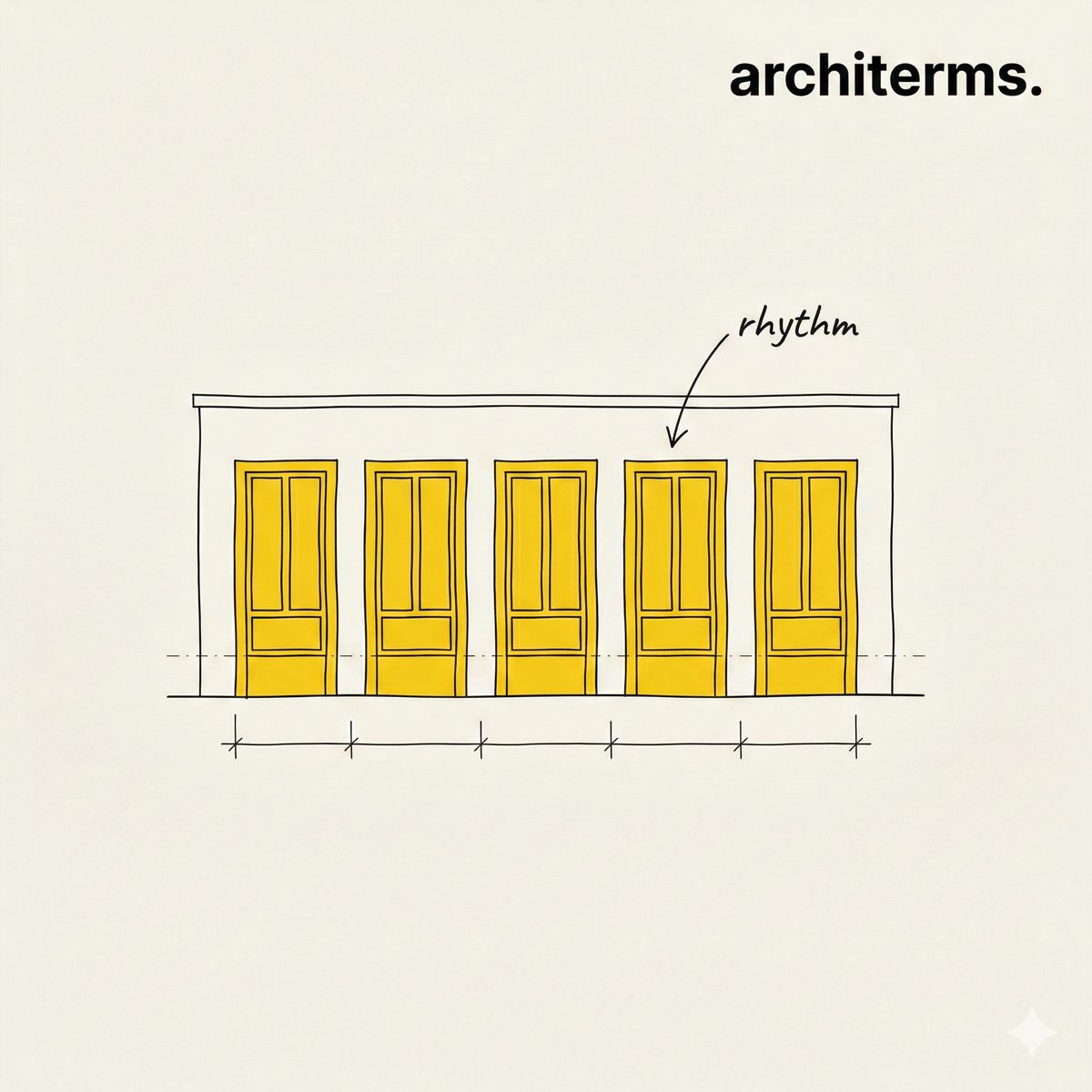
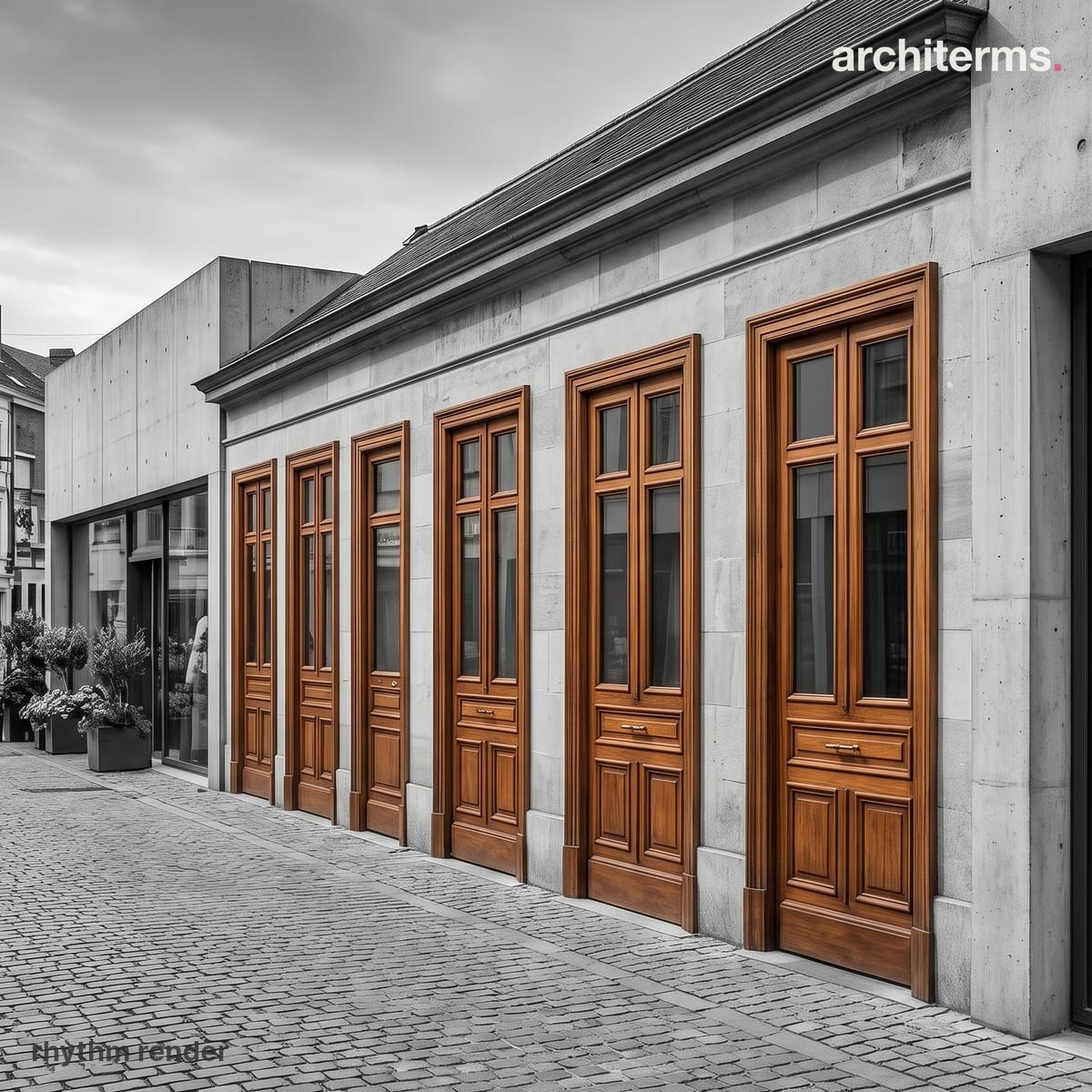
Rhythm is the ordered repetition of elements along a facade. Here a series of identical tall doors, evenly spaced across the stone wall, sets up a steady visual beat that carries the eye along the street.
Rendered with Reviz.Design — AI visualization for architects and interior designers
Definition
Rhythm in architecture is what beat is to music: the ordered repetition of elements at regular (or deliberately varied) intervals that carries the eye along a building. A row of identical columns, a run of evenly spaced windows, the steady march of bays down a long facade — all of these create a beat. Rhythm is one of the core ordering principles, and it is how architecture turns repetition into something that feels alive rather than monotonous.
Rhythm can be simple and regular, like the even spacing of a colonnade, or complex, with repeating patterns that build, pause, and resolve — wide and narrow bays, grouped windows, an A-B-A measure. Architects use it to organize a facade, to give a long building scale and movement, and to lead a visitor toward an entrance or a climax. It works closely with proportion and symmetry to give a design its underlying order.
Rhythm is the ordered, repeating arrangement of architectural elements and the intervals between them, creating a sense of movement and pattern across a building. It can be regular (a constant interval), alternating (A-B-A-B), or progressive (changing gradually in size or spacing). Rhythm organizes elements such as columns, fenestration, bays, piers, and decorative details into a coherent visual sequence.
Rhythm History
Rhythm has structured architecture since the first colonnaded temples, where the steady spacing of columns set a measured beat that defined the building. Classical architecture formalized it in the rules for spacing columns, triglyphs, and metopes; Gothic cathedrals built soaring vertical rhythms from their repeated bays and shafts. The long facades of Renaissance palaces and the regular window grids of the modern office block are all exercises in architectural rhythm — proof that a repeating measure is one of the most durable tools for ordering a building.
Rhythm in Architecture
Rhythm gives a building its measure and momentum:
- —Organizes the facade: the spacing of windows, fenestration, and bays sets the visual beat of an elevation.
- —Comes in different measures: regular (even), alternating (A-B-A), and progressive (gradually changing) rhythms each feel different.
- —Creates movement: repetition carries the eye along a building and can lead it toward an entrance or focal point.
- —Gives long buildings scale: a steady beat breaks a large mass into readable, human-related units, as in a colonnade or arcade.
- —Works with the other principles: rhythm, proportion, and symmetry together form the grammar of ordered design.
Common confusion
- —Rhythm vs. symmetry: rhythm is repetition along a line; symmetry is mirroring across an axis. A facade can have strong rhythm without being symmetrical.
- —Rhythm vs. pattern: pattern is any repeated motif, including across a surface; rhythm specifically implies movement and interval — the sense of a beat through a composition.
- —Rhythm vs. proportion: rhythm is about repetition and spacing; proportion is about the ratio of sizes. They cooperate but answer different questions.
- —Regular vs. progressive rhythm: a regular rhythm repeats at a constant interval; a progressive rhythm changes gradually, with elements growing, shrinking, or drawing closer together.
Frequently Asked Questions
What is rhythm in architecture?
Rhythm is the ordered repetition of elements — such as columns, windows, or bays — and the intervals between them, creating a sense of movement and pattern across a building. It is one of the core ordering principles, turning repetition into a visual beat that carries the eye along a facade.
What are the types of rhythm in architecture?
The main types are regular rhythm, where an element repeats at a constant interval; alternating rhythm, where two or more elements repeat in a pattern such as A-B-A-B; and progressive rhythm, where elements change gradually in size or spacing, building toward a climax.
What is the difference between rhythm and pattern?
Pattern is any repeated motif, including a static surface design. Rhythm specifically implies movement and interval — the sense of a beat created by repeating elements and the spaces between them, which leads the eye through a composition.
How do architects create rhythm?
Architects create rhythm by repeating elements such as columns, windows, piers, and bays at controlled intervals, and by varying those intervals deliberately. Alternating wide and narrow bays, grouping openings, or gradually changing spacing all produce different rhythms across a facade.
Why is rhythm important in design?
Rhythm gives a building order and movement. It breaks a large facade into readable units, relates the building to human scale, creates visual interest, and can guide a visitor toward an entrance or focal point — all while tying the composition together with the other principles like proportion and symmetry.