Pergola.
A pergola is an open garden structure of vertical posts supporting an overhead grid of cross-beams and rafters, casting dappled shade and often supporting climbing plants.
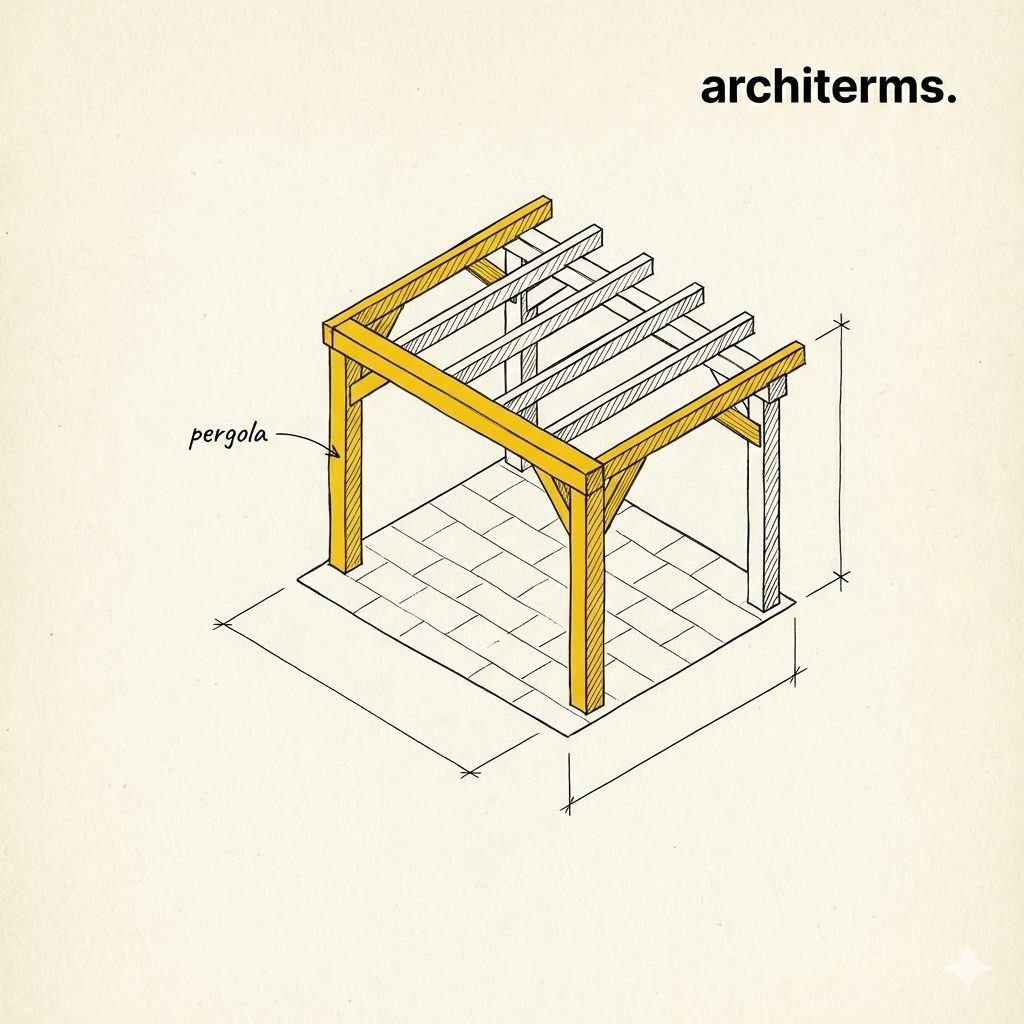
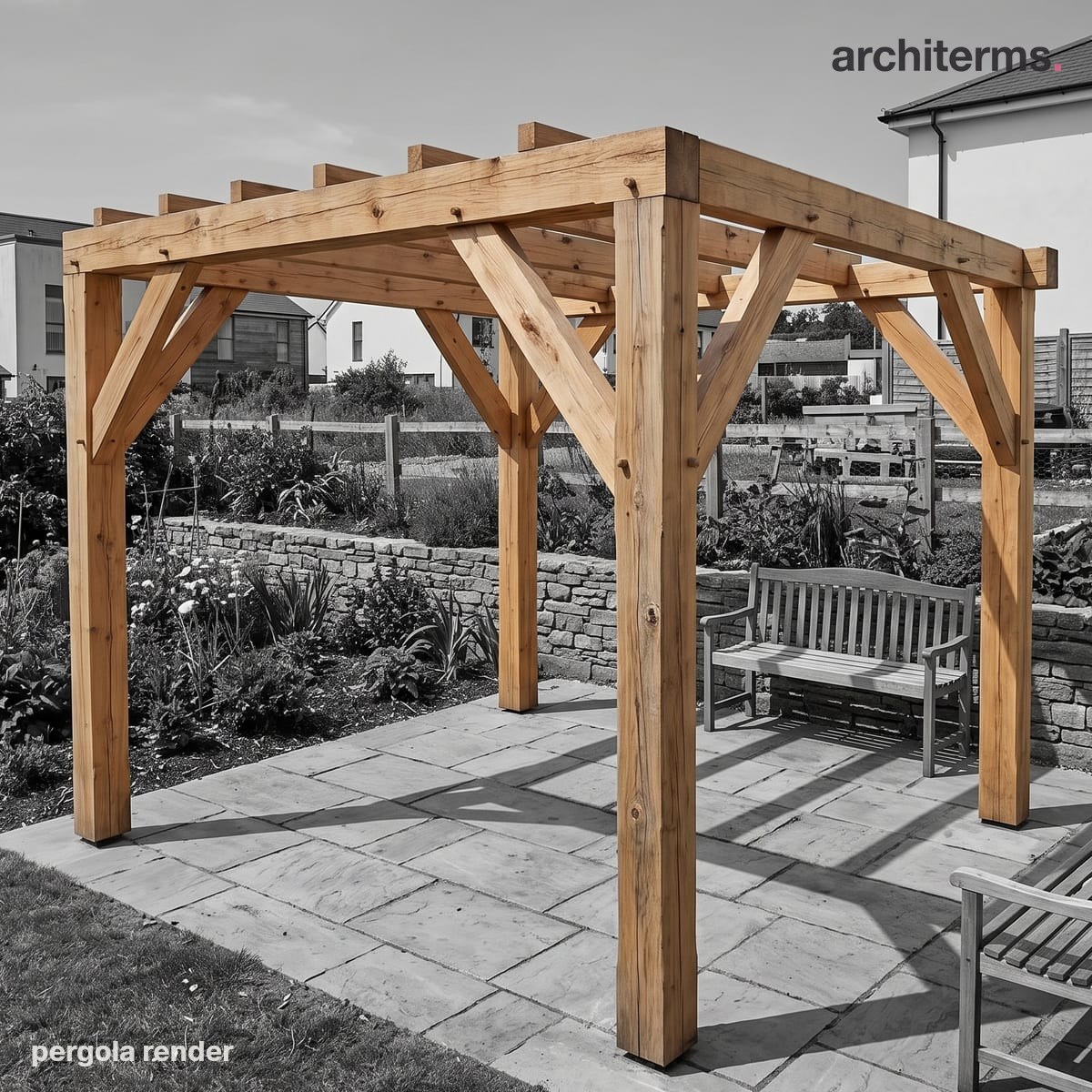
A pergola stands on four posts braced to the corner beams, which carry an open grid of rafters overhead. With no solid roof, it defines a sheltered outdoor room and casts dappled shade while staying open to the sky.
Rendered with Reviz.Design — AI visualization for architects and interior designers
Definition
A pergola is an outdoor structure built to define a space and filter sunlight without fully enclosing it. Rows of posts carry an open framework of beams overhead, creating a shaded walkway or sitting area that remains open to the air and sky. Because the top is a grid rather than a solid roof, a pergola throws a pattern of dappled light below and is a natural support for climbing plants.
Part architecture and part garden feature, the pergola bridges building and landscape. It can frame a view, mark a path, shelter a terrace, or link parts of a garden together, all while keeping a light, airy character. Its appeal lies in this combination of structure and openness—defining an outdoor room without walls or a roof.
A pergola is an open framework structure consisting of vertical posts or columns that support a horizontal grid of beams and cross-rafters overhead. Unlike a roofed shelter, its top is left open or only partly covered, so it provides shade and definition rather than full weather protection. Pergolas are typically freestanding in a garden or attached to a building to shade a terrace, and the open beams above are often planted with climbing vines that add foliage, flowers, and seasonal shade.
Pergola History
The pergola has ancient roots in the gardens of the Mediterranean, where vine-covered walkways gave shaded passage in hot climates and supported grapevines for fruit. Roman and later Italian Renaissance gardens used pergolas as architectural devices to organize space, frame views, and connect house and garden along shaded axes lined with climbing plants.
From Italy the form spread through European garden design and into the Arts and Crafts movement, where designers used rustic timber and stone-pillared pergolas to tie houses into their landscapes. Today the pergola remains a hugely popular garden structure, built in timber, stone, brick, or metal, and ranging from simple plant supports to substantial structures with retractable canopies and integrated lighting.
Pergola in Architecture
A pergola contributes to a design in several ways:
- —Filtered shade: The open grid of beams casts dappled shade that softens strong sunlight while keeping the space bright and open to the sky.
- —Defining outdoor rooms: Posts and overhead beams give a terrace or path a sense of enclosure and scale without building solid walls or a roof.
- —Supporting planting: The overhead framework is an ideal trellis for climbing vines, which add greenery, flowers, and changing seasonal shade.
- —Linking house and garden: An attached pergola extends the architecture of a building outward, creating a sheltered transition between indoors and the landscape.
Because it is essentially a post-and-beam framework, a pergola is closely related to the colonnade and the portico, but it is defined by its open top and its garden setting. This openness is exactly what gives the pergola its character: it shapes and shades a space while leaving it firmly part of the outdoors.
Common confusion
Pergola vs. arbor: An arbor is a small, often arched and freestanding structure with latticed sides that frames a seat or gateway, while a pergola is larger, with an open beam roof carried on a row of posts to shade a path or terrace.
Pergola vs. gazebo: A gazebo is a freestanding garden pavilion with a solid roof that provides full shelter from sun and rain, whereas a pergola has an open framework top that filters light rather than blocking it.
Pergola vs. trellis: A trellis is a flat lattice panel used as a screen or to support climbing plants, while a pergola is a three-dimensional walk-through structure of posts and overhead beams.
Pergola vs. portico: A portico is a roofed porch with columns forming the covered entrance to a building, while a pergola is an open garden structure with no solid roof, usually standing in the landscape.
Frequently Asked Questions
What is a pergola in architecture?
A pergola is an open outdoor structure of vertical posts that support an overhead grid of beams and cross-rafters. It provides dappled shade and defines a garden path or terrace without fully enclosing it, and its open top is often planted with climbing vines.
What is the difference between a pergola and a gazebo?
A gazebo is a freestanding garden pavilion with a solid roof that gives full shelter from sun and rain. A pergola has an open framework top that filters sunlight into dappled shade rather than blocking the weather, so it shades and defines a space while staying open to the sky.
What is the difference between a pergola and an arbor?
An arbor is a small, often arched freestanding structure with latticed sides that frames a bench or a garden entrance. A pergola is larger, with a flat open roof of beams carried on a row of posts to shade a walkway or terrace.
What is a pergola used for?
A pergola is used to create a shaded outdoor room, frame a path or view, and support climbing plants. Attached to a house it shades a terrace and links the building to the garden; freestanding it defines a sitting area or walkway in the landscape.
What materials are pergolas made from?
Pergolas are built from timber, stone or brick piers, and metal such as steel or aluminium. Traditional garden pergolas are usually timber, while modern versions may use metal frames with features like retractable canopies and integrated lighting.