Rose Window.
A rose window is a large circular window divided by stone tracery into a radiating, petal-like pattern and filled with stained glass, typical of Gothic churches. In plain terms: it is the big round, wheel-like stained-glass window you see high on the front or transept ends of a cathedral.
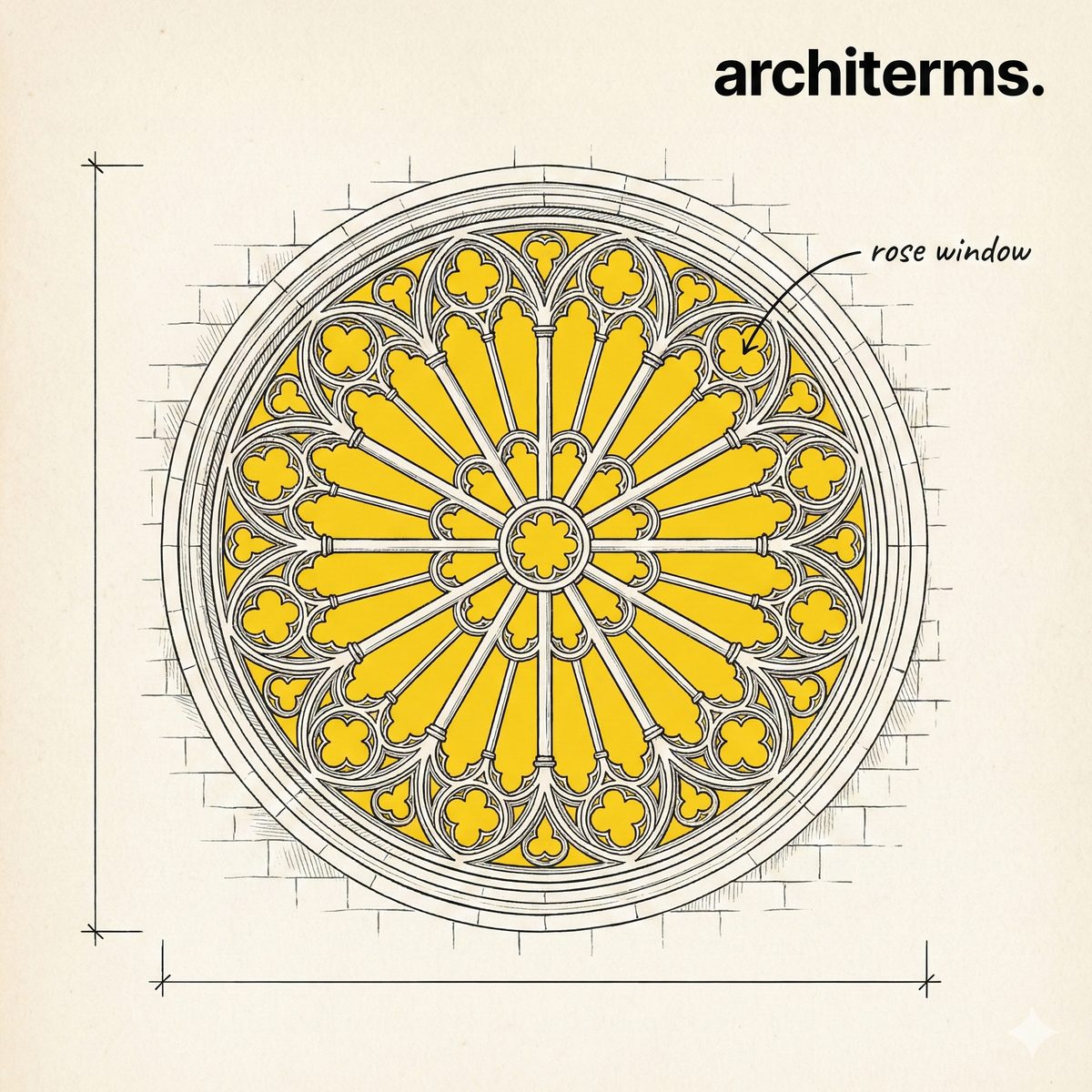
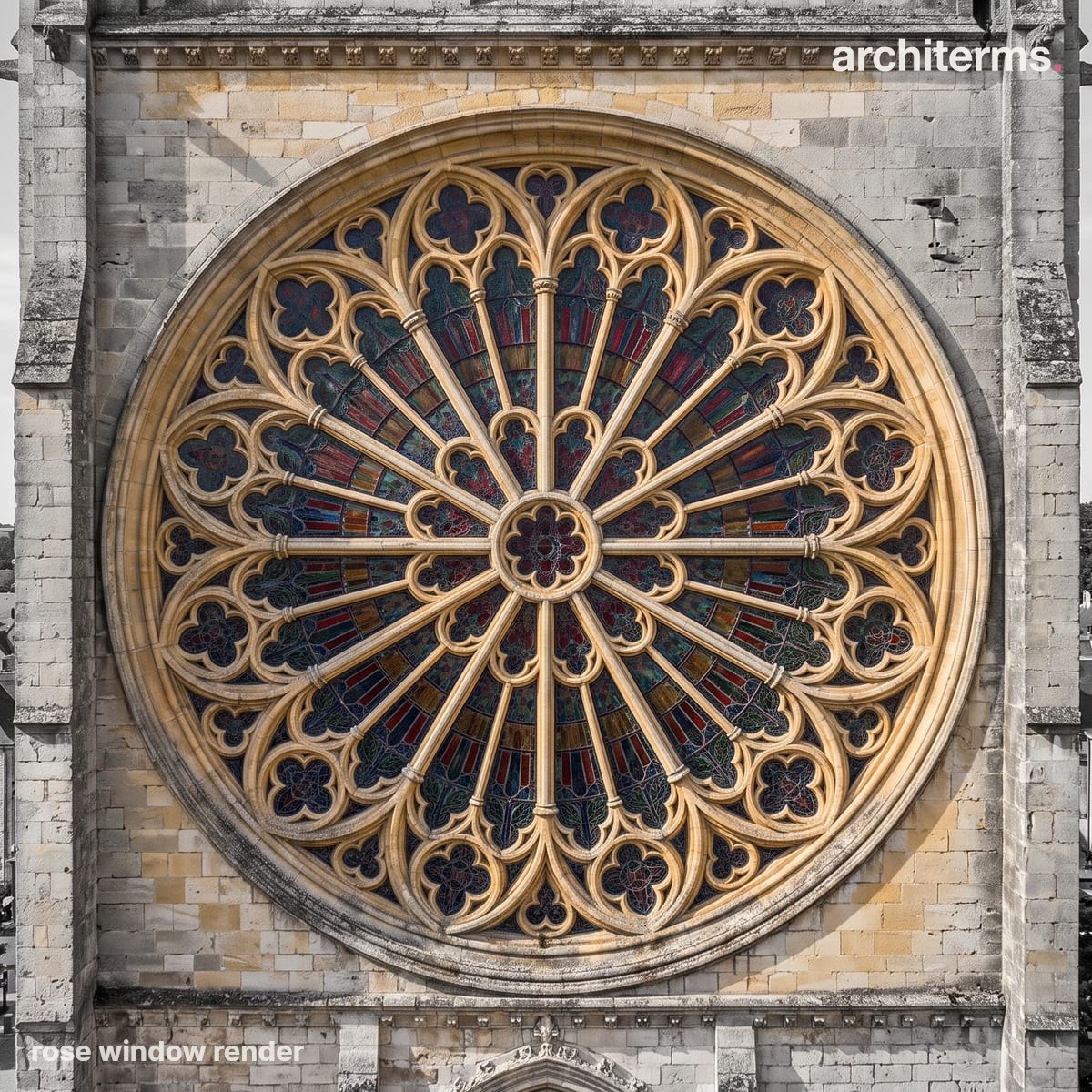
A rose window fills a circular opening with stone tracery that fans out from a central boss like the spokes of a wheel. The bars divide the glass into radiating lights and petal-shaped foils, holding a broad expanse of stained glass high on the facade.
See Rose Window in your own project with Reviz.Design
Definition
A rose window is one of the most recognizable features of Gothic architecture: a great circle of stained glass set high in a church wall, its glass held in a web of carved stone tracery that radiates from the center like the petals of a flower or the spokes of a wheel. Placed on the west front or at the ends of the transept arms, it gathers daylight and turns it into shifting, colored light across the interior.
Beyond its beauty, the rose window was a feat of engineering and a teaching tool. Its imagery—often arranged around a central figure—presented stories and symbols to a largely non-reading congregation, while its very form, a perfect circle, carried associations of heaven, eternity, and divine order.
A rose window is a large circular window subdivided by radiating stone tracery into compartments filled with stained glass, used chiefly in Gothic and Gothic Revival churches. The tracery springs from a central hub and fans outward in symmetrical patterns of petals, foils, and circles, giving the window its flower-like or wheel-like appearance. Set into the upper wall of a facade or transept, the rose window combines structural stonework, colored glass, and geometric design into a single luminous composition that lights the interior and expresses the building's symbolism.
Rose Window History
The rose window grew out of the smaller round windows, or oculi, of Romanesque churches. As Gothic builders mastered the pointed arch, the rib vault, and the flying buttress, they could open large areas of wall to glass, and the round window expanded into the elaborate rose. Early plate-tracery roses, where openings were cut through solid stone, gave way in the 13th century to bar tracery, in which slender stone mullions form delicate, lacy patterns. The great roses of Chartres, Notre-Dame de Paris, and Reims set the standard. The form was revived enthusiastically in the 19th-century Gothic Revival, appearing in churches across Europe and the Americas.
Rose Window in Architecture
The rose window works on several levels at once:
- —Light: It floods the upper interior with colored light that changes through the day and the seasons, animating the space.
- —Structure: The stone tracery is both decorative and load-sharing, bracing the wide opening; the surrounding wall and buttresses carry the loads around it.
- —Composition: As the centerpiece of a facade, the rose is usually framed by portals below and towers to the sides, anchoring the whole front.
- —Symbolism and narrative: Its radial geometry suggests cosmic order and eternity, and its panels often depict saints, prophets, or scenes arranged around a central figure such as Christ or the Virgin.
The demanding combination of a large opening, fine stonework, and heavy glass made the rose window a showcase of a workshop's skill.
Common confusion
Rose window vs. oculus: An oculus is a plain round opening or window, often without elaborate tracery; a rose window is specifically a large circular window divided by radiating tracery into a patterned design.
Rose window vs. wheel window: The terms overlap. A wheel window has straight, spoke-like mullions running to the rim; a rose window has more flowing, petal-like tracery. Many windows blend both, and the names are often used interchangeably.
Rose window vs. tracery: Tracery is the stone framework that subdivides any Gothic window; the rose window is the whole circular window, of which the radiating tracery is one essential part.
Rose window vs. stained glass: Stained glass is the colored glass that fills the openings; the rose window is the complete circular feature, including its stone tracery and structural setting, not the glass alone.
Frequently Asked Questions
What is a rose window?
A rose window is a large circular window divided by radiating stone tracery into a petal-like or wheel-like pattern and filled with stained glass. It is a hallmark of Gothic churches, typically set high on the west front or at the ends of the transept arms.
Why is it called a rose window?
It is called a rose window because the radiating stone tracery fans out from the center in symmetrical compartments that resemble the petals of a rose or other flower. The name describes the flower-like geometry; some similar windows with straight spokes are instead called wheel windows.
Where are rose windows usually located?
Rose windows are usually set high in the wall on the west front of a church, above the main entrance, and at the ends of the transept arms. Their elevated position lets them light the upper interior and act as the focal point of the facade.
What is the difference between a rose window and an oculus?
An oculus is a simple round opening or window, often without tracery, while a rose window is a large circular window subdivided by radiating stone tracery into a patterned design filled with stained glass. The rose window is essentially an elaborate, tracery-filled development of the round opening.
What were rose windows used for?
Rose windows brought colored light into the church and served as teaching images, presenting saints, prophets, and biblical scenes arranged around a central figure. Their circular form also carried symbolic meaning, evoking heaven, eternity, and divine order for the congregation below.