Rebar.
Rebar (reinforcing bar) is a ridged steel bar embedded in concrete to carry the tensile forces that concrete alone cannot resist. In plain terms: it is the hidden steel skeleton that keeps concrete from cracking and pulling apart under load.
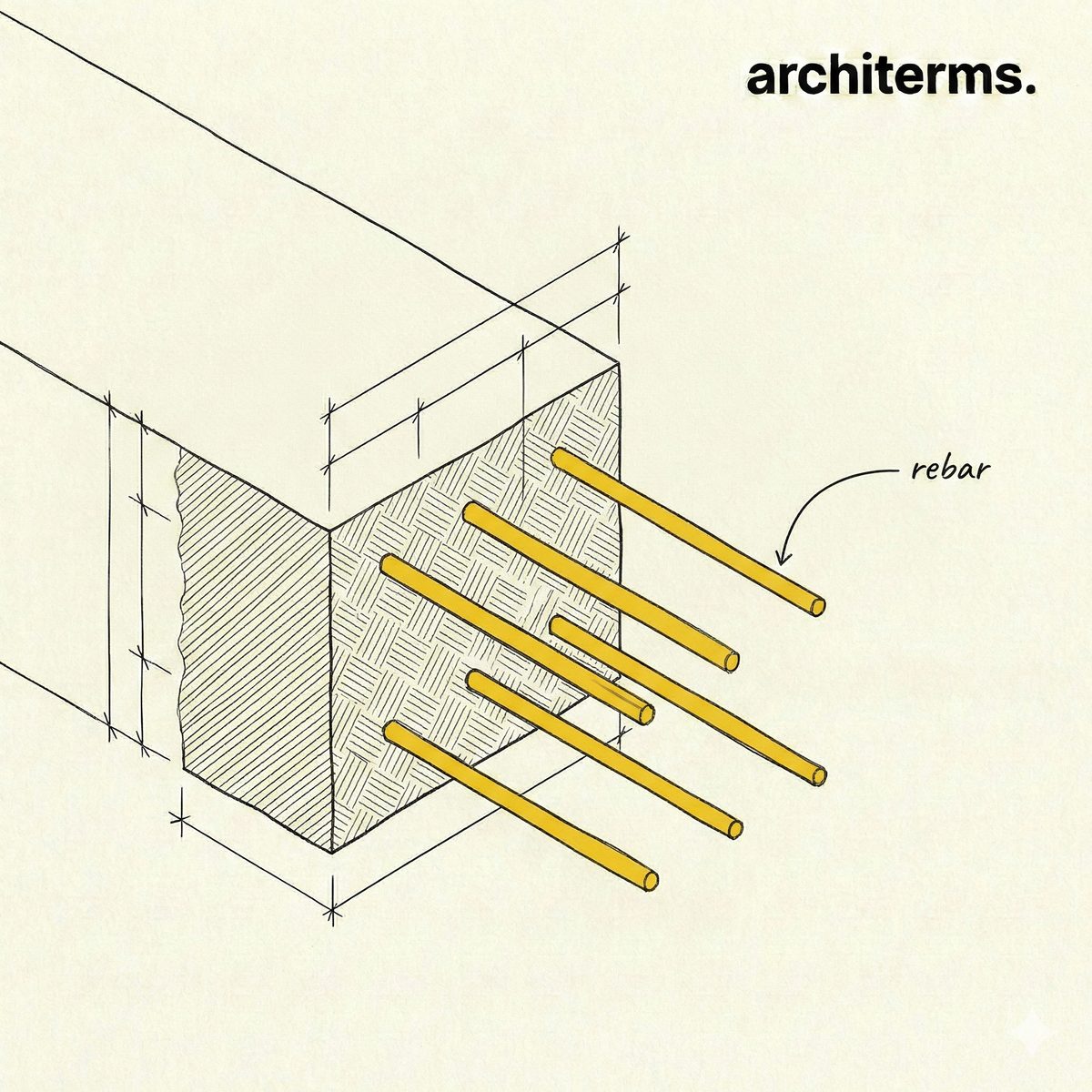
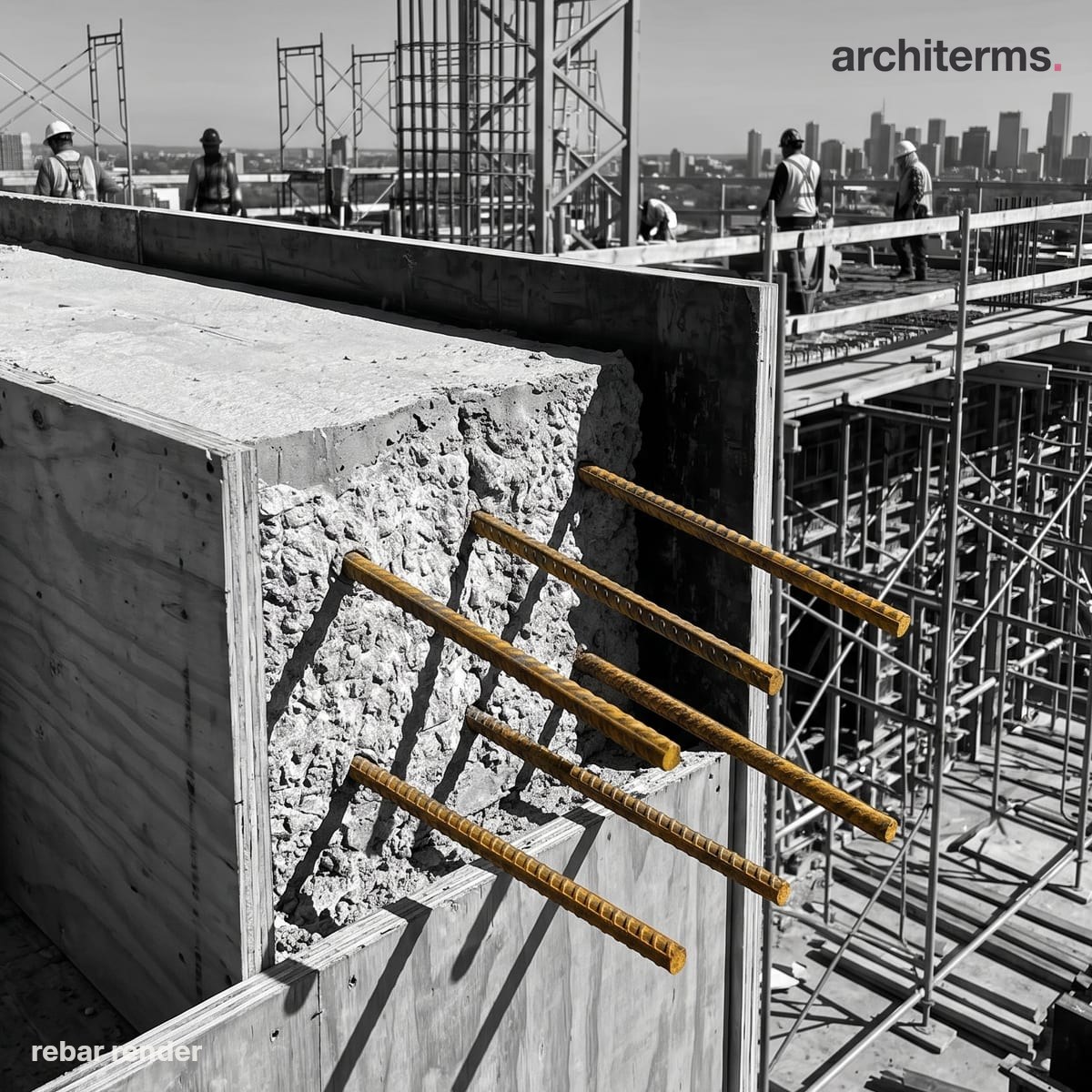
Rebar is the ridged steel embedded in concrete to take tensile force: the bars run through the mass so that when the concrete is pulled or bent, the steel holds it together instead of letting it crack apart.
Made with Reviz.Design — AI visualization for architects and interior designers
Definition
Rebar, short for reinforcing bar, is the steel that gives concrete its strength against pulling forces. Concrete is enormously strong when squeezed (in compression) but weak when stretched (in tension), and it will crack and fail under bending or pulling loads. By casting steel bars into the concrete before it sets, builders create reinforced concrete—a composite in which the concrete handles compression and the embedded rebar handles tension, so the two materials cover each other's weaknesses.
You will find rebar in nearly every modern concrete element: foundations, slabs, columns, beams, walls, bridges, and retaining structures. Although it disappears completely once the concrete is poured, the size, spacing, and position of the rebar are calculated with care, because they determine how much load the member can carry and how it will crack and deform before it ever fails.
Rebar (reinforcing bar) is a ridged steel bar embedded in concrete to resist the tensile and shear forces that plain concrete cannot carry on its own. The raised ribs, or deformations, on its surface grip the surrounding concrete so the two act together as one composite material. Rebar is specified by diameter, grade (its steel's yield strength), and position, and it is always placed with a layer of concrete cover around it to protect the steel from corrosion and fire. In reinforced concrete, the concrete resists compression while the rebar resists tension, allowing slender beams, slabs, and columns to span and stand.
Rebar History
The idea of strengthening a brittle material with embedded rods is old—Roman builders used iron cramps, and early masons reinforced masonry with timber and iron—but reinforced concrete as we know it emerged in the 19th century. The French gardener Joseph Monier patented iron-reinforced concrete planters in the 1860s, and engineers such as Francois Hennebique turned the principle into a complete building system by the 1890s. Reinforced concrete spread rapidly once it was understood that steel and concrete expand and contract at almost the same rate with temperature, so they stay bonded. The 20th century made rebar a global standard, with deformed (ribbed) bars replacing smooth ones to improve the grip between steel and concrete.
Rebar in Architecture
Rebar does its work invisibly, but it shapes what architecture can do:
- —Tension and bending: In beams and slabs, rebar is concentrated where the concrete is stretched—typically the bottom of a simply supported span—so the member can bend without cracking apart.
- —Columns and walls: Vertical bars tied with horizontal links (stirrups) help columns resist crushing and buckling and hold the concrete together under load.
- —Crack control: Even where loads are light, mesh and distribution bars limit the width of shrinkage and temperature cracks, keeping surfaces durable.
- —Continuity and ductility: Properly lapped and anchored rebar ties a structure together so it can flex and redistribute load—crucial for resisting earthquakes and preventing sudden, brittle collapse.
Because the steel must be protected, the concrete cover over the rebar is a key detail: too little cover and the bars corrode and spall the concrete; enough cover and a reinforced structure can last for generations.
Common confusion
Rebar vs. wire mesh: Rebar is individual deformed bars placed where tension is greatest and tied into cages; welded wire mesh is a prefabricated grid of thinner wires used mainly to control cracking in slabs. Mesh spreads light reinforcement evenly, while rebar provides concentrated structural strength.
Rebar vs. structural steel: Rebar reinforces concrete from within and works as part of a composite; structural steel (beams, columns, frames) carries load on its own as a separate framing system.
Reinforced vs. prestressed concrete: Ordinary reinforced concrete relies on passive rebar that engages only as the concrete deflects and cracks; prestressed concrete uses high-strength tendons tensioned before or after the pour to keep the concrete permanently in compression.
Rebar vs. cover: The rebar is the steel itself; the cover is the protective layer of concrete around it. Confusing the two leads to bars placed too close to the surface, where they rust.
Frequently Asked Questions
What is rebar in construction?
Rebar, short for reinforcing bar, is a ridged steel bar cast into concrete to carry tensile and shear forces that the concrete itself cannot resist. The surface ribs lock the bar to the surrounding concrete so the two act together as a single composite material called reinforced concrete.
Why is rebar used in concrete?
Concrete is very strong in compression but weak in tension, so it cracks and fails when stretched or bent. Rebar is placed where the concrete is in tension, allowing the steel to carry the pulling forces while the concrete carries the squeezing forces. Together they let slender beams, slabs, and columns span and stand safely.
What is the difference between rebar and wire mesh?
Rebar is made of individual deformed bars positioned where structural tension is greatest and tied into cages, while welded wire mesh is a prefabricated grid of thinner wires used mainly to control shrinkage and temperature cracking in slabs. Rebar provides concentrated structural strength; mesh spreads light reinforcement evenly.
Why does rebar need concrete cover?
Concrete cover is the layer of concrete between the rebar and the surface. It protects the steel from corrosion, fire, and wear, and helps bond the bar to the concrete. If the cover is too thin, moisture reaches the steel, the rebar rusts and expands, and the concrete cracks and spalls away.
What are rebar sizes and grades?
Rebar is specified by its diameter and its grade, which is the steel's yield strength. Diameters commonly range from about 6 mm to 40 mm (or #3 to #11 bars in imperial sizing), and higher grades carry more force per bar. Engineers choose the size, grade, spacing, and number of bars to match the loads on each element.