Cantilever.
A cantilever is a structural element that projects horizontally and is supported at only one end. In cantilever architecture, it's how you get balconies, canopies, and overhangs that look like they're floating—without columns underneath.
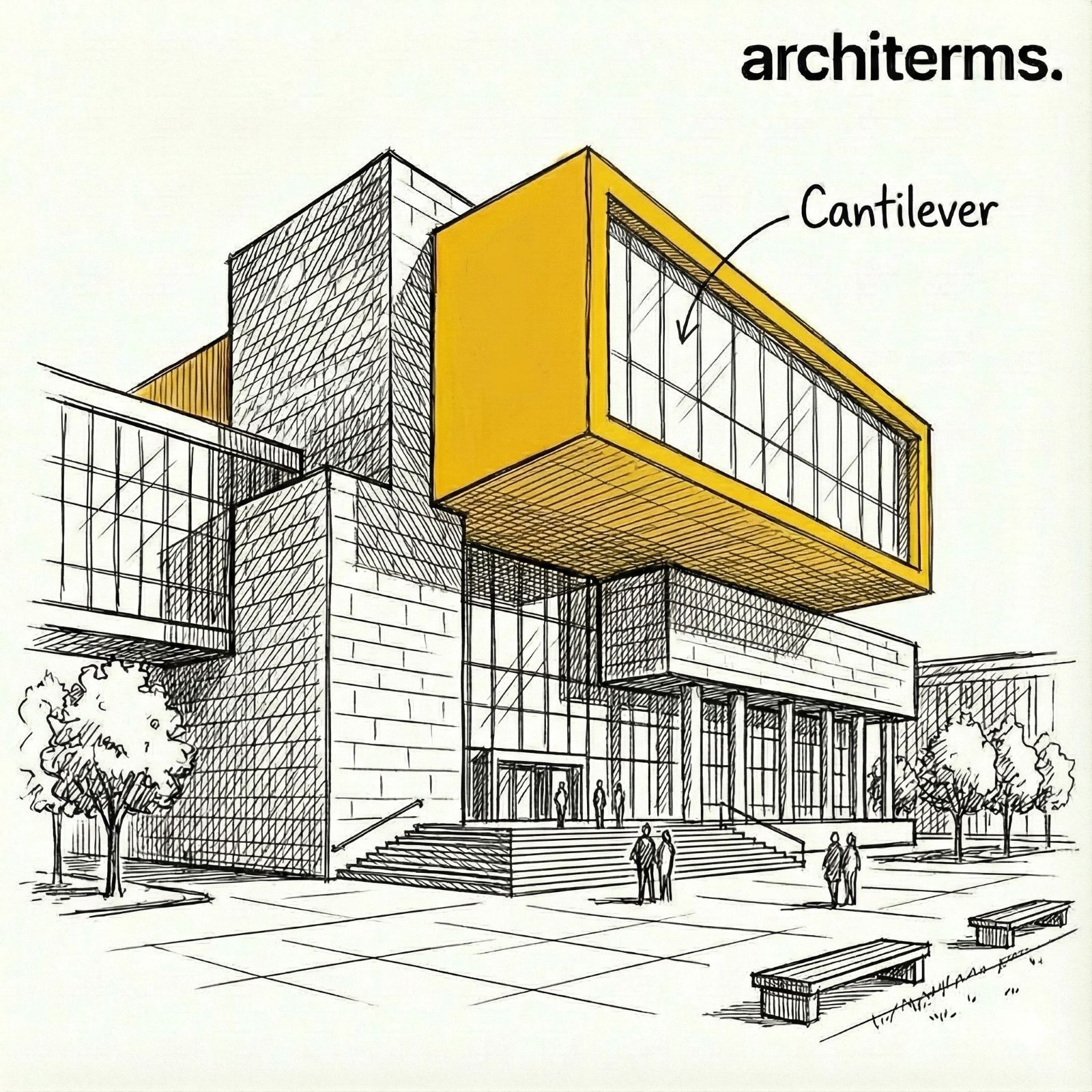
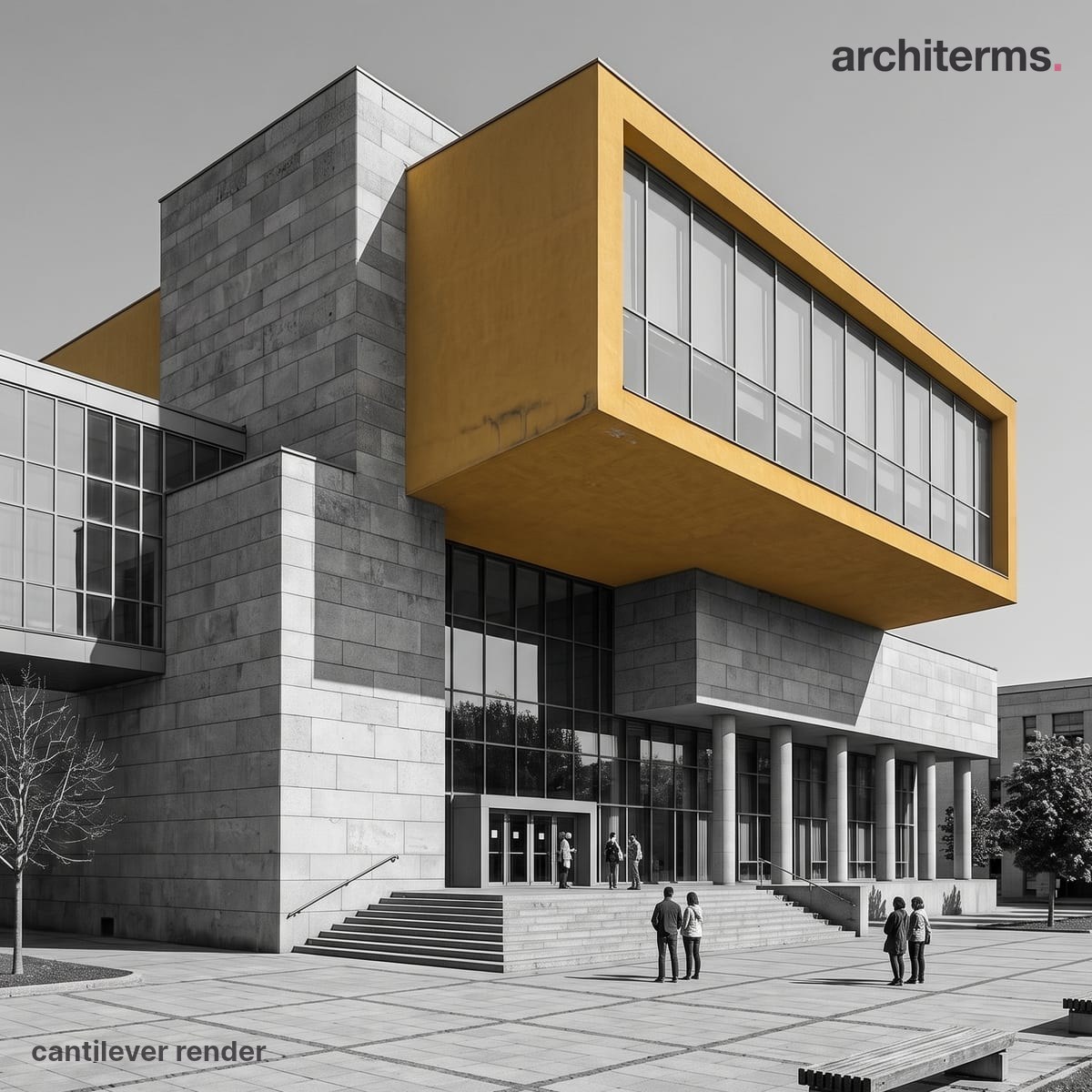
A cantilever is anchored at one end only, so the projecting slab is held entirely by the wall it grows out of. The fixed end resists the leverage of the load, letting the balcony reach into open air with nothing supporting its far edge.
Visualize your own Cantilever project with Reviz.Design
Definition (Cantilever meaning in architecture)
A cantilever is basically a beam doing something a little rebellious: it spans into open space with no support at the far end. It works because the fixed end is designed to resist bending. Gravity pulls the cantilever down, and the support end "holds the fight" by taking a large bending moment and shear.
Structurally, the biggest forces happen right at the support. That's why cantilevers are less about the dramatic projection you see—and more about what's hidden behind it: the anchorage and detailing that transfer forces into a wall, frame, or core. If the fixed end isn't designed properly, the cantilever may sag (deflection), crack (especially in concrete), or feel bouncy under use.
Cantilever design (what engineers and architects watch for)
Good cantilever design balances strength, stiffness, and comfort. The key checks are usually:
- —Strength: can it safely resist bending and shear at the fixed end?
- —Deflection control: will it sag too much over time or under load?
- —Vibration: will it bounce or feel uncomfortable under footsteps or wind?
- —Connection detailing: can the support transfer moments into the main structure without weak links?
Design choices that affect performance include span length, member depth, material (steel, reinforced concrete, timber), and reinforcement layout.
Application (Cantilever architecture examples)
Cantilevers are used because they solve practical problems and keep spaces visually clean:
- —Balconies without posts blocking the area below
- —Canopies over entrances for rain and sun protection
- —Roof overhangs for shading and weather control
- —Upper-floor projections to gain area without expanding the footprint
They're especially useful on tight sites, at corners, and anywhere you want a clear ground plane for circulation.
Cantilever bridge (same principle, bigger scale)
A cantilever bridge uses projecting arms from piers to span long distances where placing supports in the middle is difficult. The same structural story applies: the largest forces concentrate near the supports, and engineers carefully manage bending and deflection along the cantilever arms.
Common confusion
- —Cantilever vs. overhang: an overhang describes the shape; a cantilever describes the structural condition (supported at one end).
- —Cantilever vs. simply supported beam: a simply supported beam has two supports; a cantilever is fixed at one end and free at the other.