Paver.
A paver is a flat, individual unit — of concrete, brick, or natural stone — laid in a pattern to create a durable, removable surface for paths, patios, driveways, and plazas. In plain terms: it's a single paving block that fits together with others to make hard ground.
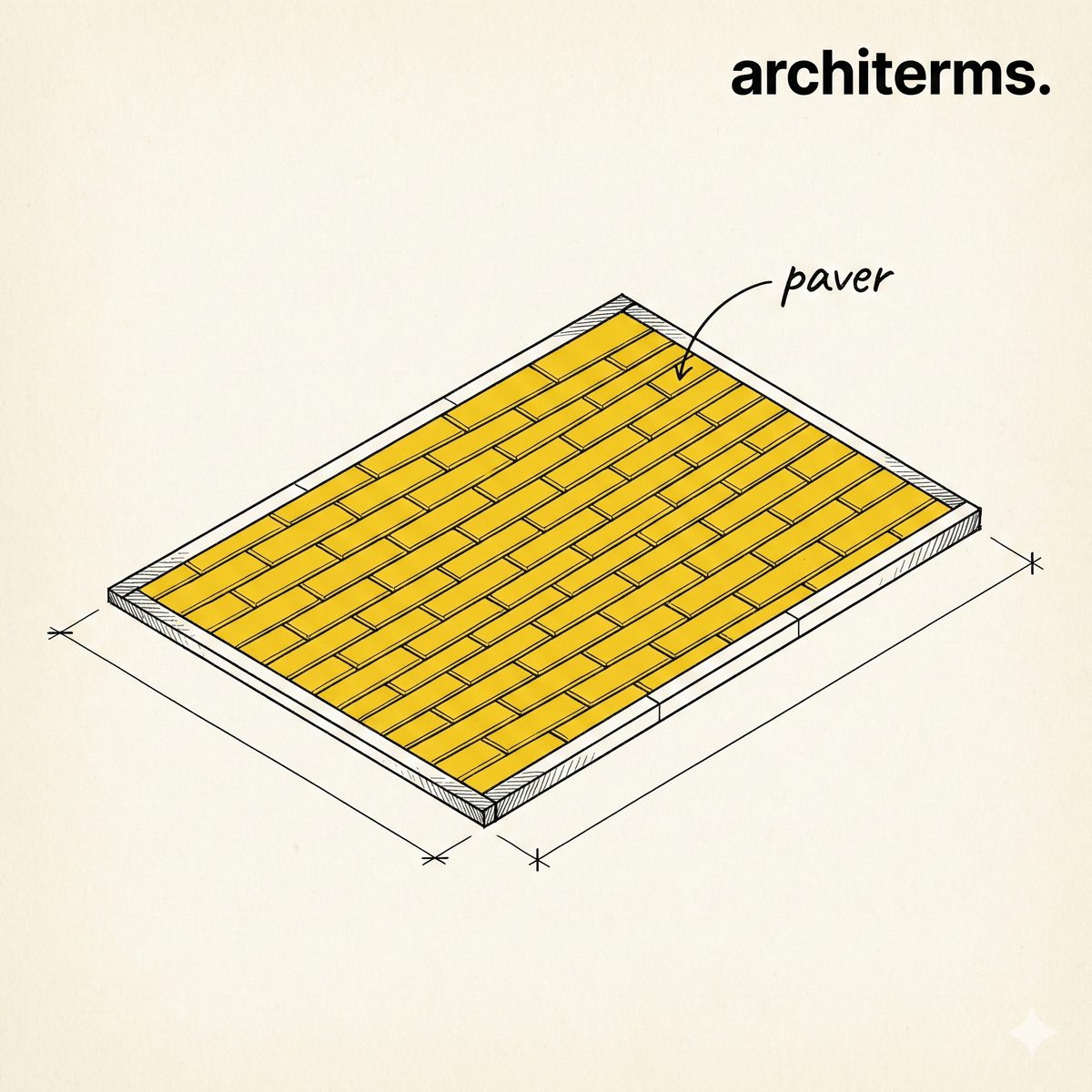
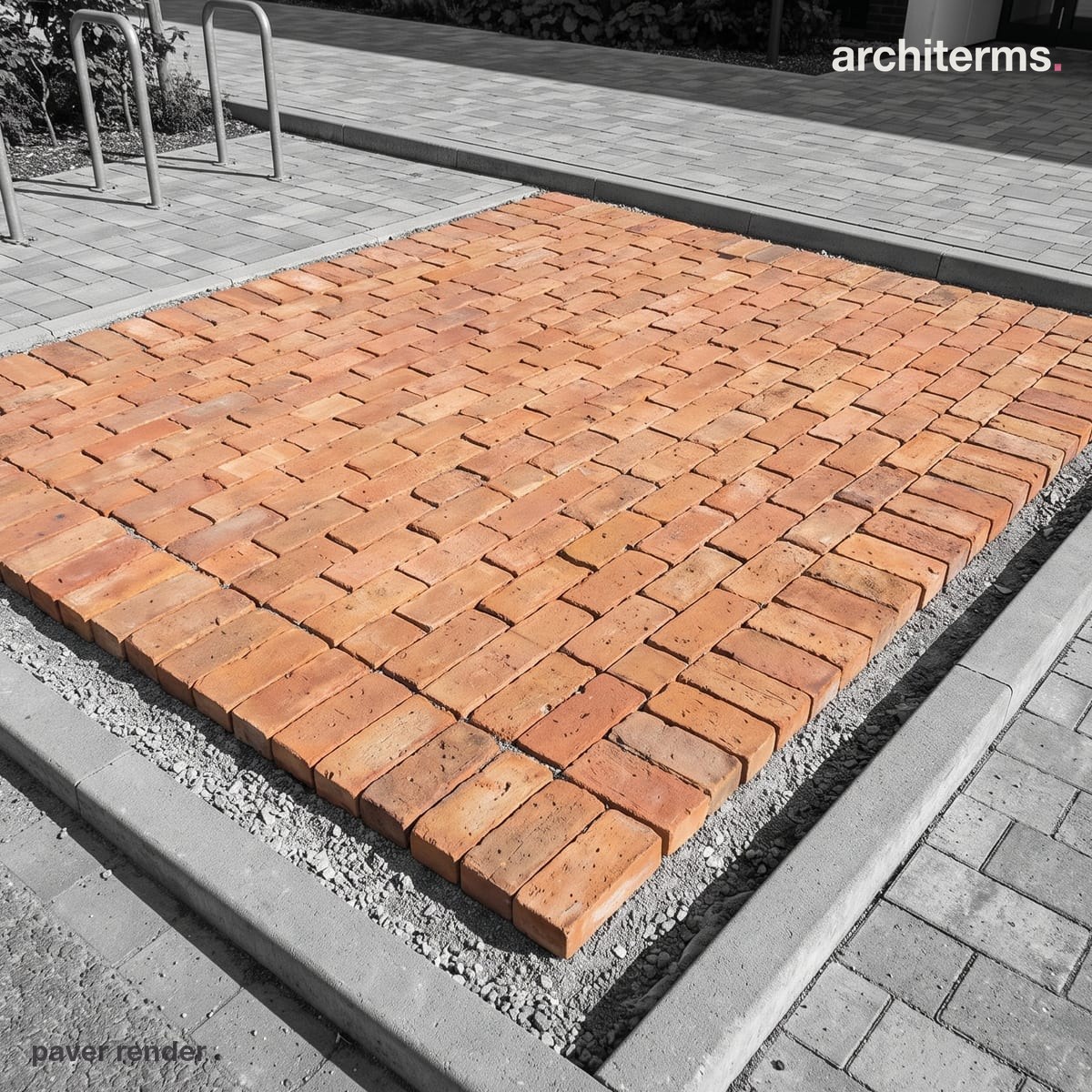
Pavers are individual units set side by side to make a hard surface: here fired clay blocks are laid flat in a staggered bond over a bedding layer, each unit locked by its neighbours yet liftable one at a time for repair.
Visualized with Reviz.Design — AI rendering for architects and interior designers
Definition
A paver is one of the small, flat units that, laid side by side, make up a hard outdoor surface — a patio, a path, a driveway, a public plaza. Pavers are made from concrete, clay brick, or cut natural stone, and they are usually set on a bed of sand or gravel rather than glued down, so they interlock by friction and can be lifted and relaid. That simple idea — many paving units instead of one continuous slab — is what gives paved surfaces their flexibility and repairability.
Because each paver is a separate piece, the surface can flex slightly with the ground, drain between the joints, and be opened up to reach services below without being destroyed. Pavers are a staple of hardscape and landscape design, where the choice of material, size, color, and laying pattern does a lot to set the character of a garden, courtyard, or streetscape.
A paver is a prefabricated or cut paving unit — concrete, fired clay (brick), or natural stone — laid in a pattern over a prepared base to form a hard-wearing surface for pedestrians or vehicles. Pavers are typically laid on a compacted sub-base and a sand setting bed, with sand-filled joints, so they form a flexible, permeable, and removable pavement rather than a rigid, monolithic slab.
Paver History
Paving in units is ancient: Roman roads were built from carefully fitted stone blocks, and towns paved their streets with stone setts and cobbles for centuries. Fired-clay brick paving followed the same logic at a smaller scale. The modern interlocking concrete paver was developed in post-war Europe as a fast, durable, and repairable way to surface roads and public spaces, and it spread worldwide. Today permeable pavers, designed to let rainwater soak through the joints, extend the same idea to sustainable drainage.
Paver in Architecture
The paver is the basic unit of designed hard ground:
- —Makes durable outdoor ground: patios, paths, driveways, and plazas, the hardscape that a site plan sets out.
- —Stays flexible and repairable: laid on sand, the surface can flex with the ground, and individual pavers can be lifted and relaid.
- —Sets the character: material, size, color, and the laying pattern (herringbone, running bond, basketweave) shape how a space feels.
- —Manages water: open joints, and purpose-made permeable pavers, let rainwater drain through rather than run off.
- —Coordinates with the landscape: levels, edges, and drainage tie the paving to walls and grading, including retaining wall and gabion edges.
Common confusion
- —Pavers vs. concrete slab: a poured concrete slab is one continuous, rigid surface; pavers are many separate units on a sand bed — flexible, permeable, and removable.
- —Paver vs. tile: tiles are thin and bonded with adhesive to a solid base, usually indoors; pavers are thick, structural units bedded in sand for outdoor traffic.
- —Paver vs. flagstone: flagstone is flat natural stone in irregular pieces; pavers are usually regular, sized units, though natural-stone pavers exist.
- —Pavers vs. cobblestones/setts: cobbles and setts are small, rounded or cubic stone units; modern pavers are flatter, sized, and often concrete or clay.
Frequently Asked Questions
What is a paver?
A paver is a single flat paving unit — made of concrete, clay brick, or natural stone — laid together with others over a prepared base to form a hard surface for paths, patios, driveways, and plazas. Pavers are usually bedded in sand so they interlock and can be lifted and relaid.
What is the difference between pavers and a concrete slab?
A concrete slab is one continuous, rigid poured surface. Pavers are many separate units laid on a compacted base and sand bed. Pavers can flex with ground movement, drain through their joints, be repaired individually, and be lifted to reach services below — a slab cannot.
What are pavers made of?
Pavers are commonly made of concrete, fired clay (brick), or cut natural stone such as granite, sandstone, or limestone. The material affects appearance, durability, slip resistance, and cost, and the choice is a key part of hardscape and landscape design.
What is a permeable paver?
A permeable paver is designed so rainwater can pass through the joints or the units into a drainage layer below, instead of running off the surface. Permeable paving helps manage stormwater, reduce flooding, and support sustainable drainage systems.
How are pavers laid?
Pavers are typically laid over a compacted sub-base and a leveled sand setting bed, fitted tightly in a chosen pattern, edged to hold them in place, and finished by sweeping sand into the joints. Because they are not mortared down, they form a flexible, removable pavement.