Atrium.
An atrium is a large open interior space—often in the center of a building—that brings daylight and a sense of openness into surrounding rooms. Many atriums are topped with a skylight or glazed roof.
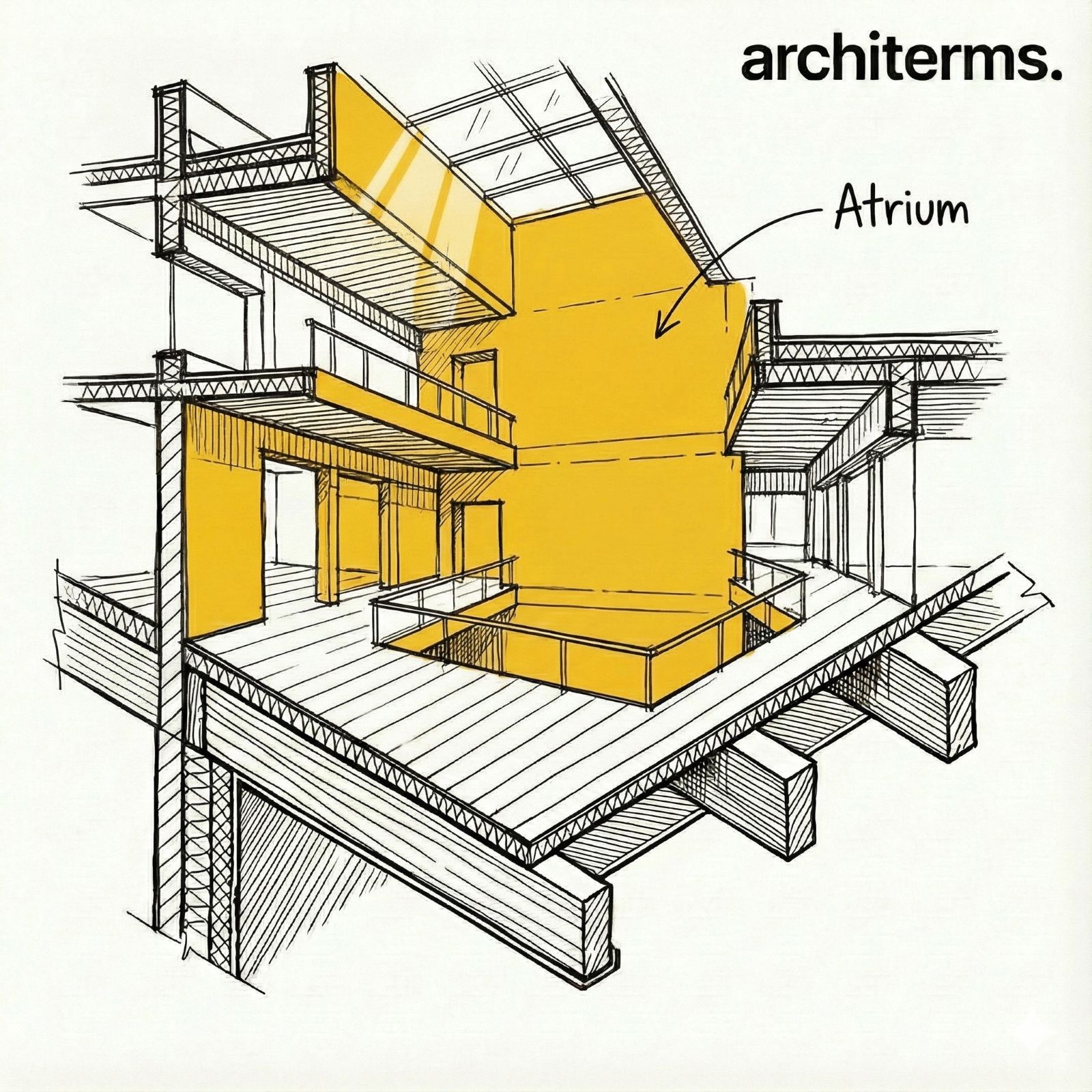
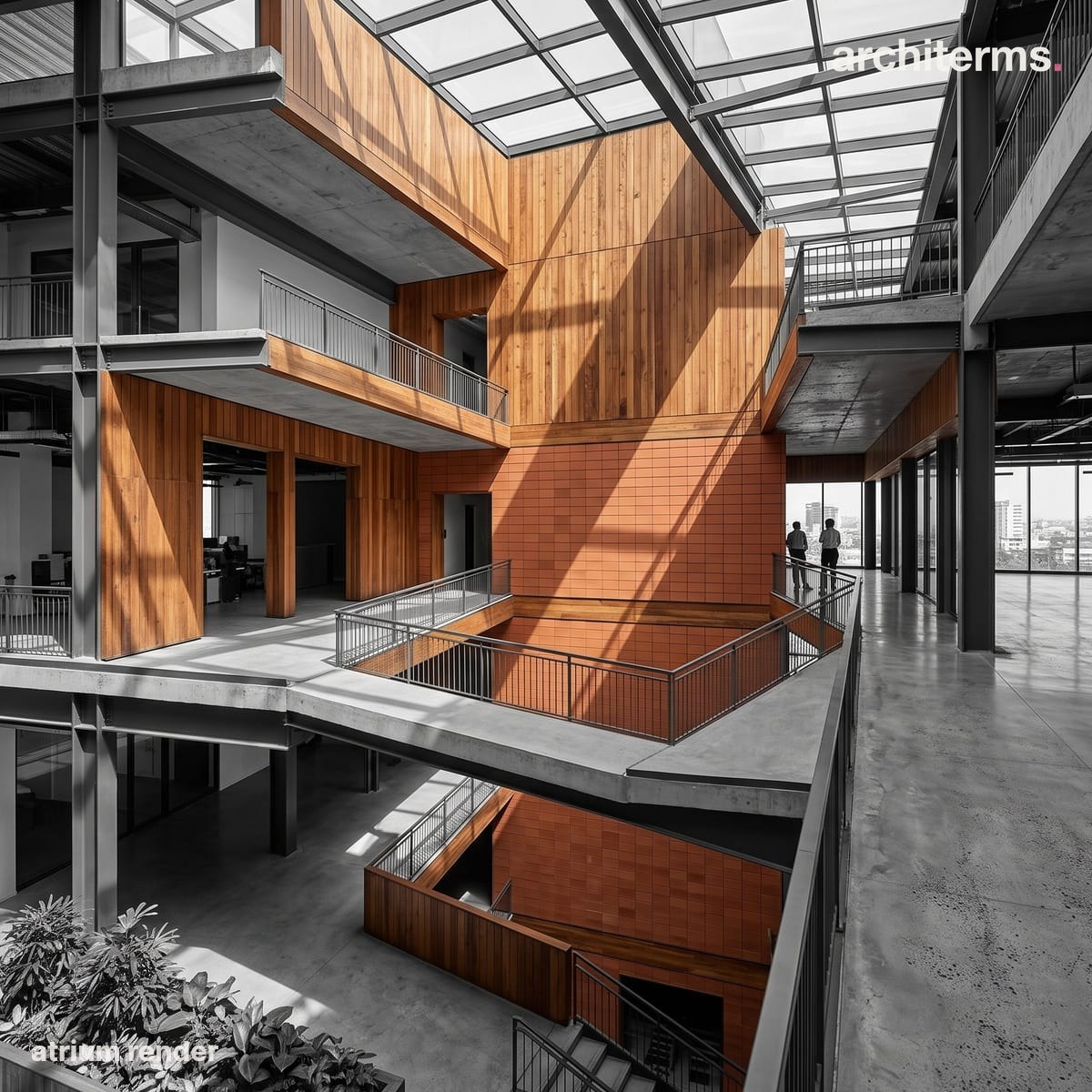
An atrium is an open shaft cut through the depth of a building, usually capped with a glazed roof so daylight falls all the way down. The floors around it read as galleries, borrowing light and air from the void at the centre.
Visualize your own Atrium project with Reviz.Design
Definition
If a building had a "living room," the atrium would be it. It's a tall, open space that makes big buildings feel navigable and human by giving you a clear center—somewhere your eyes can land, your body can orient, and daylight can actually reach. Unlike a typical corridor or lobby, an atrium usually connects multiple floors visually, so you can see where you are and where you need to go.
Modern atriums are often covered with glass, which turns them into a kind of indoor-outdoor space: protected from weather, but still bright, airy, and social. Because they pull light deep into a building, atriums can reduce reliance on artificial lighting and create a more comfortable interior atmosphere—when they're designed well.
History
The word "atrium" comes from Roman houses, where the atrium was a central open court that brought in light and air. Over time, the idea scaled up: hotels, offices, hospitals, museums, and shopping centers adopted atriums as dramatic internal "courtyards"—spaces that feel public, memorable, and easy to understand.
Application
You'll find atriums in buildings that need a strong public center or clear wayfinding, such as:
- —Office buildings (lobbies, shared circulation, informal meeting zones)
- —Hotels (multi-story interior courts with rooms facing inward)
- —Museums and civic buildings (gathering, orientation, exhibition spill-over)
- —Hospitals and campuses (daylit hubs that reduce stress and improve navigation)
Atria also solve practical problems: they can organize staircases and bridges, bring daylight to interior floors, and create comfortable "pause" spaces—places where people naturally stop, meet, and wait.
Design considerations
Atriums are beautiful—but they're not "free space." They need careful design around:
- —Heat gain and glare (especially under large skylights)
- —Ventilation and smoke control (tall volumes change airflow and fire strategy)
- —Acoustics (hard surfaces + height can amplify noise)
- —Structure (bridges, long spans, and roof glazing systems)
Done well, an atrium becomes more than a dramatic void—it becomes the building's best-performing space in terms of light, comfort, and orientation.